
The Dutch housing market in 2026 requires smart and sustainable solutions. As prices for raw materials and lots continue to rise, more and more homeowners are choosing not to move, but to make the most of their current home. Going up is often the most logical step here to create more living comfort without sacrificing the location.
What is a roof structure and a roof terrace on an extension and why is it necessary?
When we talk about vertical extension, we must distinguish between different structures. A roof structure is a structural addition that creates a completely new floor on an existing home. This is a radical but very effective method to significantly increase the living area and give the home a modern look. In addition, we are seeing the popularity of the terraces on the roof or on an existing extension increase. Instead of just an extra room, a combination of interior space and a terrace is often chosen.
In addition to a rooftop extension, there are other ways to create extra living space. Explore the options for home expansion and discover which solution best suits your home and your living needs."
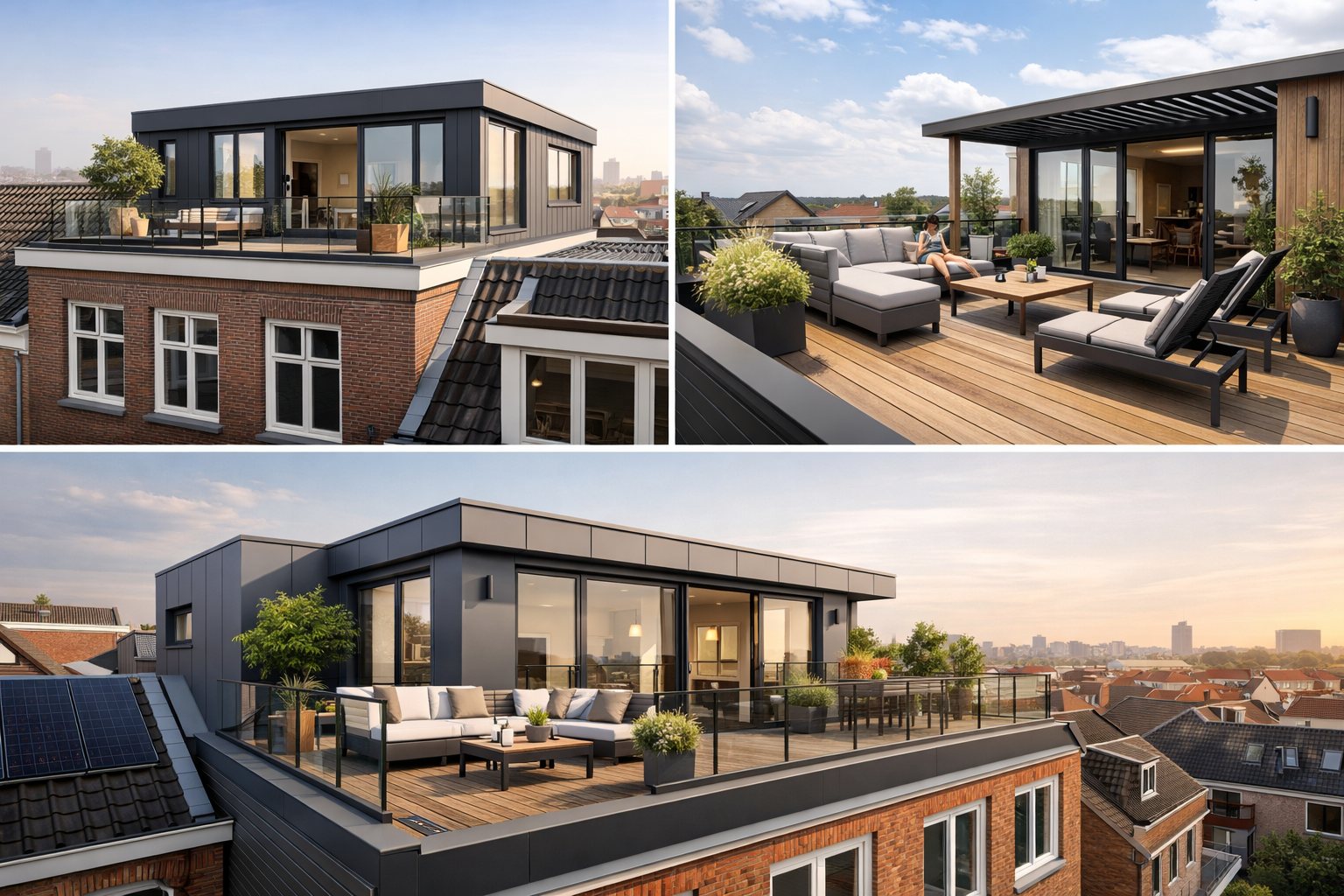
Benefits of roof structures and roof terraces
Investing in a roof extension offers benefits that go beyond just extra meters. At a time when hybrid working is the norm, an extra floor acts as a much-needed rest. Below we look at the main reasons why homeowners in the Netherlands choose this form of renovation.
Enlargement of the living area
The most obvious reason is the huge gain in effective living space. Every square meter is valuable, especially for families in the Randstad. By installing a roof structure, you can transform a previously cramped attic into a spacious master bedroom or even create two additional children's rooms.
This type of renovation is also extremely relevant for a terraced roof structure. In such homes, extension in width is often impossible due to the proximity of the neighbors. Going up is then the only way to make the home future-proof for a growing family.
Creating a comfortable patio space
In addition to extra interior space, the need for private green spaces in the city is greater than ever. Transforming the roof of an existing extension into a roof terrace offers a unique opportunity to create an outdoor space where there were previously only roof tiles.
When building a roof terrace under construction, it is very important that the construction is technically perfect. Here are three essential components that we pay extra attention to in each design:
- The load-bearing capacity of the existing walls must be accurately calculated to support the extra weight of furniture.
- The watertightness of the underlying extension under the roof terrace must be guaranteed by the use of high-quality materials.
- The railings must comply with safety standards without obstructing the unobstructed view.
Increasing home value
A well-executed extension is one of the few investments in a home that pays for itself almost immediately. Homes that have a roof structure with a balcony or a spacious terrace on the top floor are highly sought after on the current market. They attract audiences that are willing to pay more for luxury and comfort.
The economic value of a home increases not only due to the extra square meters, but also due to improved energy performance. At a time when energy labels play a decisive role in sales, a new, perfectly insulated floor provides a significant advantage in the market.
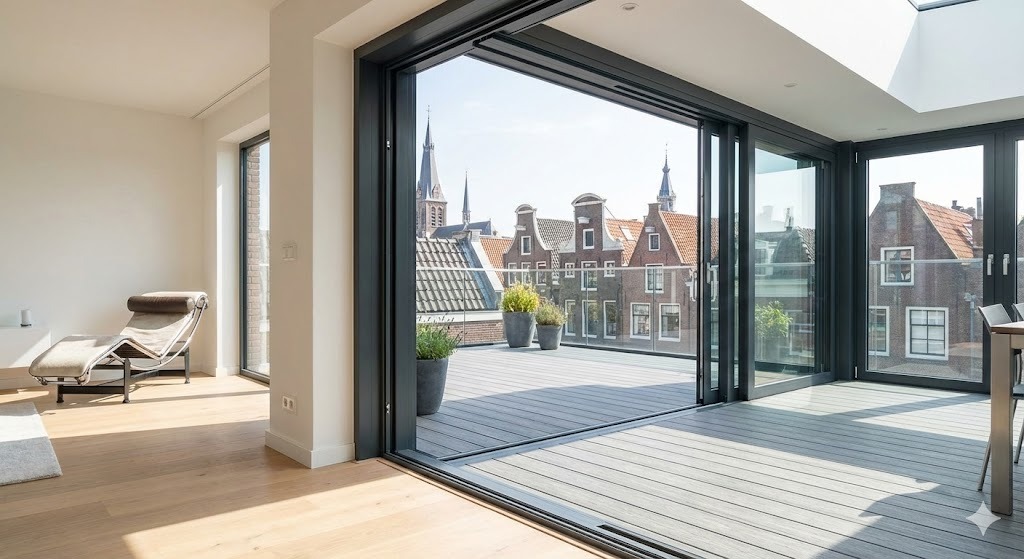
Technical aspects of construction
Building at heights involves specific challenges in the field of technology and legislation. When planning a roof terrace on an extension, you must take into account the integrity of the current home.
Permits and Dutch legislation
In the Netherlands, building regulations are strict and vary from municipality to municipality. The Environmental Act, which has recently been amended, requires careful preparation. Having a roof structure installed therefore always starts with a permit check with the local government to see if the plan fits the welfare requirements of.
Choice of materials and technologies
The materials we use today for a roof structure with a roof terrace are lighter and more durable than ever before. Many projects are now carried out with prefabricated elements that are prepared in the factory, which significantly reduces construction time on site and reduces inconvenience to the neighborhood.
When we look at a roof structure with a roof terrace, we see that the integration of sustainable materials has become the standard. The most commonly used materials are:
- Aluminum cladding for a low-maintenance and modern look of the structure.
- High-end insulating glass (triple glass) that provides an optimal indoor climate and excellent sound insulation.
- Lightweight composite decking floors that combine the natural look of wood with durability.
The use of these materials ensures that the new floor lasts for generations and contributes to a significantly lower energy bill.
Difference between a roof structure and a dormer window
Many people hesitate between a dormer window or a full roof elevation. The most important difference between a roof structure or dormer window is the net space gain. Where a dormer window only widens part of a sloped roof to generate more light, a structure creates a completely new living environment with straight walls where the roof used to be.
The choice for a roof structure is often a strategic choice for the long term, especially when it comes to a terraced roof structure. It offers the possibility of a complete rearrangement of the top floor, which, with a standard dormer window, is technically limited to one room.
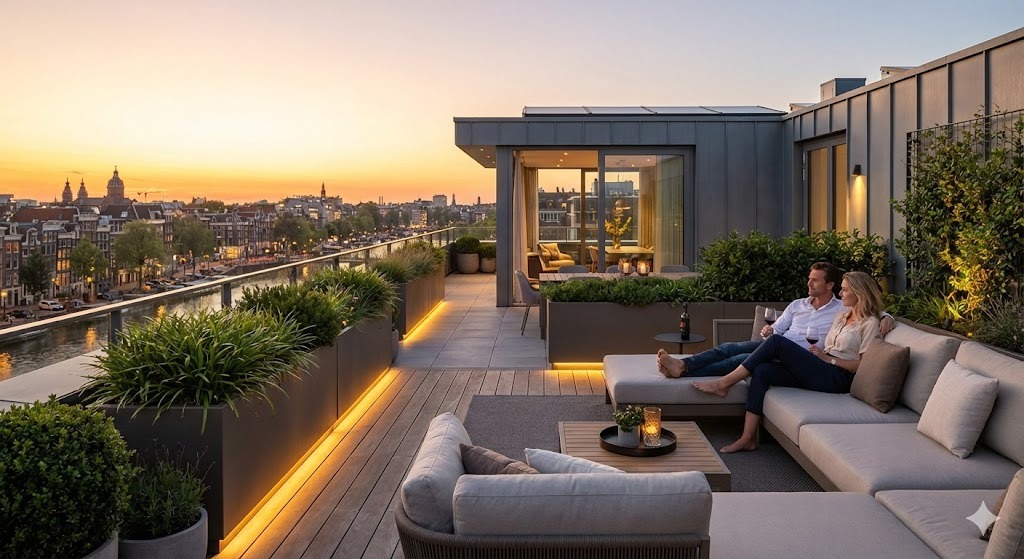
Practical tips for designing terraces and extensions
A beautiful design is only successful if it is also functional and comfortable. Designing a vertical extension requires a keen eye for detail and a good understanding of the walking lines in the home.
Planning and functionality
When planning a terrace, the sun position is crucial, but also accessibility from the home. The influence of a roof terrace on the size and complexity of the extension must be in balance with the ultimate ease of use. In practice, a terrace that is only accessible via a steep ladder will be used less often for relaxation.
In addition, it is essential to have a clear understanding of all architectural and finishing aspects of a roof terrace on an extension beforehand. This includes not only the structural work, but also the finish such as outdoor lighting and drainage. A transparent budget plan prevents surprises during the construction process.
Influence on the architectural style of the home
An extension should not become a “foreign body” to the house, but should be a logical continuation of the existing architecture. When building a roof terrace on an extension, the challenge is to combine modern elements with the characteristic features of the building. This enhances the appearance of the entire home.
Details such as the profiles of the frames and the color of the façade cladding play a major role here. A well-designed extension turns a standard home into a unique architectural object that fits perfectly into the Dutch streetscape.
How to prevent construction mistakes
The biggest pitfall in a roof structure is poor communication between the architect and the contractor. A professional construction company ensures that all parties are on the same page.
Furthermore, it is crucial to immediately provide the roof terrace with an adequate drainage plan to prevent leaks. A final list of tips for successful execution includes:
- Always check the guarantees on the used roofing and the entire structure.
- Make clear agreements about the construction time and daily communication during the project.
- Ensure an accurate final inspection where all technical installations are thoroughly tested.
By following these guidelines, you ensure yourself a result that will technically function smoothly for years and where you will enjoy living.
Conclusion
Enlarging your home by means of a roof structure or a smart extension with a roof terrace is the most effective way to add luxury and space to your life in 2026. It offers you the opportunity to create a unique roof terrace and secure the financial value of your property for the future.

