
The switch to a gas-free home and the desire for an optimal indoor climate have pushed the popularity of floor heating in the Netherlands to new heights. Where people used to dread a major renovation that required the entire screed to be removed, modern technology today offers solutions that are both fast and almost dust-free. At Bricknest, we understand that a warm floor forms the basis of a comfortable home, but also that the technical integrity of the existing structure must be guaranteed.
Subfloor preparation
Before the milling machine can make the first few meters, a thorough inspection of the existing screed is essential. This is because not every floor is immediately suitable for processing; the thickness, the composition and the possible presence of pipes in the floor determine the feasibility of the project.
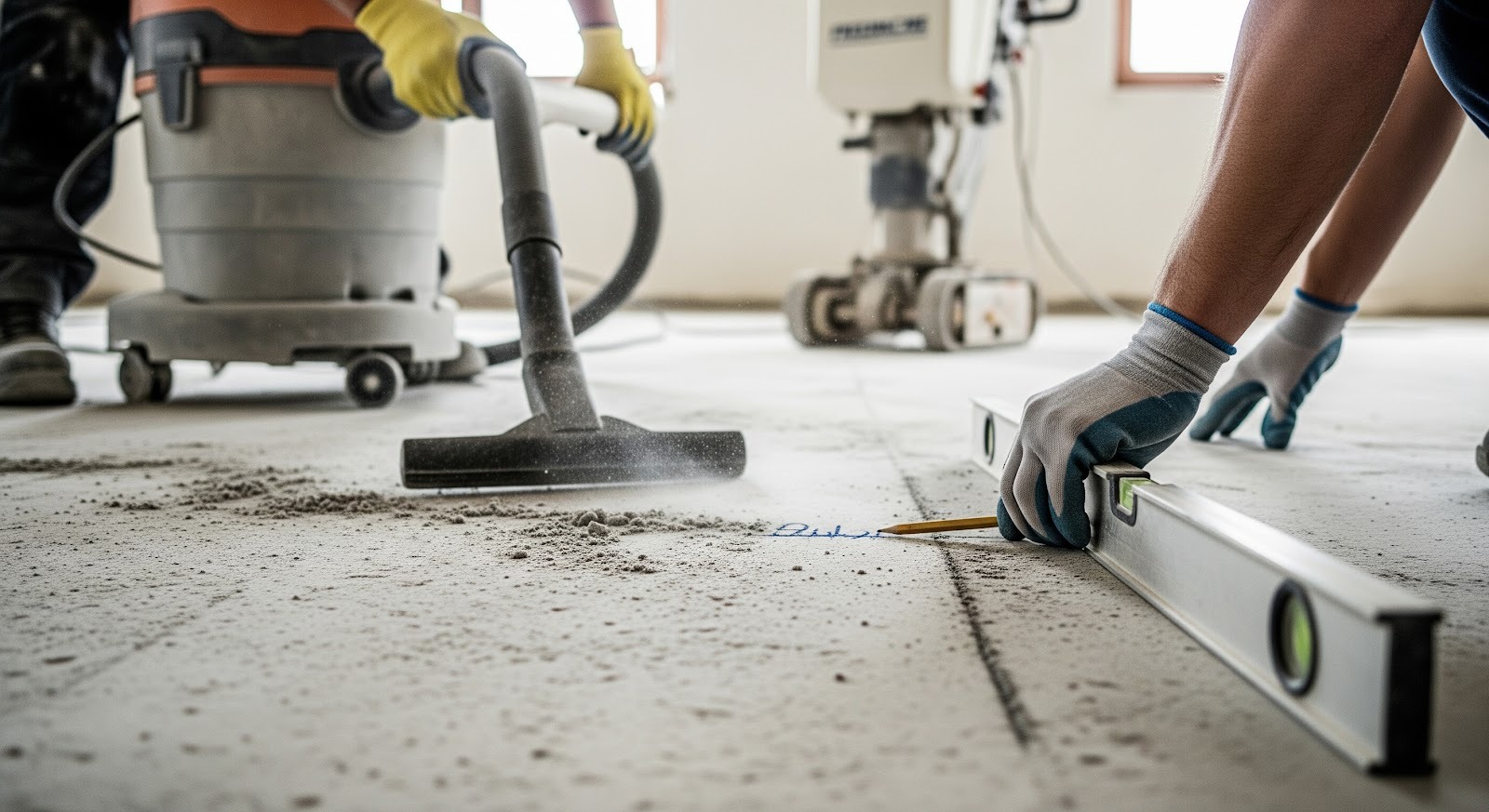
Cleaning and leveling the surface
A clean and flat work surface is the prerequisite for a successful installation. Loose parts, adhesive residue from old carpeting and dust must be completely removed to prevent the milling machine from jamming or affecting the depth setting. For a technically perfect result, a flat base is essential. Learn more about the need for leveling concrete and wood floors to understand how a stable surface directly contributes to the efficiency of your final heating system.
Pattern planning for the heating channels
The effectiveness of the heating depends on the so-called center-to-center distance between the loops of the cables. Our engineers draw up a layout that takes into account the cold zones in the room, such as large windows or sliding doors. A cochlea pattern or a meander pattern is often chosen to ensure uniform heat distribution. Here, it is crucial that the slots do not lie too close to the walls or fixed pieces of furniture, because the heat cannot be effectively transferred to the room there and unnecessary energy loss occurs.
Freezing floor heating
The technique of milling floor heating is a solution for renovation projects where the floor height must remain the same. Instead of pouring an extra layer on top of the existing floor, we create deep slots into which the heating cables are directly recessed.
Safe milling techniques
When milling floor heating, we use diamond-cut milling blades that cut through sand cement or anhydrite with high precision. The depth of the slot is usually set to 16 to 20 millimeters, which is sufficient to fully enclose the cable while remaining close enough to the surface for a quick heating response time. At Bricknest, we pay extra attention to the curves in the pattern; these must be milled smoothly to prevent mechanical stress on the cables. Our machines are equipped with depth controls that prevent us from accidentally touching the structural floor or existing pipes.
Minimizing dust nuisance and damage
One of the biggest concerns when it comes to milling is dust generation, but with our modern equipment, this is a thing of the past.
In order to minimize the inconvenience in an inhabited home, we use the following method:
- Use of industrial dust extractors that are directly connected to the milling machine (HEPA certified).
- Shielding adjacent areas with fabric walls or foil if desired.
- Constant monitoring of the milling blades to prevent overheating and unnecessary vibrations.
- Direct cleaning of the slots after milling, so that the cables can be laid immediately in a clean environment.
Thanks to this low-dust technique, the installation can often be completed within one working day, after which the floor is immediately ready for the next phase of the renovation.
Electric heating systems
In contrast to water-fed systems, which rely on a central heating boiler or heat pump, electric floor heating works completely independently. This makes it an ideal choice for both additional heating and main heating in modern, well-insulated homes.
Energy efficient cables and mats
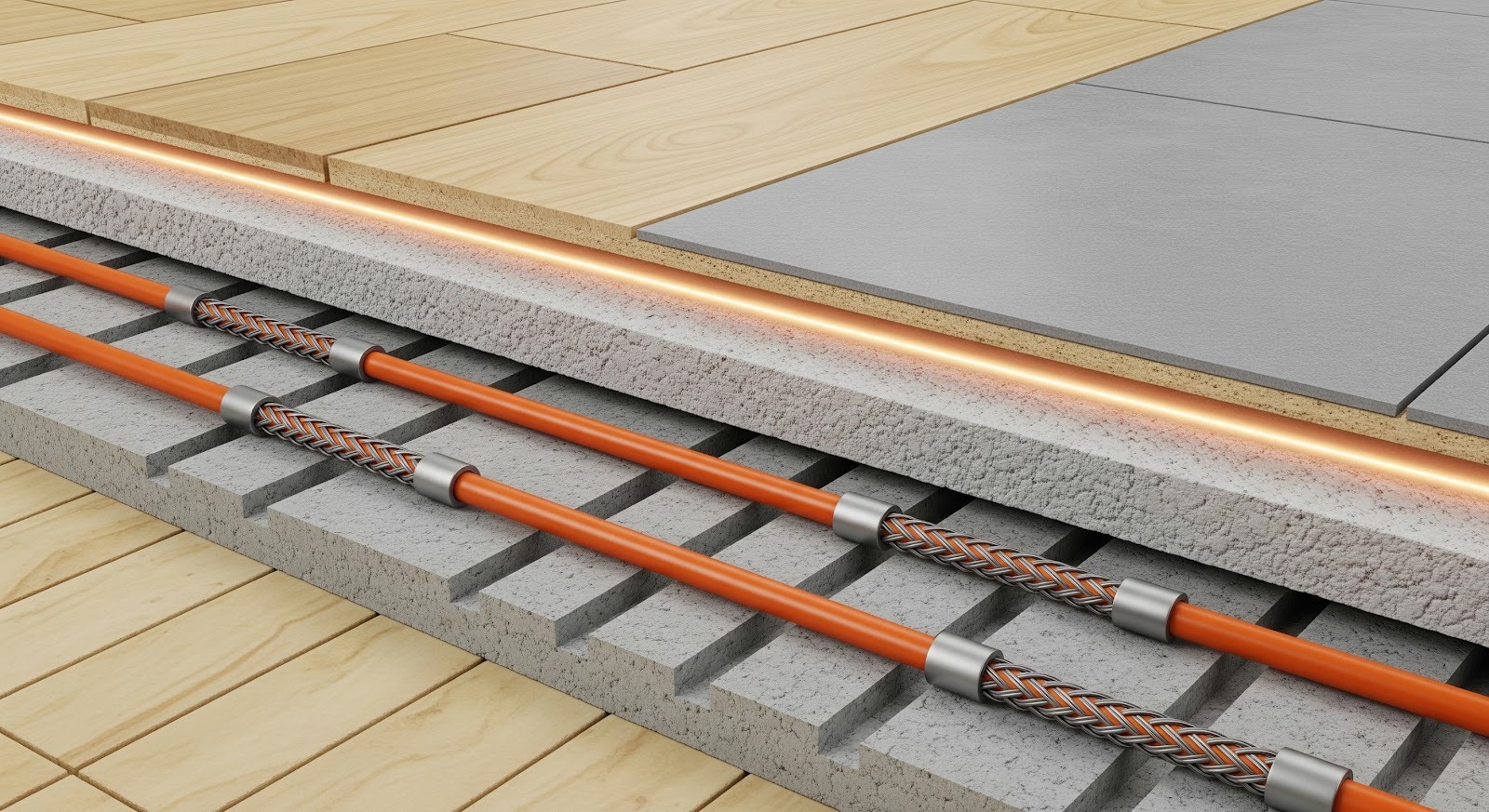
For the milled systems, we use high-quality heating cables with a specific power per linear meter. These cables have a robust insulation jacket and an earth coil for maximum safety. The technology at Bricknest focuses on achieving optimal efficiency by positioning the cables at exactly the right depth. As a result, the screed acts as a thermal battery: the mass heats up and releases heat very gradually over a long period of time, which ensures a stable indoor temperature without the need to constantly correct the thermostat.
Temperature control and smart control
The system's intelligence lies in the thermostat. Modern electrical systems are controlled by digital clock thermostats that use a floor sensor and a room sensor.
Smart regulation offers the following technical advantages:
- Adaptive start control: the thermostat learns how long it takes for the floor to warm up and starts at the optimal time.
- Floor temperature limit settings, essential for sensitive top layers such as laminate or PVC.
- Integration with home automation systems and apps, allowing you to precisely monitor the consumption per room.
- Frost protection and vacation mode to prevent energy waste.
This precise control prevents more energy from being consumed than strictly necessary, significantly reducing operational costs.
System installation
After the slots have been milled and cleaned, the hardware is assembled. This is a process where precision and electrotechnical knowledge come together to ensure a safe installation.
Fast and accurate installation
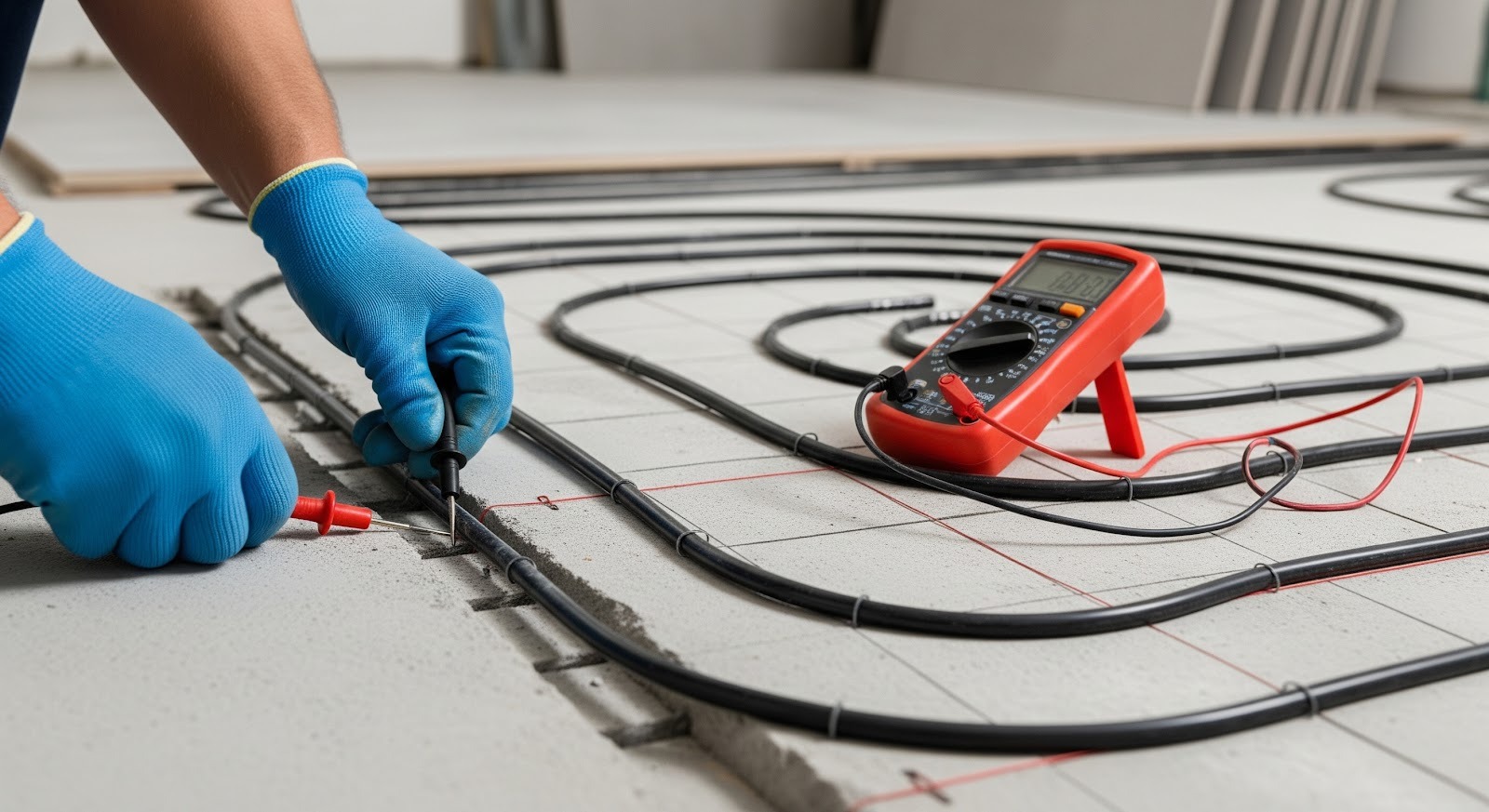
The heating cables are manually pressed into the milled slots, making sure that the cable is not kinked or makes contact with each other (to prevent hotspots). After laying, our installers at Bricknest test the resistance of the cable with a multimeter to ensure that no breaks occurred during transport or installation. Only after this check are the slots sealed with a special, high-quality repair mortar or tile adhesive that has good thermal conductivity properties. This ensures that the heat is transported directly from the cable to the surface.
Integration with laminate or tiles
The final floor finish also determines the efficiency of the heating. Tiles and natural stone have a low thermal resistance and are therefore ideal in combination with floor heating. When using laminate or PVC, it is essential that the materials are “suitable for floor heating”. The installation is carried out in such a way that the floor is completely flat, so that the floor installer can get to work immediately.
Use and care
A milled electrical system is virtually maintenance-free because there are no moving parts and no liquids flow through the floor. However, there are a few things that the user should pay attention to to to ensure safety and efficiency.
Control and preventive inspection
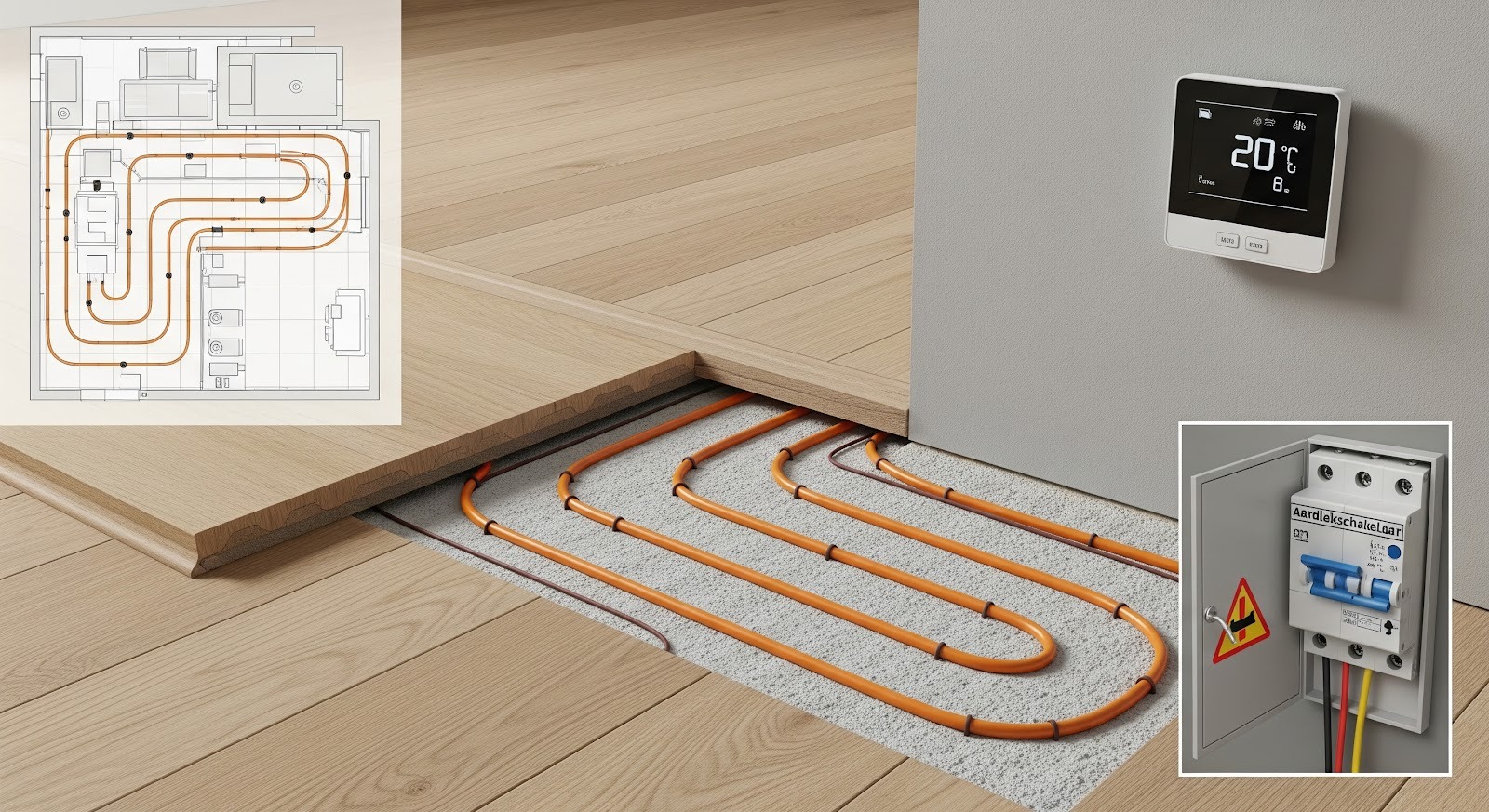
Although the cables are safely under the floor, the thermostat is the part that can be subject to wear and tear. We recommend that you check the settings of the sensors annually. If drilling work needs to take place in the floor in the future (for example to install a doorstop), it is essential to consult the floor plan to prevent damage to the cables. Our detailed documentation upon delivery helps you to rule out such risks.
Sustainability and safety
Electrical safety is ensured by connecting the system to its own group in the meter cabinet, equipped with an RCD.
As far as the durability of the installation is concerned, you can count on:
- A lifespan of the heating cables that is often equal to the lifespan of the home itself.
- No risk of leaks or water damage such as water-fed systems.
- A maintenance-free heat source that does not require an annual inspection of a boiler.
This makes an electrically milled system one of the most reliable forms of heating currently available on the Dutch market.

Benefits of floor heating
The choice for floor heating is a choice for the highest level of home comfort. It eliminates cold draft across the floor and ensures a homogeneous temperature distribution throughout the room, from floor to ceiling.
Comfort and atmosphere at home
Nothing is more pleasant than walking barefoot through a warm house, even in the middle of winter. Because the heat is emitted evenly, there is less dust circulation than with traditional radiators, which contributes to a healthier living environment. In addition, it gives you complete architectural freedom: you are no longer limited by the placement of radiators, allowing you to arrange your interior exactly as you want.
Saving on heating costs
Because floor heating emits radiant heat, the room already feels comfortable at a lower air temperature. As a result, the thermostat can often be set one to two degrees lower, which results in immediate savings on energy bills. In combination with good insulation and possible solar panels, electric floor heating is an extremely profitable investment that not only contributes to your comfort, but also to the market value of your property. With the expert implementation of Bricknest, you are assured of a system that is efficient, safe and highly sustainable.

