
Painting interior walls is often the most satisfying phase of a renovation project. It's the moment when a construction site transforms into a home. However, choosing the right paint is technically much more complex than just selecting the right color code. The chemical composition, the ratio between pigments and binders, the preparation of the substrate and the load on the space determine how long a wall retains its fresh and sleek appearance. In the Dutch construction sector, we see an enormous variety of products, making it essential to understand what technical properties are required for specific spaces and surfaces.
Main types of paint for interior walls
Before deciding which paint to choose for indoor walls, it is necessary to look at the surface, room load, gloss level, scrub resistance, VOC content and moisture load. The modern paint industry offers more and more water-based and low-emission products, but the environmental performance of each paint must be assessed on the basis of VOC content, labels, technical datasheets and scope of application. In these types of wall paint, we distinguish between types of paint based on binder, gloss level, scrub resistance, vapour resistance, moisture resistance and functional application. Good preparation at Bricknest always starts with a thorough analysis of the surface, as the adhesion of the paint depends directly on the compatibility between the wall and the chosen coating. The different types of wall paint and differences in performance are technically explained below to help with the best paint for interior walls, explanation that suits the surface, space use and desired finish.
Latex paint
Latex paint has historically been the most used variant for interior painting in the Netherlands. Although the term “latex” used to refer to natural rubber, modern latex paints are almost always water-based emulsion paints based on plastic resins. A possible quality of some modern wall paints is vapour openness, but this depends on the product composition and the layer structure; older homes should mainly look at moisture load, ventilation, substrate and technical data sheet of the paint. Many water-based wall paints dry relatively quickly and have little odor, but the opacity varies by product, color, surface and opacity class according to EN 13300.
Acrylic paint
When looking at the latex paint or acrylic paint difference, it is particularly important that acrylic-based wall paints often score well on wear resistance, cleanability and adhesion, but the quality remains dependent on the specific product. Acrylic paint contains a higher content of acrylic resin, which forms a harder and more closed film after drying. This can make the paint more resistant to mechanical stress and normal household cleaning, provided that the product is intended for this purpose. Many water-based acrylic paints are less likely to yellow than solvent-based products, but elasticity, crack bridging and durability should always be assessed on a product by product basis.
Matte paint
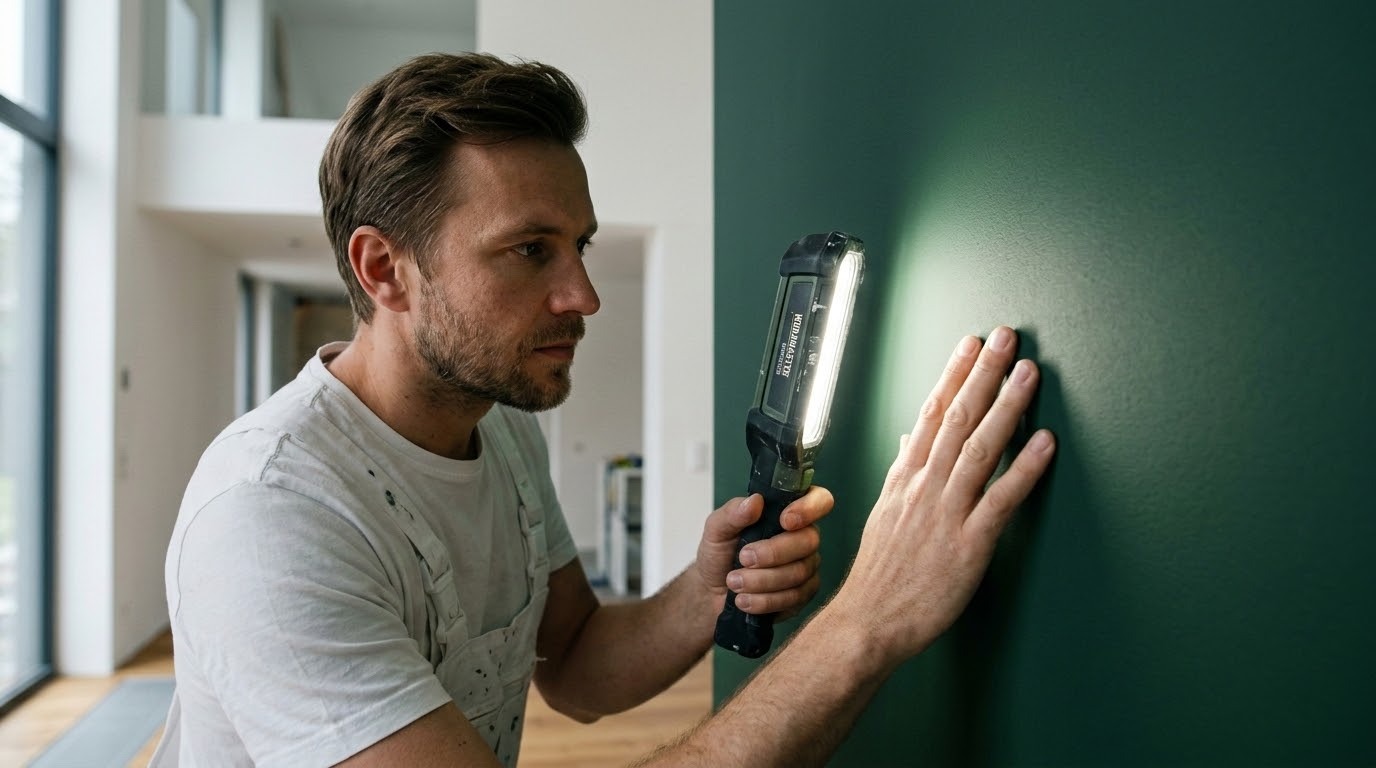
The choice of matt or glossy paint you choose depends on the condition of the wall, the incidence of light, the desired appearance, cleanability and load on the space. Matte paint has a low degree of reflection, which means that incident light is scattered instead of reflected. Technically, this is the best choice for walls that are not 100% flat; the matte texture conceals minor imperfections in the stucco. The disadvantage of traditional matt paint was its sensitivity to “gloss” when polishing; modern quality paints with scrub resistance class 1 according to DIN EN 13300 are easier to clean, but can still show shine spots if cleaned intensively or incorrectly.
Shiny paint
Glossy paint (often satin or satin for interior walls) offers a smoother and less porous surface than matt variants. The higher concentration of binder makes it less easy for dirt and grease to adhere to the surface. However, due to the high reflection, any scratch, grain or inequality in the surface is immediately magnified. That is why glossy paint requires extremely tight pre-treatment and professional application to achieve an aesthetically acceptable result.
Moisture-resistant paint for the bathroom
In humid areas, standard wall paint is only suitable if the wall is not directly affected by water and the room is well ventilated; in zones with condensation, splashing water or the risk of mold, a special moisture-resistant paint or other wall finishing system is required. When it comes to bathroom paint, the question of which to choose is about condensation resistance, cleanability, ventilation, surface, mold risk and whether the wall comes into direct contact with water. Professional bathroom paint is often a specialized water-based wall paint with increased moisture resistance, scrubbing resistance and sometimes anti-fungal additives; always check the product's technical datasheet and safety information. But moisture resistant paint wall - what exactly is that in technical terms? It is a coating that is more resistant to condensation and light moisture, is often easier to clean and absorbs moisture less quickly than standard wall paint, but it does not automatically waterproof a wall.
How to choose the right paint for your walls
The selection of the right product goes beyond the color on the sample card. The load on the room, the incidence of light and the desired lifespan must be taken into account. These wall paint selection tips will help beginners make a technically informed decision. A sustainable paint for indoor walls can contribute to a longer maintenance cycle and, with a low VOC content and good ventilation, to a better indoor environment. The Bricknest team recommends that you always look at the manufacturer's technical datasheets, specifically the scrub resistance class and coverage.
To technically assess the quality of a paint, you can pay attention to the following classifications:
- Scrub resistance class 1: The highest quality, suitable for walls that are cleaned regularly (such as in the kitchen or hallway).
- Coverage class 1: A high opacity according to EN 13300, but the actual number of layers depends on color, substrate, suction, layer thickness and processing.
- Gloss level: Matted in Gloss Units (GU), ranging from very matt to high gloss, depending on the measurement method and product classification.
- VOC content: The proportion of volatile organic compounds; a lower VOC content is more beneficial for indoor air and the environment, but ventilation, drying time and other product components also remain important.
These technical parameters form the basis for a sustainable result that can withstand the daily dynamics of a household.
For living rooms
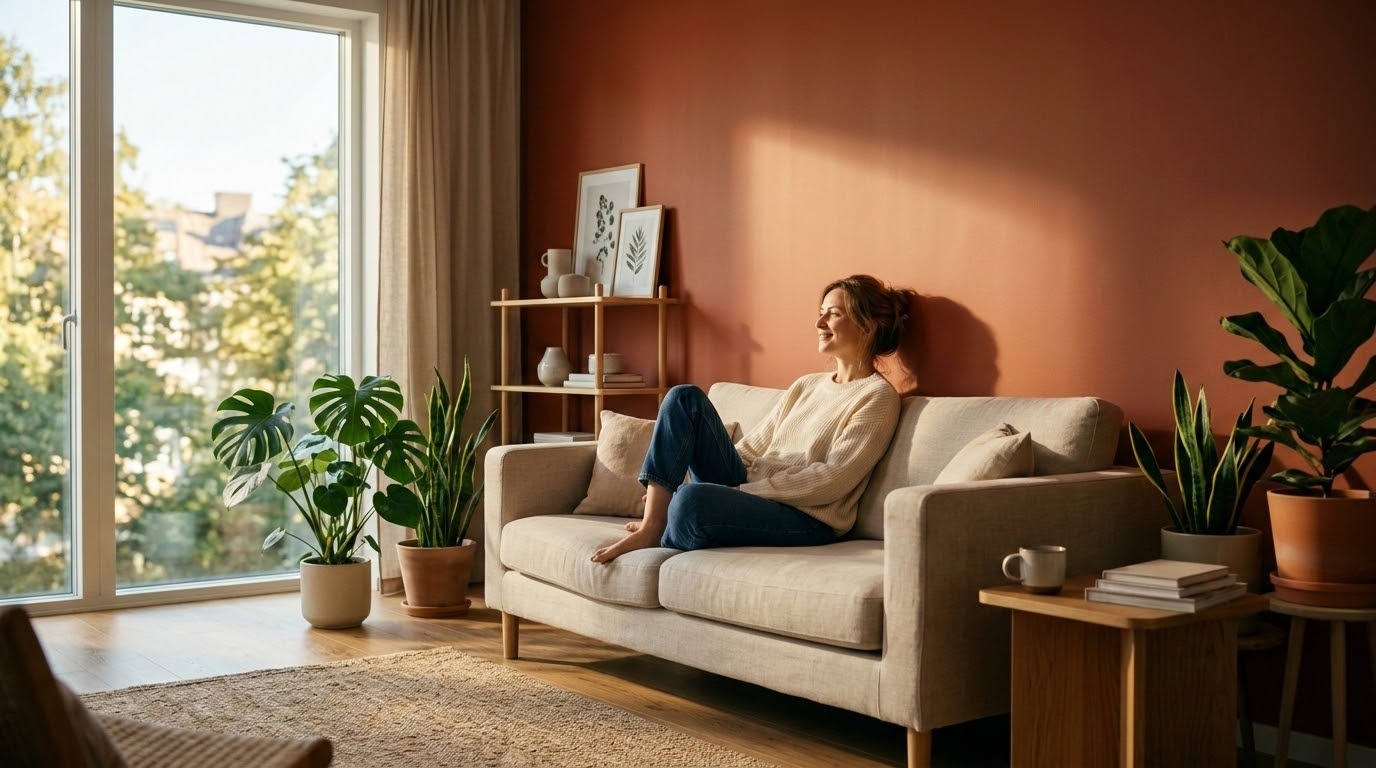
The living room focuses on aesthetics, combined with a calm distribution of light. For these rooms, we usually recommend an extra matt or matt paint. Due to the large surfaces and frequent incoming light along the walls, a matte finish offers the most uniform image. Because the living room is less intensively loaded than a kitchen or hallway, the highest scrubbing resistance class is not always necessary here; more important are a calm gloss level, good coverage, appropriate color and a finish that matches light and surfaces.
For kitchen and hallway
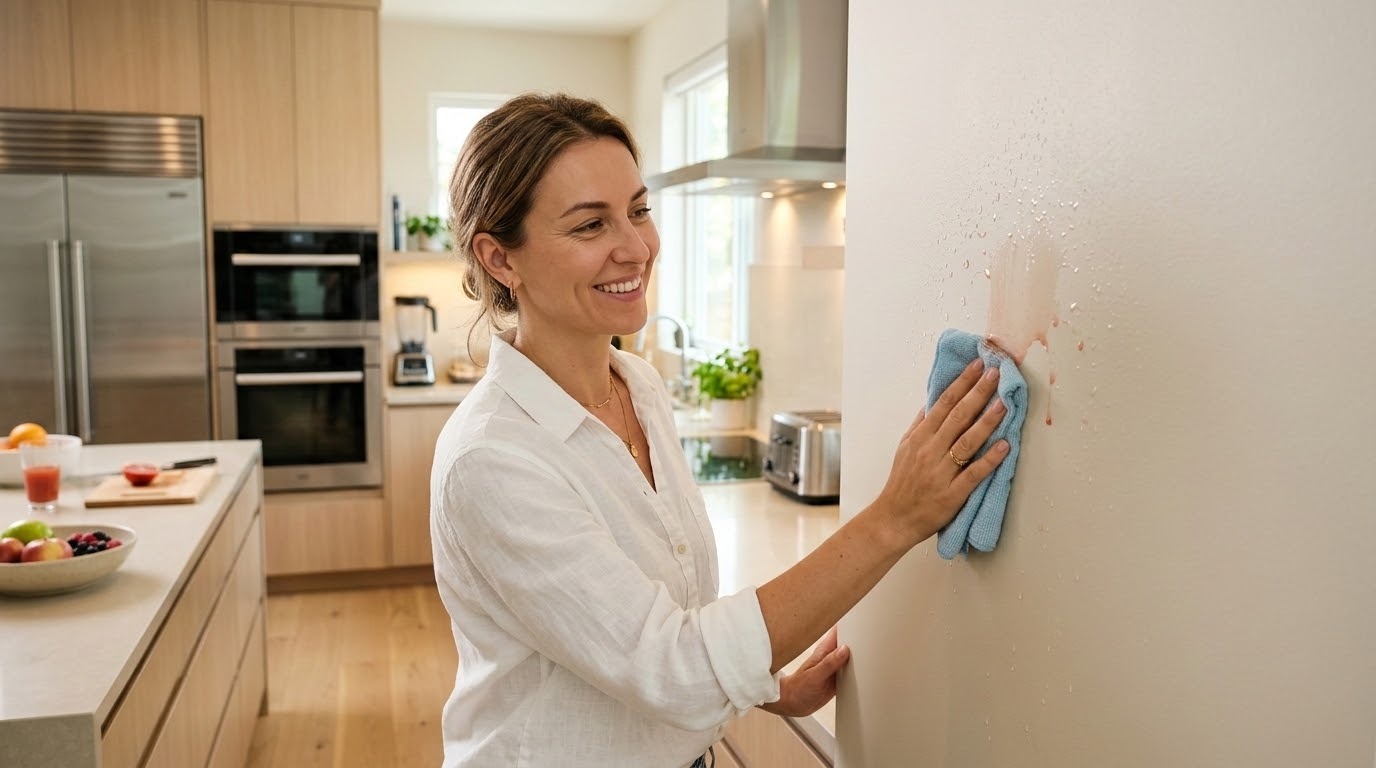
In areas where the walls are affected by splashes of grease, muddy coats or children's hands, cleanability is the most important technical requirement. Here, we opt for a satin gloss or a specialized cleanable matt paint (so-called “easy clean” coatings). These paints have a more closed surface structure, so that dirt and light moisture are less likely to soak into the paint layer and the surface is easier to clean. When choosing a hallway, it is also wise to look at the impact resistance of the paint to minimize damage caused by moving or cycling.
For the bathroom
When deciding which paint for the bathroom to choose, the focus should be on moisture regulation. A wrong choice here can lead to peeling paint, discoloration or mold, especially if there is insufficient ventilation or a damp surface. The aspect of moisture-resistant wall paint becomes the most concrete here: the system must be resistant to condensation, cleaning and light splash loads, but paint is only suitable in direct wet areas if the manufacturer explicitly releases the system to do so.
When applying in the bathroom, please note these steps:
- Ensure a dry, clean and load-bearing surface and check the permitted moisture percentage according to the technical data sheet for primer and paint.
- Apply a specific moisture-resistant primer that neutralizes suction.
- Use a paint that is declared suitable by the manufacturer for humid areas and pay attention to antifungal properties, cleanability and ventilation advice.
By taking these technical precautions, you create a hygienic environment that stands the test of time with flying colors. Choosing the right paint is a profession in itself, but with these technical insights, you lay the foundation for an appropriate and sustainable finish for the interior walls.

