
In the dynamic Dutch energy market, the transition to renewable energy sources has become a fundamental step for every modern household. Solar panels here form the backbone of an energy-efficient home, with the focus shifting from mere generation to integrated management of consumption and storage. At Bricknest, we understand that installing photovoltaic systems requires technical precision that goes beyond simply placing panels on a roof.
Our approach as an integrated contractor ensures that your energy project seamlessly matches the architectural condition of your home. Thanks to your personal project manager and the use of our digital client portal, you maintain full control over the technical specifications and progress throughout the entire process. With the security of the Bricknest Double Guarantee — 1 year warranty on execution and project insurance up to €500,000 — you invest in a solution that performs optimally for years, both technically and financially.
Why install solar panels
The decision to switch to solar energy is driven by a combination of economic logic and environmental responsibility. At a time when energy rates are fluctuating, your own generation system offers much-needed stability for a household's monthly expenses.
Saving on electricity costs
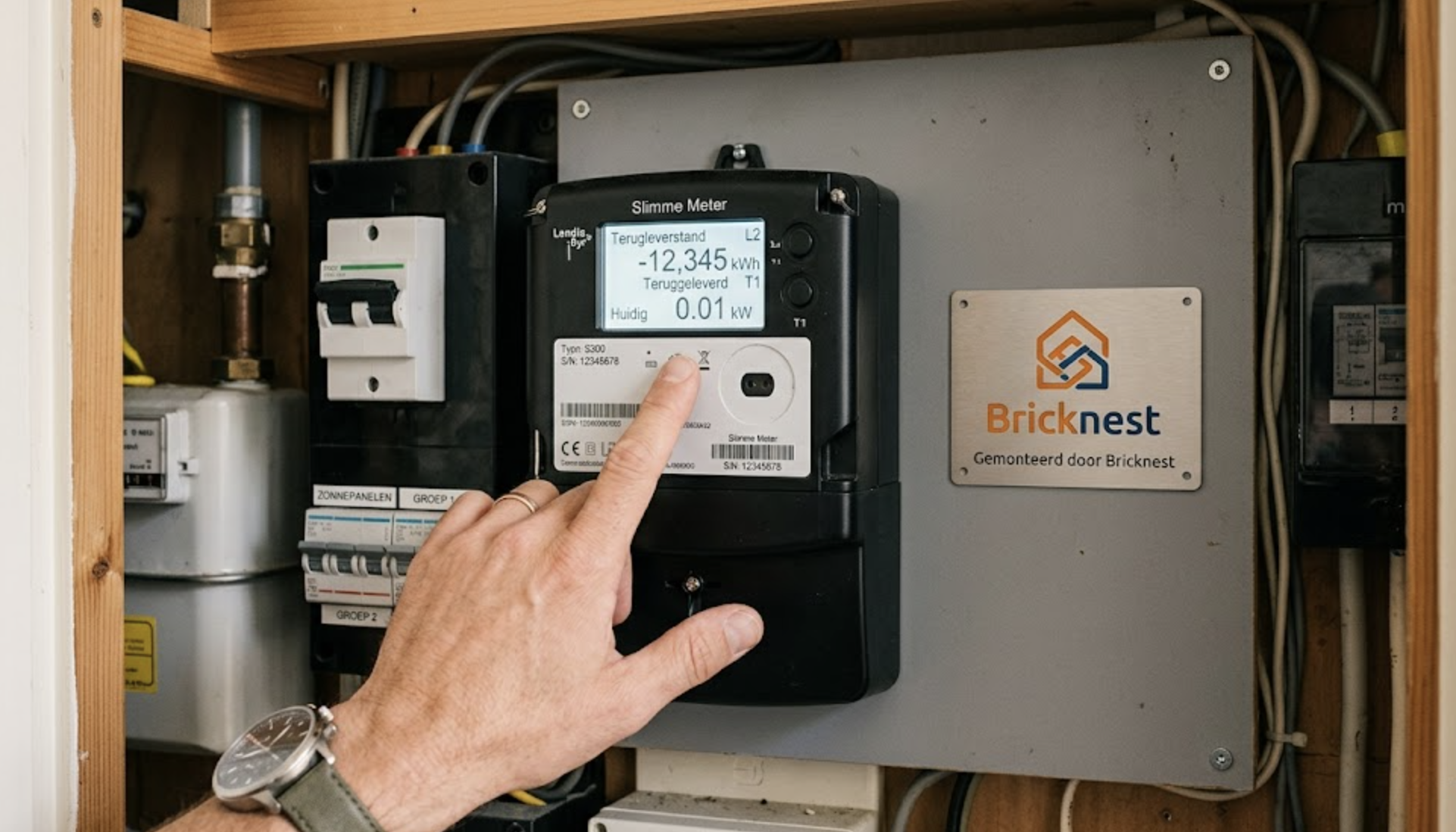
By making direct use of the power you generate, you significantly reduce your dependence on the public grid. Technically, you can maximize your efficiency by aligning your consumption patterns to the peak hours of the sun. In the Dutch context of 2026, where the netting scheme is subject to change, direct self-consumption will be the most critical factor for your financial savings.
Environmental friendliness
Reducing the environmental footprint is a technically measurable benefit of solar energy. By converting solar radiation directly into electricity without emissions, you contribute to making the built environment more sustainable. Bricknest often advises on the synergy between solar energy and high-quality [thermal insulation] (cite: 87-183), so that the generated energy is not lost via a defective shell.
Energy independence
The pursuit of autonomy is a growing trend among homeowners. An expertly dimensioned system enables you to be less sensitive to grid failures or price increases in the energy market. When combined with modern storage technologies, you create a robust energy system that is ready for the challenges of the future.
In practice, complete independence is rarely achievable without storage, but solar panels do increase control over their own energy consumption. Flexibility increases, especially when combined with a battery. Bricknest delves deeper into this in the articles advantages of solar panel battery integration and how solar panels work with home batteries.
Where can solar panels be installed
The location of the panels determines the yield and requires an architectural assessment of the supporting structure. At Bricknest, we often integrate solar energy into wider renovation projects, installing the panels in strategic locations to maintain aesthetics and functionality.
Garden shed with solar panels
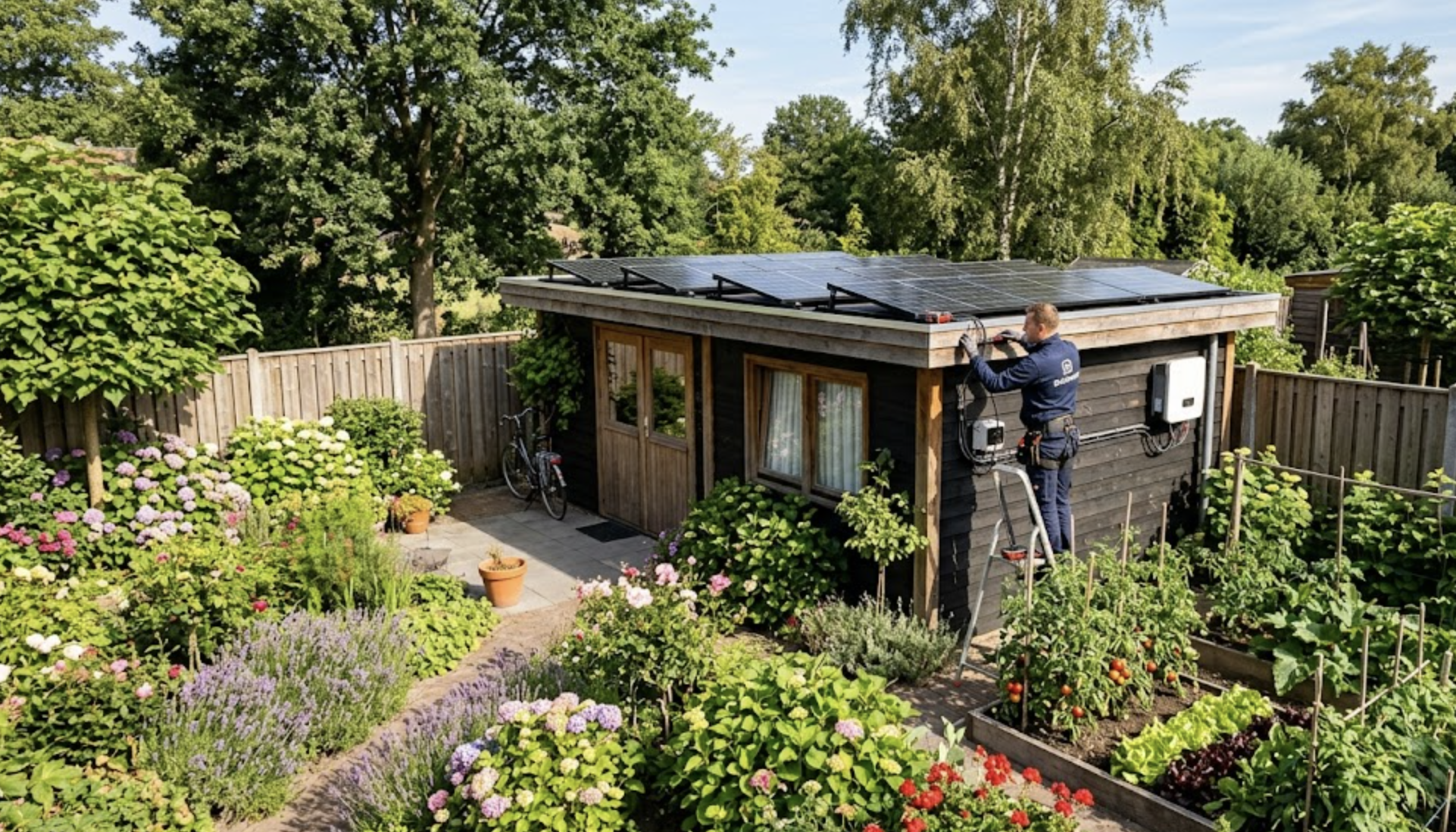
A garden shed with solar panels is an excellent solution when the main roof of the house does not offer enough space or has an unfavorable orientation. Technically, an annex offers an additional surface that is ideal for a separate group system. Here, we pay extra attention to the cabling to the home to minimize voltage loss over the distance.
Solar panels, dormer window
Installing solar panels and dormer windows requires specific expertise due to the limited space and the wind load on the raised structure. Because dormers often have a flat roof, we use ballast systems or specific mounting supports that do not jeopardize the watertightness of the roof covering.
Solar panel on the dormer window
When we install an individual solar panel on a dormer window, we look closely at the shading of the surrounding roof surfaces. A technical advantage of mounting on a dormer window is that it often has less shade from surrounding trees or buildings, which improves the efficiency of the entire string.
Roof superstructure, solar panels
Integrating solar panels into an integral roof structure is the most efficient way of making it more sustainable. When Bricknest builds a new floor on an existing home, we can immediately prepare the roof structure for the additional load of solar panels. This prevents you from having to make adjustments to a newly installed roof later and guarantees a seamless thermal and energetic connection.
Solar panels with battery
The integration of storage capacity is the next step in the evolution of the private energy supply. Without a battery, much of the power generated goes back to the grid during the day, while you have to buy expensive power in the evening.
To fully understand this process, it's essential to know how solar panels work with home batteries. Intelligent control by a hybrid inverter ensures that the battery is first charged before the power flows to the grid. The benefits of solar panel-battery integration are immediately noticeable in increasing your self-consumption from an average of 30% to as much as 70% or more.
Solar panel with battery
A solar panel with a battery system allows you to buffer the solar energy generated during the day for later use. Technically, we use lithium iron phosphate (LiFePO4) technology because of its high safety and the large number of charging cycles. This system is fully dimensioned by Bricknest based on your peak consumption.
Home battery solar panels
Home battery solar panels are not only about storage capacity, but also about compatibility between the inverter, control system and grid connection. A good system must load and unload at the right time, without unnecessary losses or oversizing.
Important technical issues include:
- usable storage capacity instead of nominal capacity alone;
- inverter compatibility;
- load and discharge capacity;
- available space and ventilation.
That's why it's wise to also check out the Bricknest guide ultimate guide to home batteries and energy storage to be included in the system selection.
Solar panels with home battery
Solar panel systems with a home battery are the standard for homes that strive for an energy-neutral existence. These integral systems can also be set to charge during hours with negative energy prices, providing an additional economic advantage for the owner.
Features of the installation
The quality of the installation largely determines the efficiency and lifespan of the system. A strong panel on a poorly prepared roof will never perform optimally.
Roof requirements. The roof must have sufficient load-bearing capacity and be in good structural condition. For older roofs, inspection of roofing, battens and substructures is essential before installation.
Angle of inclination and orientation. The yield depends strongly on the direction of the roof surface and the angle of inclination. South is often beneficial, but east-west settings can be technically more interesting when consumption is spread over the day.
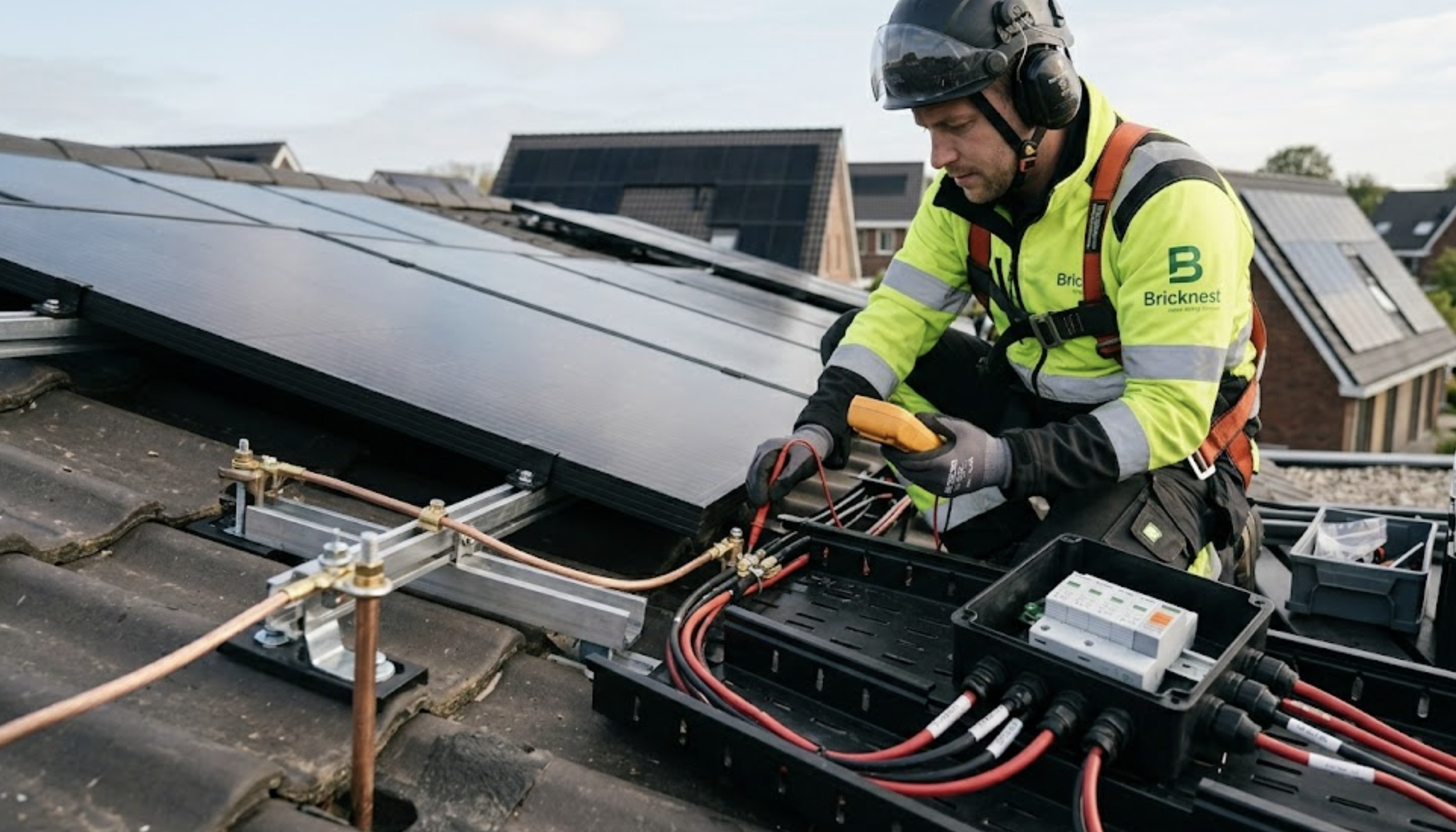
Safety and connection. A correct installation requires safe DC cabling, solid mounting points, surge protection and a well-tuned connection to the meter cabinet. Especially when expanding or storing batteries, the grid connection must also be taken into account.
Costs and payback period
The economic analysis of a solar system must be viewed over the entire technical lifetime, usually 25 years. Bricknest offers full transparency in the cost structure via your personal digital dashboard.
The investment costs are determined by a number of technical and logistical variables that we specify in each offer:
- The total peak power of the panels and the efficiency of the chosen cells (e.g. N-type monocrystalline).
- The type of inverter (string inverter, microinverters or power optimizers) based on shadow analysis.
- The complexity of the mounting system, especially with a solar panel on a dormer window or flat roofs.
- The integration of storage capacity and the necessary adjustments into the group cabinet.
- The costs for certified installation and the necessary structural adjustments to the roof.
In the current market, the average payback period for a complete system is between 6 and 9 years, depending on your consumption profile and current energy prices. Given the long warranty period on revenue, the system only provides profit for your household after the payback period.
How to choose a system
Choosing the right system is a process where we fully guide you as a technical advisor. An undersized system provides too little, while an overdimensioned system has an unnecessarily long payback period.
When determining the configuration, we use the following criteria:
- Energy consumption: We analyse your historical data via the smart meter to determine the ideal power.
- Budget: We offer various scenarios in your digital client portal, ranging from basic setups to high-end systems with maximum guarantees.
- Scalability: We design the installation so that an additional home battery, solar panels or charging stations can easily be added in the future without having to replace the entire infrastructure.
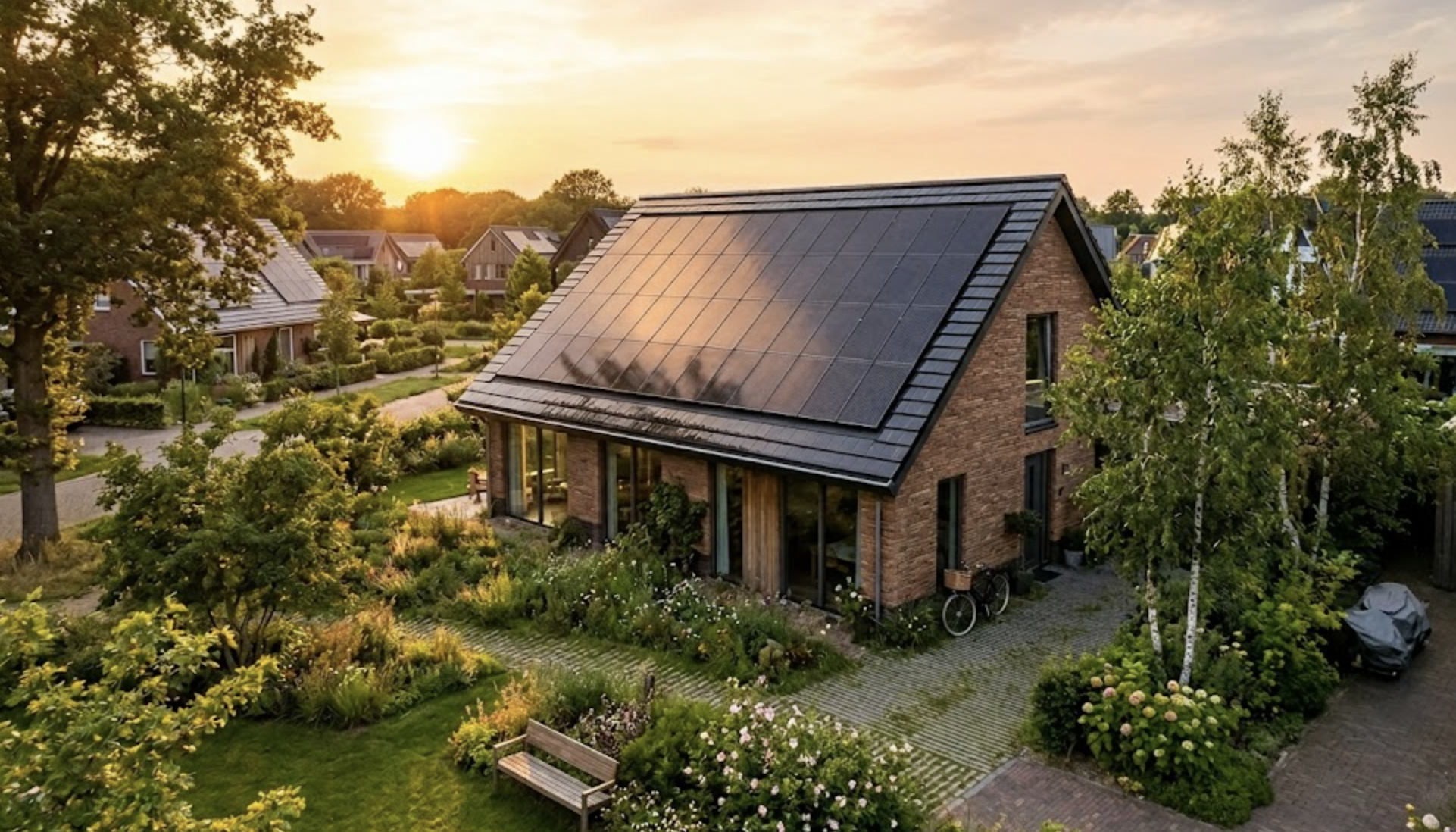
- Aesthetics: Especially with visible roof surfaces, we recommend 'all-black' panels that blend seamlessly into the architecture of the home.
With Bricknest, you choose a partner that takes full technical responsibility for your transition to solar energy. Our integrated approach ensures that quality remains guaranteed in every phase, from the initial calculation to the final technical inspection.
Are you ready to transform your home into a sustainable power plant? Contact Bricknest and find out how your personal project manager can guide you to a profitable and green result.

