
In the Dutch climate, characterized by volatility, strong gusts from the North Sea, and frequent precipitation, roof integrity is one of the most critical aspects of property maintenance. Technically, a roof is a complex system that not only protects against water but also plays a crucial role in a building's thermal management and structural stability. In 2026, we see the focus of roofing work shifting increasingly toward sustainability and high-end technical specifications. At Bricknest, we understand that a roof repair goes beyond simply replacing a tile; it is an investment in the longevity and market value of your home.
Roof repair and roofing services
Roof repair encompasses a wide range of technical interventions, from fixing minor damage to complex structural adjustments. In the Netherlands, there is a great diversity of roof types and materials, which requires specific craftsmanship for every individual situation. Whether it concerns a historic building with ceramic tiles or a modern commercial property with a bituminous flat roof, the technical approach must always be based on a thorough analysis of the current state of the roof structure.
Types of roofing work
Roofing work refers to all activities related to the construction, maintenance, and repair of the roof structure and roofing material. This ranges from replacing lead flashing and valley gutters to completely renewing the roof boarding. Installing skylights, dormers, and integrating solar panels into the roofing also fall under this category, with the watertightness of the connections posing the greatest technical challenge.
Characteristics of roof repair in the Netherlands
Dutch building standards are strict, especially regarding wind load and water resistance. A specific characteristic is the need for a high degree of ventilation under the roofing to prevent condensation in the insulation layer. Furthermore, the Environment and Planning Act (Omgevingswet) has been in effect since 2024 and continues to form the legal framework for many construction and renovation activities in 2026. For roofing work, regulations concerning permits, building aesthetics, heritage protection, and energy performance are particularly relevant.
When is a roof repair necessary
Recognizing defects in time can prevent large-scale damage to the interior. Technical indicators for necessary repairs include porous roof tiles, cracking in bituminous layers, or visible signs of wood rot in the purlins. A sudden increase in heating costs can also indicate a compromised insulation layer caused by an invisible defect in the water-resistant membrane.
Roof repair costs
The financial aspects of roof maintenance are determined by a combination of material costs, labor intensity, and the complexity of accessibility. It is essential to have a transparent understanding of the price structure to make an informed decision. In the current market, roof repair costs are subject to fluctuations in raw material prices, making a detailed quote necessary.
What determines the price of a repair
The final investment is influenced by various technical and logistical variables.
- The type of roofing (EPDM is often more expensive to purchase but lasts longer than bitumen).
- The pitch of the roof (steep roofs require more safety measures).
- The condition of the underlying structure (if the battens are rotten, costs increase significantly).
- Accessibility for equipment such as cranes or aerial work platforms.
Average price for a roof repair
For minor interventions, such as replacing a few roof tiles or repairing a small crack in a flat roof, one should account for a starting price between €150 and €350. However, for more structural problems requiring specialized equipment or multiple professionals, these amounts rise quickly. It is technically unwise to select based solely on the lowest price, as the quality of the seal determines future damage costs.
Cost of a repair per m²
Larger projects are often charged at a unit price. The cost of roof renovation per m2 varies on average from €75 for a simple tiled roof to €200 or more for complex roofs with high-quality insulation and specific materials such as natural stone slate. This price per square meter includes the removal of old materials and the installation of new systems in accordance with current NEN standards.
Additional costs (scaffolding, disposal, diagnostics)
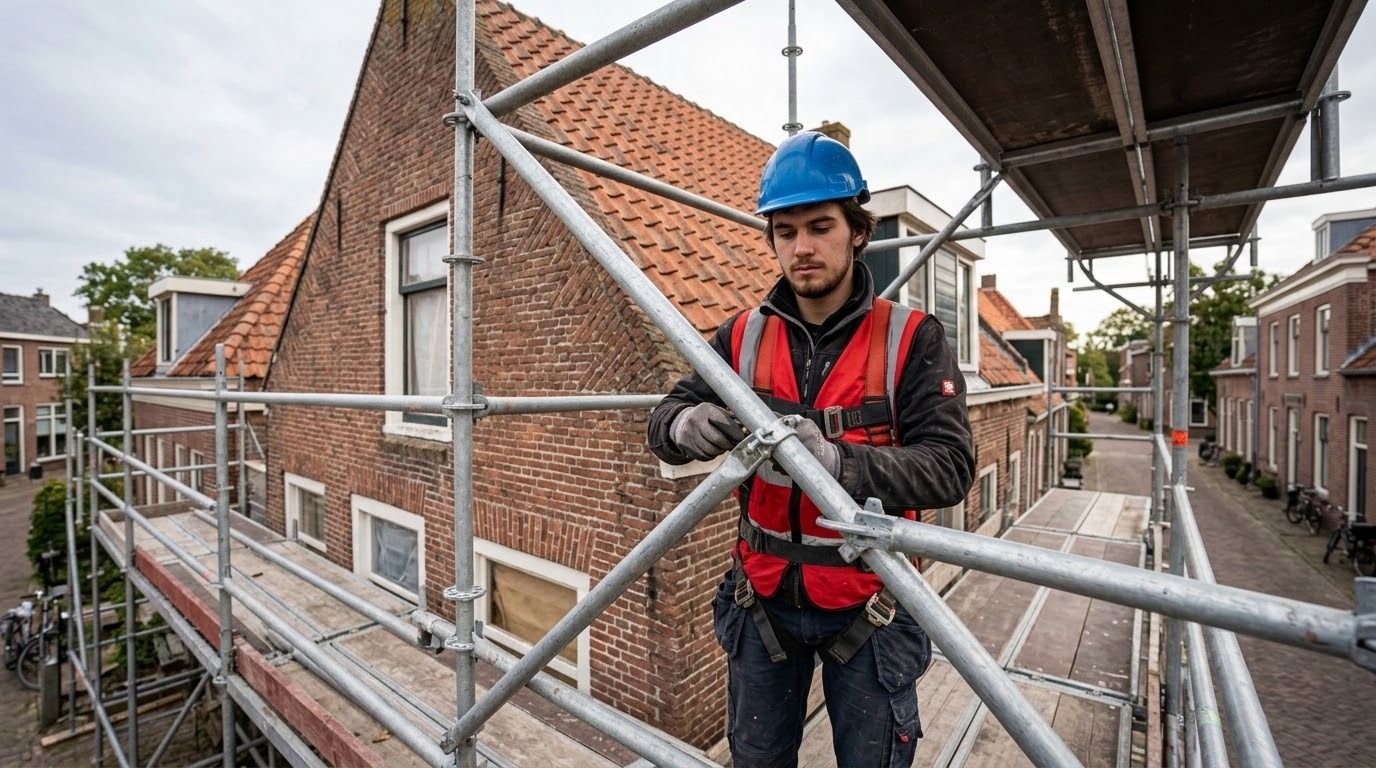
In addition to direct repair work, there are often necessary peripheral costs. Renting and erecting a safe scaffolding structure can, depending on the height of the building, add significantly to the total bill. Environmentally friendly disposal and processing of old materials (such as asbestos-containing elements or contaminated bitumen) and initial leak detection via thermography or smoke testing are also items that must be included in the budget.
How to reduce repair costs
Cost savings can be achieved through preventive maintenance and by combining tasks. In the Netherlands, a reduced VAT rate of 9% may apply to labor costs for insulating homes older than two years. This rate applies to the installation of insulation material and does not automatically apply to all components of a roof repair. Furthermore, addressing a small defect in a timely manner prevents the need for a complete, costly reconstruction in the near future.
Repairing roof leaks
A leak is a technical emergency that requires immediate action. The destructive power of water can quickly destroy insulation, cause short circuits in the electrical system, and undermine the structural integrity of wooden joists through mold and rot.
Causes of leaks
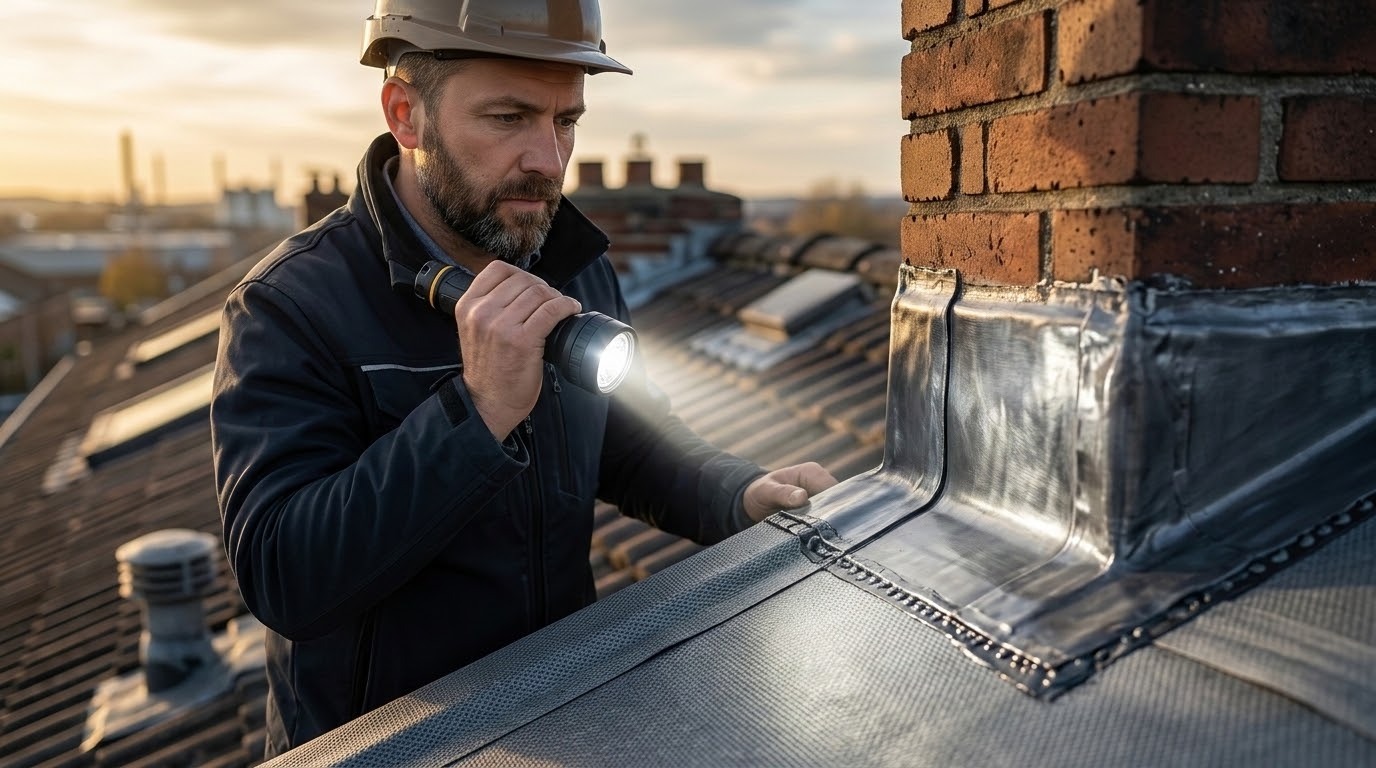
Most leaks in the Netherlands are caused by deferred maintenance on edge finishes. Wear and tear on lead flashing around the chimney, clogged drains due to leaves and moss growth, or mechanical damage from extreme weather conditions are common sources. On flat roofs, the seam of the roofing material is often the weakest point, where thermal movement (contraction and expansion) can cause gaps to form.
Finding the source of a leak
Locating a leak is often more complex than it seems, because the point where water enters the interior is rarely the same as the point where the leak is located in the outer layer. Advanced techniques such as endoscopy, ultrasonic measurements, or dye testing are used to map the exact path of the water under the roofing without the need for destructive testing.
Emergency leak repair
In the event of an active leak, a temporary emergency seal is crucial to limit further consequential damage. The cost of emergency roof leak repairs is generally higher due to the immediate availability of personnel, but this investment pays for itself by preventing damage to the interior and the building structure. However, a permanent solution must always be planned after the emergency repair.
Sealing and waterproofing
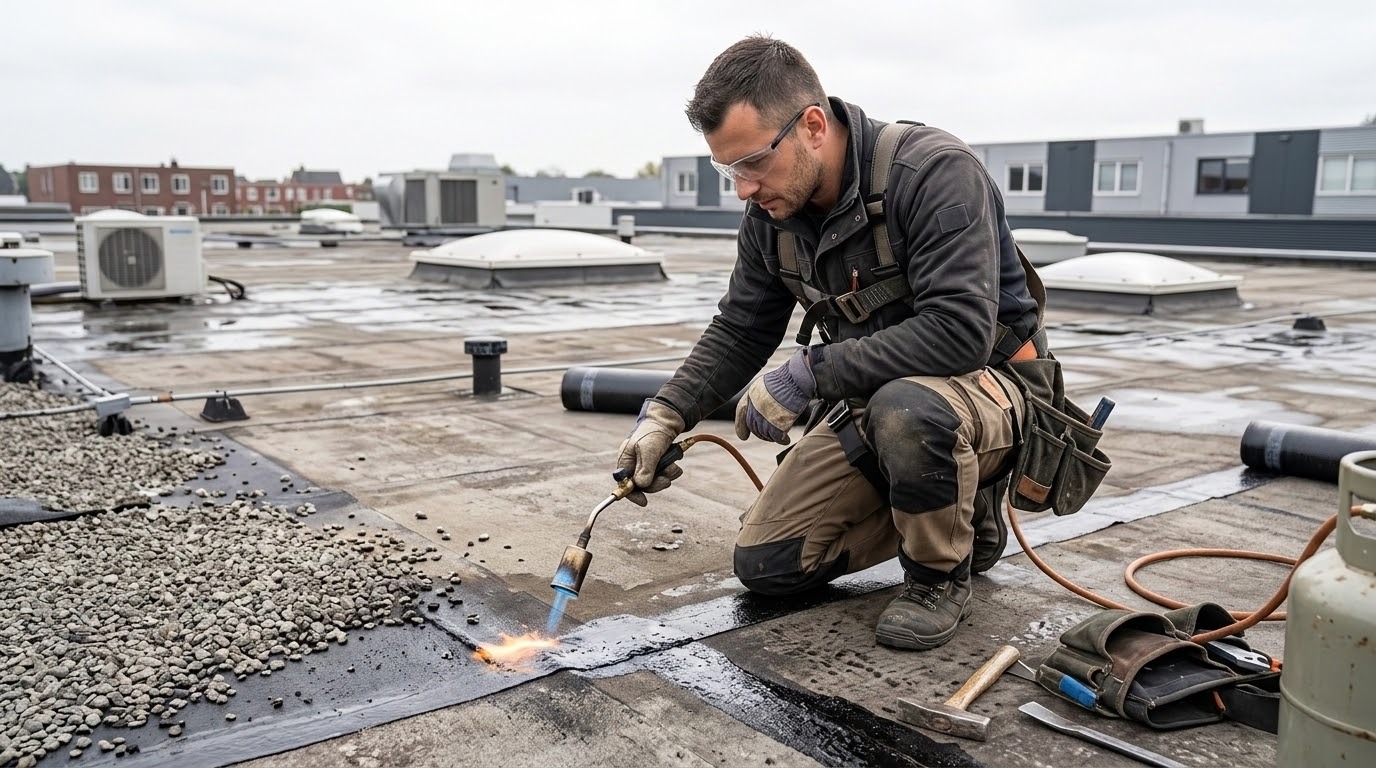
The definitive solution for a leak consists of restoring the waterproof barrier. This is often done by replacing the affected section and re-vulcanizing (for EPDM) or torching (for bitumen) the seams. For tiled roofs, it is checked whether the underlying membrane is still intact, as this acts as the secondary water barrier.
Preventing recurring leaks
To prevent recurrence, the surrounding parts of the roof must also be critically assessed. Cleaning the gutters and removing algae and moss is essential, as this vegetation retains water and blocks drainage. An integral inspection of all critical connections (roof windows, ventilation pipes) after a repair is a standard part of a high-quality restoration process.
Complete roof reconstruction
Sometimes the technical condition of a roof has deteriorated to the point where repair is no longer cost-effective or safe. A full reconstruction offers the opportunity to bring the home up to 2026 technical standards, including optimal insulation and a modern look. The cost of a full roof replacement is high, but it ensures a worry-free period of 30 to 50 years.
When is a full roof replacement necessary
Replacement is necessary when more than 25% of the roofing shows defects or when the underlying wooden structure is sagging or shows signs of large-scale rot. When making older homes asbestos-free, an integral replacement is also often chosen to immediately increase the insulation value (Rc-value) in accordance with the Building Environment Decree (Bbl).
Phases of roof reconstruction
Reconstruction is a structured process that begins with complete dismantling.
- Inspection of the load-bearing walls and foundation for the additional load.
- Removal of the old roofing and any asbestos.
- Repair or reinforcement of the purlins and rafters.
- Installation of the vapor barrier and high-quality insulation boards.
- Installation of the new roofing and edge finishes (gutters, fascia boards).
Replacing the roofing
When choosing new roofing, we look at lifespan and aesthetic integration. Modern concrete tiles with a dirt-repellent coating or ceramic tiles with a glaze layer are popular for pitched roofs. For flat roofs, EPDM is often chosen in 2026 because of its elasticity, long lifespan, and low maintenance requirements. However, bitumen, PVC, and other roofing membranes remain relevant, depending on the existing roof structure, detailing, budget, and the building's intended use.
Reinforcing the roof structure
With the increasing installation of heavy solar panel systems and heat pumps on roofs, the structure often needs to be mechanically reinforced. This is done by placing additional rafters or strengthening existing beams with steel profiles to prevent sagging under permanent loads and snow loads.
Insulation and energy efficiency
A full renovation is the ideal time to meet BENG requirements (Nearly Energy-Neutral Buildings). By choosing high-quality PIR or resol insulation boards with a high Rd-value, the thermal resistance of the building envelope is maximized, which directly results in a more favorable energy label for the home.
Roof types and repair characteristics
The technical approach to a repair fundamentally depends on the geometry and materials of the roof. Each type of roofing has its own specific degradation pattern and repair method.
Repairing a pitched roof
With pitched roofs, everything revolves around overlap and mechanical fastening. Wind pressure and suction at great heights require that corner tiles and ridge tiles are securely anchored. During repairs, the batten structure is often checked, as it can be invisibly damaged by leaking water.
Flat roof repair
Flat roofs are prone to standing water and UV radiation. Repairs focus on surface homogeneity. In 2026, liquid plastic coatings are frequently used to seamlessly seal complex details around drains and roof penetrations.
Tiled roof repair
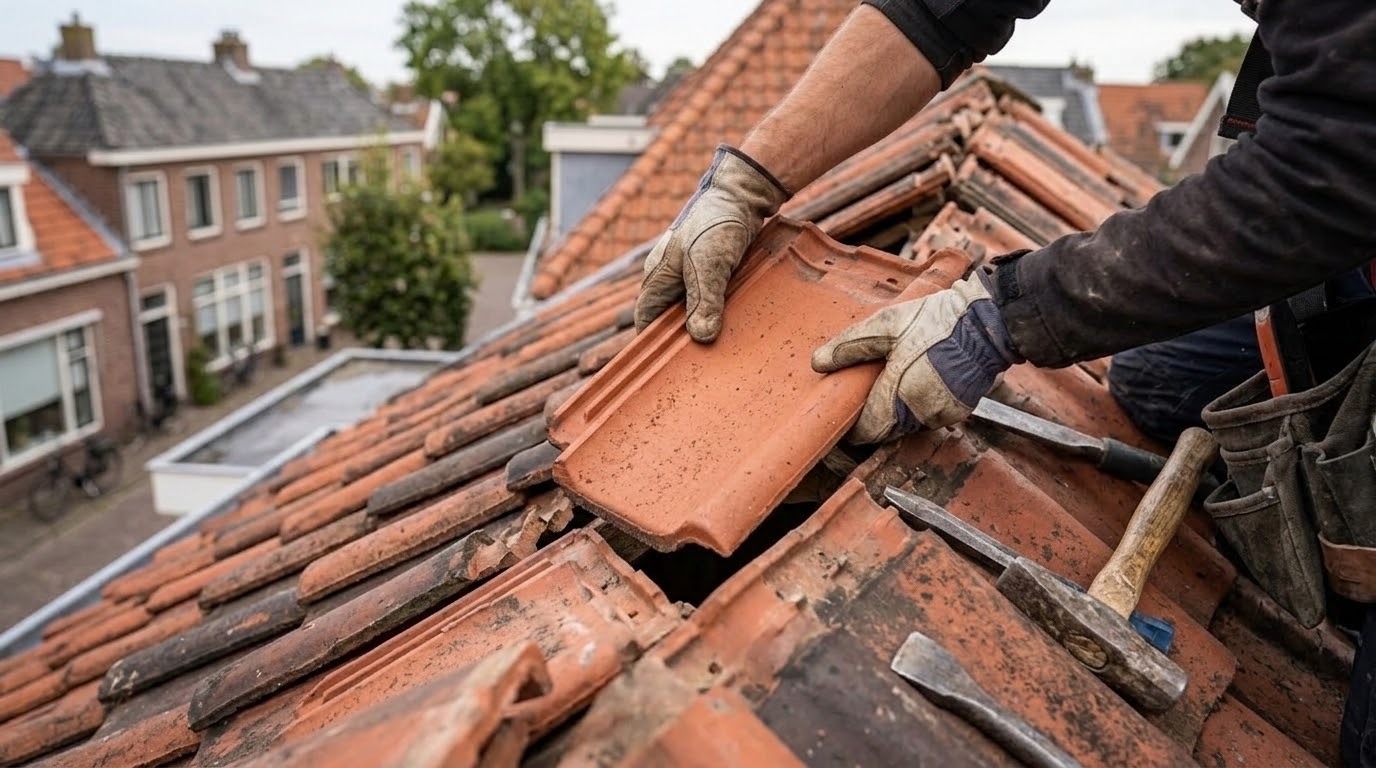
For tiled roofs, the most common repair is replacing broken or flaking tiles. Re-securing ridge tiles using modern plastic ridge fillers (instead of outdated cement mortar) is also a standard technical procedure that improves ventilation and prevents cracking.
Bituminous roofing repair
Bitumen roofs are repaired by applying a new top layer or by patching localized damage. It is essential that the bond with the old layer is optimal; for this, the substrate must be dry, clean, and often primed.
EPDM and PVC coating repair
EPDM is repaired using cold-bonding techniques or self-adhesive flashing materials. PVC roofs are repaired using hot-air welders, where the new patch is literally fused to the old layer. This requires great precision to reach the optimal temperature for molecular bonding without burning the material.
Roof maintenance and prevention
Prevention is always technically and financially better than cure. Deferred maintenance can affect insurance coverage. In the event of damage, many insurers assess whether the roof has been demonstrably well-maintained and whether the damage is not the result of long-term neglect.
Regular roof inspection
An annual inspection, preferably after the autumn storms, is essential. This involves checking for loose parts, the condition of the chimney pointing, and the general state of the roofing. Small cracks can be easily sealed at this stage before they cause a leak.
Cleaning gutters and drains
Water retention on the roof is one of the primary causes of premature aging.
- Removing leaves and branches from the gutters.
- Checking the leaf guards at the downspout.
- Cleaning the gravel layer on flat roofs to ensure proper drainage.
- Removing moss and algae that obstruct water runoff on tiles.
Seasonal maintenance
In winter, the roof must be kept free of extreme snow accumulation near dormers (ice damming), while in summer, the heat load on bituminous roofs must be monitored. Seasonal maintenance ensures that the roof is always prepared for the most extreme weather conditions of the season.
Extending roof lifespan
By applying protective coatings and replacing the weakest components (such as zinc work) in a timely manner, the lifespan of a roof can be extended by as much as 10 to 15 years. This postpones the major investment of a full replacement and ensures a consistent technical condition.
Insulation and energy efficiency (focus)
In 2026, roof insulation is no longer a luxury, but a necessity to meet Dutch energy standards and keep rising heating costs manageable. The government incentivizes "roof insulation during repairs" through attractive schemes.
Roof insulation during repairs
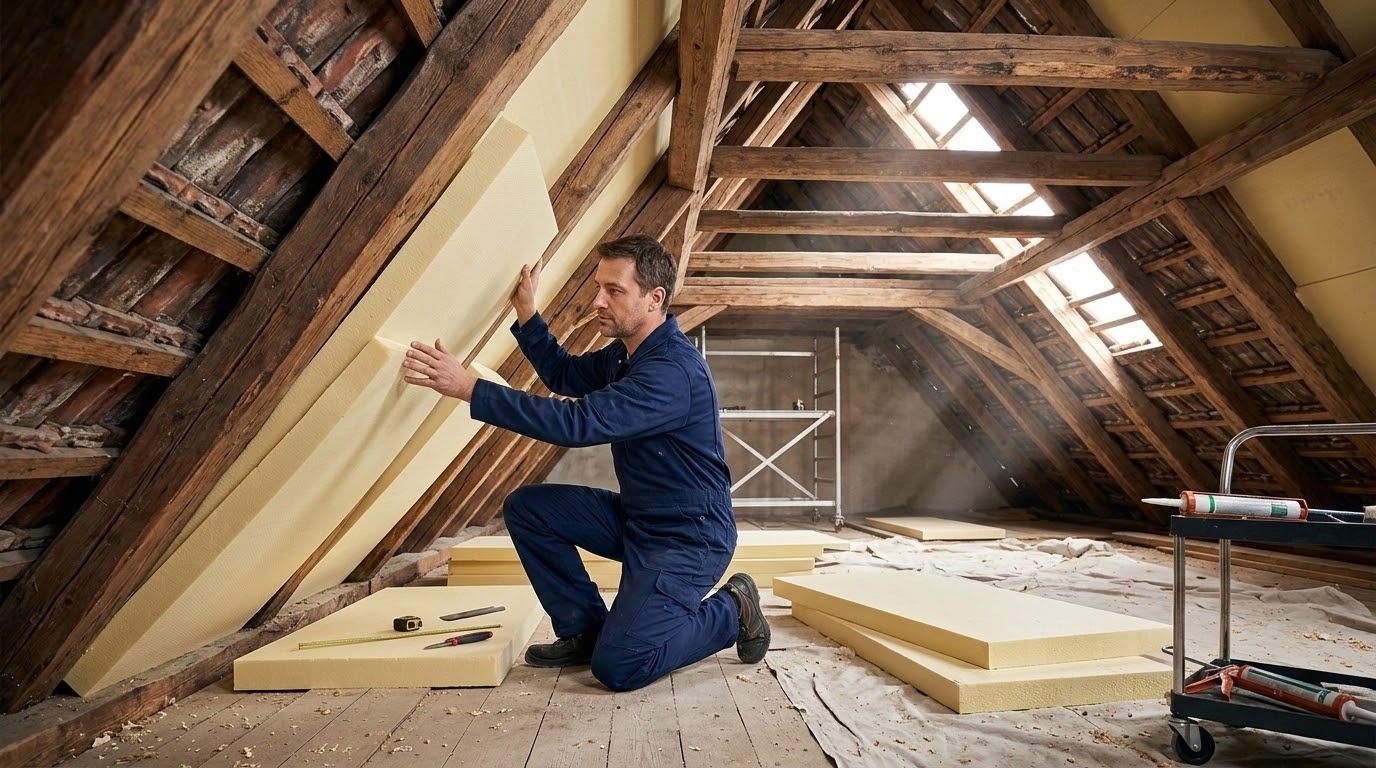
When roofing is removed for repairs, it is the most cost-effective time to install insulation. You can opt for the "warm roof" method, where the insulation is placed on the load-bearing structure; this is technically superior because it keeps the entire structure within the thermal envelope.
Reducing heat loss
Because warm air rises, up to 30% of heat is lost through an uninsulated roof. By installing vapor-barrier foils and high-quality insulation materials, airtightness is improved and convection is stopped, which immediately results in higher thermal comfort.
Compliance with Dutch standards
Projects in 2026 must comply with the Building Decree for the Living Environment (Bbl). When renewing or replacing insulation layers, a minimum threshold of Rc = 2.1 m²K/W applies to roofs in existing buildings. Higher values, such as Rc 6.3 m²K/W, may be technically desirable and align better with new-build standards, but are not automatically mandatory for every roof renovation.
Savings on heating costs
A well-insulated and repaired roof significantly lowers a home's energy demand. In the Dutch context, such an investment often pays for itself within 7 to 10 years, purely through savings on gas bills or the electricity consumption of a heat pump.
Permits and standards in the Netherlands
Building and renovating in the Netherlands is subject to the Environment and Planning Act (Omgevingswet). Although many roof repairs are permit-free, there are important exceptions where prior consultation with the municipality is necessary.
Are permits required for roof repairs
For regular maintenance where the appearance and volume of the roof do not change, a permit is usually not required. When installing a dormer window, especially on the street side or in a protected area, an environmental permit is often needed. The exact permit requirement must be checked in advance via the Omgevingsloket, as municipal rules and the location of the property also play a role.
Building regulations and requirements
All work must comply with the technical requirements of the Bbl. This includes rules regarding the fire safety of the materials used (fire class), structural safety, and requirements for waterproofing and ventilation.
Work on historic buildings
Very specific rules apply to national or municipal monuments. The historical value of the roof, such as the color of the tiles or specific lead and zinc details, must be preserved. For national and municipal monuments, a permit is often required for roof work, especially when the work affects historical materials, color schemes, roof shape, or detailing. Therefore, you must always check in advance which heritage rules apply to the property.
Safety requirements
Working at heights involves risks. In the Netherlands, strict occupational health and safety regulations apply to working at heights. From 2.5 meters upwards, appropriate measures against fall hazards are required, such as edge protection, scaffolding, an aerial work platform, or personal fall protection. Even at lower heights, additional measures may be mandatory if the work situation presents specific risks. A professional company will never compromise on these safety standards, which protects the homeowner from legal liability in the event of accidents.
Choosing a contractor
The quality of your roof depends entirely on the expertise of the party performing the work. Selecting a reliable roofing company requires more than just comparing prices; it is about trust and proven technical knowledge. The price for roof repairs should be proportional to the guarantees offered and the materials used.
How to choose a roofing company
Look for certifications such as Dakmerk or VCA. A good contractor will always visit the site for a physical inspection before preparing a quote. Ask for references from similar projects in the area. At Bricknest, we advise clients to always ask about the method used for connecting critical details, as this reveals the professional level of the tradesperson.

What to look for in the contract
A professional contract includes a clear description of the work, the materials used (including thicknesses and brands), the start and end dates, and the payment terms. Ensure there are no hidden costs and that responsibility for waste disposal is explicitly stated.
Work guarantees
A standard warranty on roofing work in the Netherlands is usually 10 years for watertightness. Check whether the warranty covers material costs as well as labor. Some manufacturers offer system warranties that provide extra security, provided the installation is carried out by a certified partner.
Verifying registration, certifications, and experience
Check whether the company is registered with the Chamber of Commerce, has appropriate business liability insurance, and has demonstrable experience with the specific roof type. Certifications such as VCA or relevant quality marks can provide extra assurance, but should always be assessed in combination with references and completed projects.
Timelines for project execution
Roof repairs must be carried out efficiently to keep the period of exposure to the elements as short as possible. Planning is therefore an essential part of technical management.
How long does a roof repair take
A minor leak repair is often completed within a few hours to half a day. A full renovation of an average residential home typically takes 3 to 5 working days, depending on the complexity and the condition of the underlying structure.
Influence of weather on timelines
The Dutch weather is the biggest variable. During persistent rain or wind speeds of force 5 or higher, many roofing tasks cannot be performed safely or technically correctly (such as torching bitumen). A good contractor builds a margin into the schedule for weather conditions and communicates this transparently.
Emergency work and planned projects
After a storm, the demand for roofers is enormous. Those who plan work outside of peak storm periods often get a more realistic view of the price for roof repairs and have a wider choice of available contractors. Emergency jobs are often squeezed in between, but can end up being more expensive.

Warranties and liability
The legal framework surrounding roofing work protects consumers against poor performance and hidden defects. For construction and renovation projects, the Quality Assurance for Building Act (Wkb) may also be relevant. Its application depends on the type of structure and the nature of the work. For private clients, it therefore remains important to record agreements regarding quality, completion, defect rectification, and liability in writing.
Warranty on roofing work
The warranty period must be confirmed in writing. It typically covers defects resulting from workmanship errors or inferior materials. It is important to note that regular maintenance is often a condition for maintaining warranty claims.
Contractor liability
The contractor is responsible for damage that occurs during execution (such as a leak caused by an inadequately covered roof during construction). A solid business liability insurance policy is therefore a strict requirement for any roofing company that wishes to be taken seriously.
What to do if defects occur after repair
Should you discover a defect after the repair, report it immediately to the contractor in writing. Under Dutch law, the contractor has the right to rectify the defect within a reasonable period. A clear written notification, a deadline for repairs, and a well-documented completion process reduce the risk of disputes. With roofing work, it is especially important that the cause, repair method, materials used, and warranty conditions are recorded in a verifiable manner.

