
PVC, laminate, or parquet? Compare costs, lifespan, moisture resistance, underfloor heating, and maintenance, and make an informed flooring choice for your renovation.
A new floor largely determines how a home feels and how practical it is in daily use. Anyone planning a renovation often ends up considering one of these three options: a PVC floor, a laminate floor, or a parquet floor. While they may look very similar in photos, they differ significantly in construction, feel, maintenance, and how they react to moisture.
In this article, we compare the three materials side by side. You will read about the strengths and limitations of each material, as well as the questions you should ask yourself before making a choice. We intentionally avoid mentioning specific prices per m²: these depend heavily on the quality, the product, and the condition of the subfloor.
What is the difference between PVC, laminate, and parquet?
The three types of flooring are often mentioned in the same breath, but they are fundamentally different products. The main difference lies in the material of the core and the top layer. This leads to almost all other differences: how the floor sounds, how it reacts to water, and whether it can be refurbished later.
Key characteristics of the materials
- PVC: a synthetic floor made up of multiple layers. On top is a decorative layer with a transparent wear layer. PVC is available as a click floor and as a glue-down floor. The material feels relatively soft and warm.
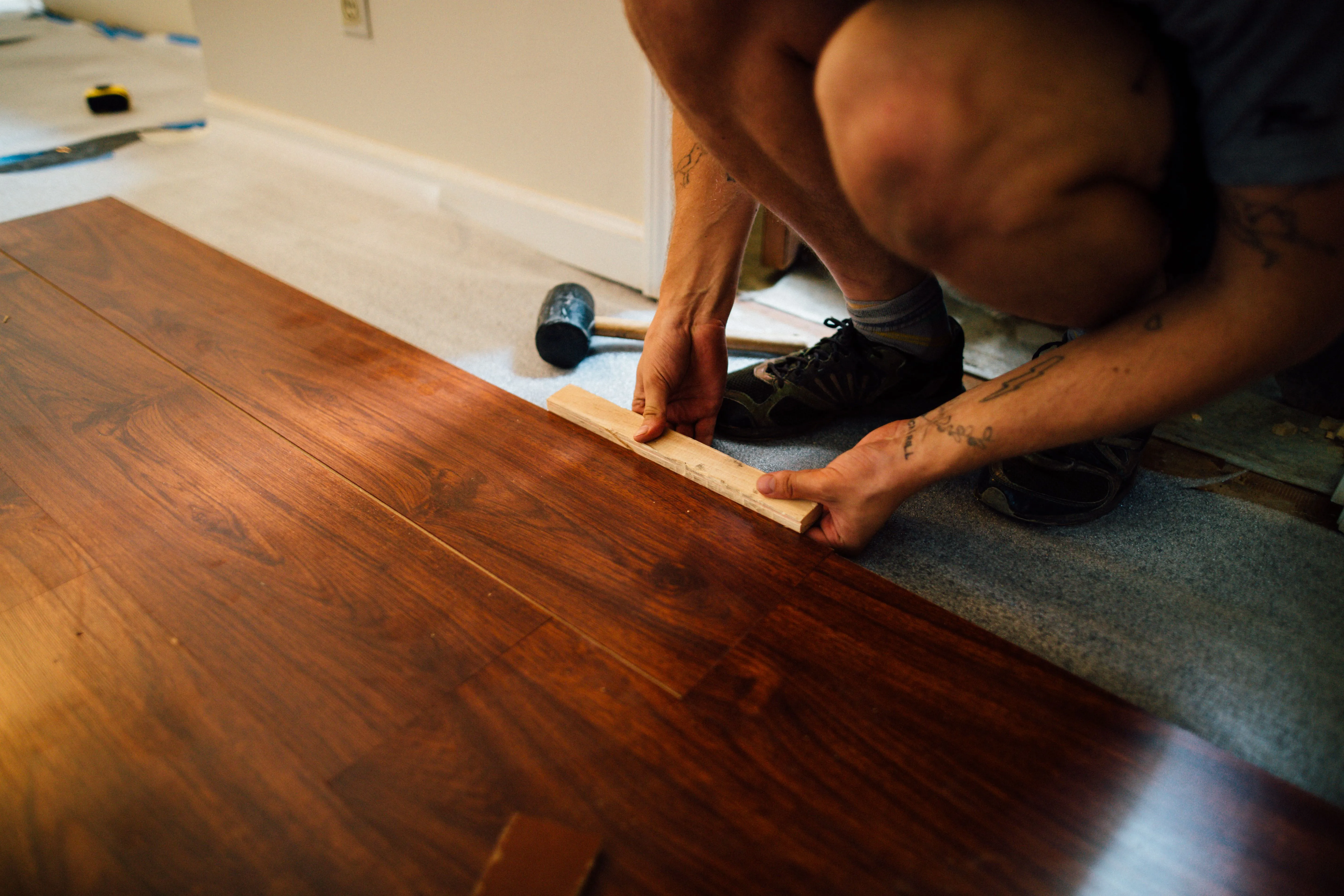
- Laminate: a plank with a fiberboard core (usually HDF), finished with a printed decorative layer under a hard, transparent protective layer. Laminate is usually installed as a floating floor using a click system on an underlay.
- Parquet: a floor with a top layer of real wood. Solid parquet consists entirely of wood; multi-layer parquet has a wooden top layer on a stable base. The finish is usually oil or lacquer.
In short: PVC and laminate imitate the look of wood or stone, while parquet is wood. You notice this difference primarily in the tactile feel, the acoustics, and how the floor looks after years of use.
Difference in costs and lifespan
As a rule, laminate is the most affordable of the three, PVC is usually slightly higher, and parquet is the most expensive. However, there is a wide range within each category. A simple parquet floor can turn out to be cheaper than a high-end PVC variant. Also, keep in mind that the total costs consist of more than just the material. Leveling the subfloor, the underlay, baseboards, removing the old floor, and the installation itself often make up a significant part of the budget.
When it comes to lifespan, another factor plays a role: can the floor be refurbished? Parquet with a sufficiently thick wooden top layer can be sanded and refinished. This is not possible with PVC and laminate; their lifespan depends primarily on the thickness and quality of the wear layer and the level of usage. Therefore, a floor with a higher purchase price is not automatically more expensive when calculated over the years.

PVC: when is it a good choice?
A PVC floor has become a popular option for renovations in recent years. Its popularity is mainly due to its comfort and ease of maintenance.
Advantages of PVC
- Quiet and comfortable: PVC sounds quieter than laminate. You hear less clicking from shoes, and the floor is comfortable to walk on.
- Highly resistant to water spills: the surface barely absorbs any moisture. A spilled glass or wet shoes are easily cleaned up.
- Easy to keep clean: vacuuming and damp mopping are usually sufficient.
- Many designs: from wood-look to stone-look, in planks and tiles, and also in herringbone patterns.
- Often suitable for underfloor heating: many products are designed for this, but always check the manufacturer's instructions.
Disadvantages of PVC
- Vulnerable to dents and scratches: heavy furniture with narrow legs, or stones and sand under shoes can leave marks. Felt pads and a good doormat help.
- Cannot be sanded: a damaged wear layer cannot be repaired. With a click floor, you can replace individual planks; with glue-down PVC, that is more difficult.
- High demands on the subfloor: glue-down PVC in particular clearly shows any unevenness in the subfloor. A leveling layer is therefore often part of the job.
- Sensitive to heat: where the sun shines brightly on the floor for long periods, the surface can heat up significantly and some products may warp. You can read whether a product is resistant to this in the product information.
An important point: Bricknest does not recommend PVC in the bathroom. A water-resistant surface does not mean the floor as a whole is suitable for a room where water gets on the floor daily. It is better to discuss other solutions for that room with your contractor.
Laminate: when is it better than the other options?
A laminate floor has long been a staple for renovations on a limited budget. The top layer is hard and wear-resistant, and the planks click together without glue. In the PVC vs. laminate comparison, laminate often wins on price and hardness, while PVC wins on noise reduction and moisture resistance.
Benefits of laminate
- Affordable: generally the cheapest of the three for a comparable look.
- Hard, scratch-resistant top layer: suitable for households with children or pets, provided you choose a product with an appropriate wear class.
- Dimensionally stable: laminate is generally less susceptible to indentations from heavy furniture than PVC.
- Quick to install: floating installation with a click system can often be done over an existing, level subfloor.
Limitations and disadvantages
- Sensitive to moisture: if water gets into the seams, the fiber core can swell. This swelling does not always fully recede, and repeated contact with water makes laminate more vulnerable. More moisture-resistant variants exist, but even then, the manufacturer's instructions remain leading.
- Audible walking noise: laminate can sound clicky. A good underlay limits this, but the difference compared to PVC remains noticeable.
- Cannot be sanded: just like with PVC, a worn-out top layer means the floor needs to be replaced.
Parquet: who is a natural floor suitable for?
A parquet floor is the choice for those who want real wood, with the grain, color variations, and the feel that comes with it. In the laminate vs. parquet trade-off, it is therefore not just about money, but also about how much you value a natural material and a floor that you can have sanded down again after years of use.
Benefits of parquet
- Real wood: not a print, but a natural surface that can age beautifully.
- Refinishing: if the top layer is thick enough, you can have scratches and wear sanded away and the floor re-oiled or lacquered.
- Long lifespan: thanks to this ability to be refurbished, a well-maintained parquet floor generally lasts the longest.
- Warm aesthetic: parquet suits both classic and modern interiors.
Disadvantages and maintenance considerations
- Wood expands and contracts: wood expands and shrinks with changing humidity. Small gaps may appear during a dry winter. A stable indoor climate helps.
- Sensitive to water and scratches: standing water should be wiped up immediately. Wood is generally softer than the top layer of laminate, so protect the legs of chairs and tables.
- Maintenance depends on the finish: an oiled floor requires periodic maintenance with a suitable product. A lacquered floor requires less maintenance, but wear spots in the lacquer are harder to repair locally.
- Underfloor heating: not all parquet is suitable for this. Multi-layer parquet is generally considered a more suitable choice than solid parquet, but the manufacturer's advice is decisive.
- Higher investment: both the material and the installation and finishing generally require a larger budget.
How do the floors perform in different rooms?
The same floor can perform perfectly in one room and disappoint in another. It mainly depends on how intensively the room is used and how much moisture and dirt are brought in.
For the living room and bedroom
All three materials are well-suited for the living room and bedroom. Here, comfort, aesthetics, and acoustics are the main priorities. PVC provides a quiet, soft walking experience, which can be pleasant in a bedroom. Parquet gives a living room the most warmth and character. Laminate is an attractive option if you want to finish a large area on a limited budget.
In the living room, be mindful of heavy furniture, such as a dining table or a cabinet: for PVC and parquet, it is best to use wide felt pads.
For the kitchen and hallway
The kitchen and hallway are the areas where a floor is subjected to the most wear and tear: cooking spills, dirt from outside, and high foot traffic. PVC is often the most practical choice here, as the surface is resistant to spilled water and easy to clean. Laminate can also be used in a kitchen, provided you choose a moisture-resistant version and wipe up spills immediately before the water seeps between the planks.
Parquet in an open kitchen is possible, but it requires a highly protective finish and extra care around the sink area. In the hallway, the same rule applies to all three: a doormat at the entrance prevents sand and grit from damaging the top layer.
How do you make the final decision?
A good choice starts with a few honest questions: how intensively will you use the space, how important are acoustics and maintenance, is there underfloor heating, and how long do you want this floor to last? Also, take a look at completed Bricknest renovation projects to get an impression of different finishes in real homes.
When is PVC the better choice?
- You want a quiet floor that feels soft and warm.
- The floor is for a kitchen, hallway, or open living space where spills happen regularly.
- You want low maintenance, without the need for periodic oiling as required by oiled parquet.
When should you choose laminate or parquet?
Laminate is right for you if budget is the deciding factor and you are looking for a hard, scratch-resistant floor, for example in a rental property, a child's bedroom, or a home you plan to renovate again in a few years. Parquet is for you if you want a natural material, are willing to do a bit more maintenance, and are looking for a floor that can be sanded down after years of use instead of being replaced.
If you are still in doubt, request material samples and place them in the room where the floor will be installed to see them in daylight. You can find more practical tips on planning a renovation on the Bricknest blog. If you would like to include the flooring in a broader renovation, you can also contact Bricknest for a consultation.
Bricknest B.V. manages renovation projects across the Netherlands, including flooring installations, with a dedicated project manager and independent quality control by an external specialist. Bricknest also provides transparent, task-itemized quotes and a digital client portal. The Bricknest Double Guarantee includes a one-year warranty and insurance coverage up to €500,000, subject to applicable terms and conditions.
Are you looking to renovate your home with clear agreements on execution and costs? Request a free consultation and a detailed quote from Bricknest.
This article is intended as practical information for homeowners. It does not replace a technical inspection or legal advice for any specific situation.

