
A toilet room in Dutch homes is usually compact. It often covers 1 to 2 m², but the technical density is high. Drainage, water pipes, ventilation, floor construction, wall finishing, and sanitary ware all come together in a small space where there is little room for error.
Anyone looking for toilet renovation costs usually wants to know what a realistic amount is for a complete overhaul. At Bricknest, a full toilet renovation starts from €3,500. The final price depends on the existing condition of the room, the chosen materials, the sanitary ware, and any necessary technical adjustments.
How much does a toilet renovation cost in the Netherlands?
The costs of a toilet renovation depend on the existing situation, the desired level of finish, and the amount of technical work required behind the walls and under the floor. A small space does not automatically mean a simple renovation. In a toilet, there is very little workspace available, making planning, measurements, and the sequence of execution crucial.
At Bricknest, the price is not calculated solely based on visible tiling or sanitary ware. Demolition, piping, waterproof connections, surface preparation, drainage, installation, and final inspection are all included. This provides a more realistic picture of the total budget.
Average costs of a toilet renovation
The average costs for a full toilet renovation at Bricknest start from €3,500. This amount serves as a baseline for a compact toilet room with a standard layout, normal technical condition, and a neat finish.
This amount typically covers demolition, surface preparation, tiling, installation of the toilet, mounting of a washbasin, and finishing of seams, corners, and connections. When existing pipes can be reused, the project remains more straightforward.
With more luxurious materials, the relocation of connection points, or the repair of damaged walls, the price may increase. That is why a clear assessment beforehand is important. Only then can toilet renovation costs be estimated reliably.
Why do renovation prices vary?
Prices vary because no two toilet rooms are technically identical. In older homes, pipes may be outdated, drains may be poorly positioned, or walls may not be level enough for new tiling. In apartments, factors such as noise, access, waste disposal, and building regulations also play a role.
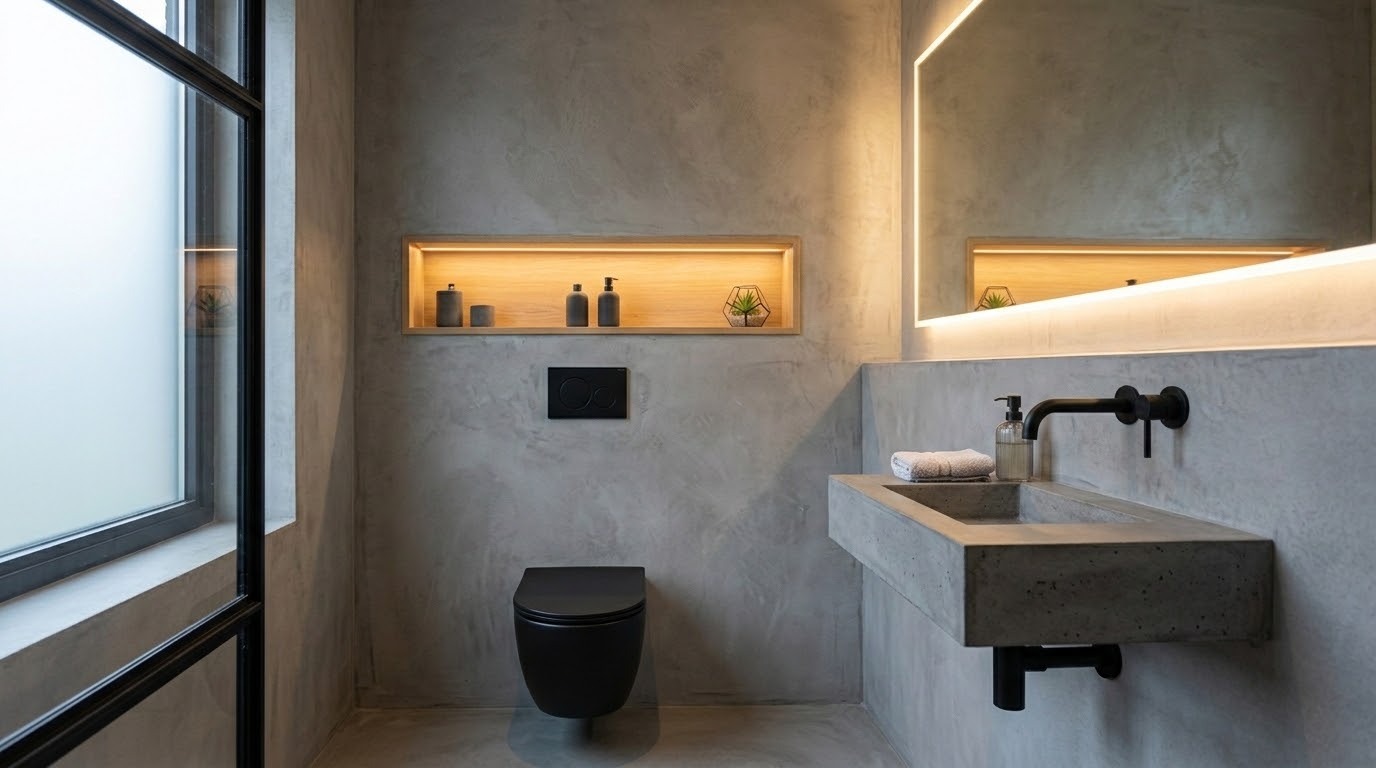
The chosen materials also have an impact. Standard ceramic tiles are usually easier to work with than large-format tiles, natural stone, or decorative wall coverings. A wall-hung toilet with a concealed cistern requires more preparation than a floor-mounted toilet, as the support frame must be securely installed and neatly concealed.
At Bricknest, this is assessed in advance, so the client not only sees a price but also understands why certain tasks are necessary.
When does the renovation budget increase?
The amount increases as soon as the renovation goes beyond replacing visible components. This happens, for example, when pipes need to be moved, the floor needs to be rebuilt, or the walls need to be repaired first.
Hidden defects can also have an impact. Think of damp spots, damaged plasterwork, poor ventilation, or old drain connections that no longer meet the requirements for the desired layout. Such issues are especially critical in a small toilet room, as mistakes are difficult to fix later without having to demolish everything again.
What is included in a full toilet renovation?
A full toilet renovation consists of more than just replacing a toilet bowl and a few tiles. It is a cohesive process in which preparation, technology, and finishing must align perfectly.
Especially in a small space, the sequence of work is important. If piping, tile layout, or installation heights are not planned correctly, visible errors or practical inconveniences will arise later.
Demolition work
The renovation begins with the careful removal of existing components. Old tiles, sanitary ware, sealant joints, flooring, and any damaged wall layers are removed. It is important to avoid unnecessary damage to pipes and connection points during this process.
In apartments, we also address practical matters such as protecting common areas, dust control, and the removal of construction waste. Proper preparation prevents delays during subsequent phases.
Pipe replacement
After demolition, the technical condition of water pipes, drainage, and ventilation is assessed. Sometimes existing connections can be retained. In other cases, replacement or relocation is necessary, especially when installing a wall-hung toilet, a new basin, or changing the layout.
A full renovation may include:
- inspection of existing water pipes and drainage;
- preparation for a concealed cistern;
- adjustment of connection points for a basin;
- improvement of ventilation or air extraction;
- preparation of wall and floor surfaces for further finishing.
This phase largely determines the reliability of the renovation. If pipes or connections are not prepared correctly, even high-quality finishes can cause problems later on.
Tiling and finishing
Tiling in a small toilet room requires great precision. Cut edges, corners, grout lines, and connections around the toilet and basin are immediately noticeable. Therefore, the substrate, measurements, and tile layout must be carefully considered in advance.
The floor must be level and stable. Walls must be sufficiently straight to ensure tiles are placed neatly. Extra accuracy is required for decorative tiles, narrow grout lines, or large-format materials. Transitions to the ceiling, door frames, and baseboards must also be finished logically.
Installation of sanitary ware and components
In the final phase, the toilet, flush plate, basin, faucet, siphon, mirror, lighting, and accessories are installed. This is followed by sealing, checking connections, and final finishing.
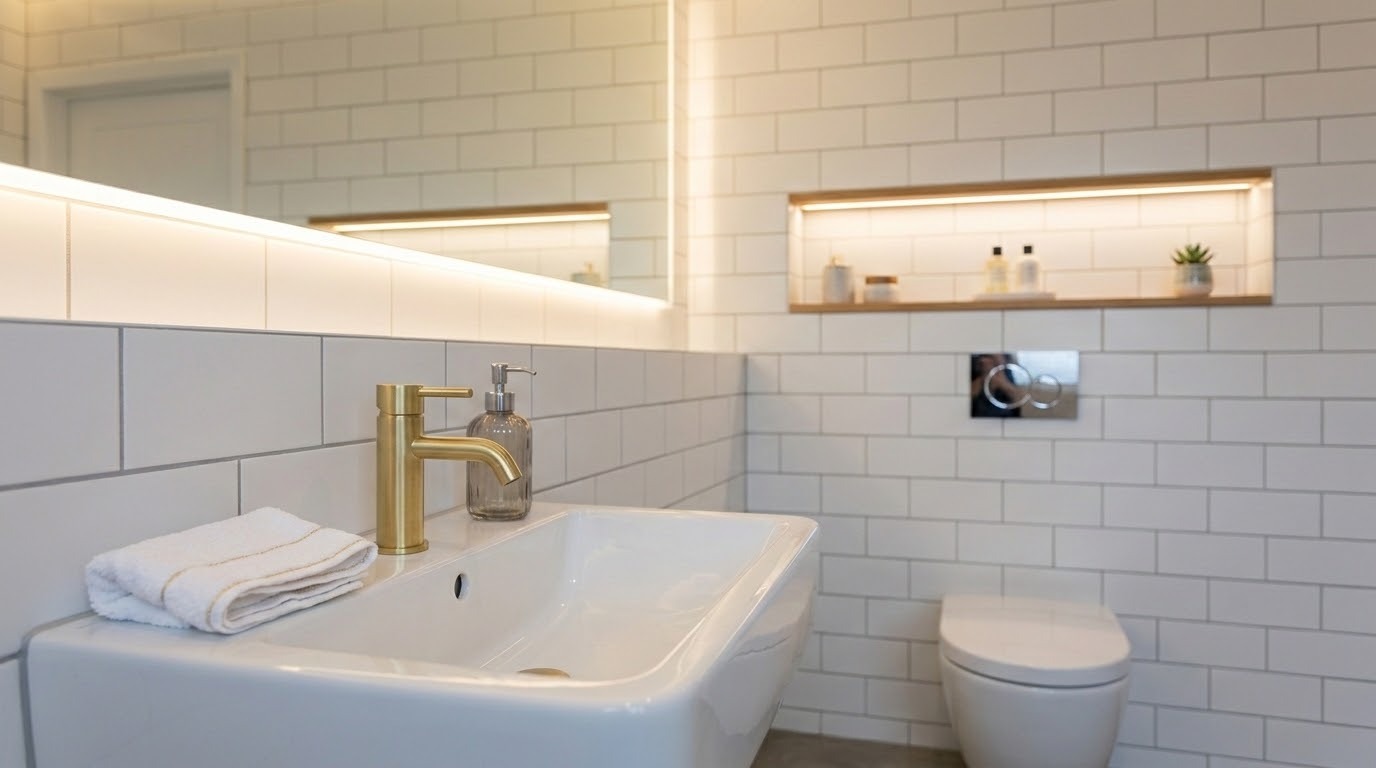
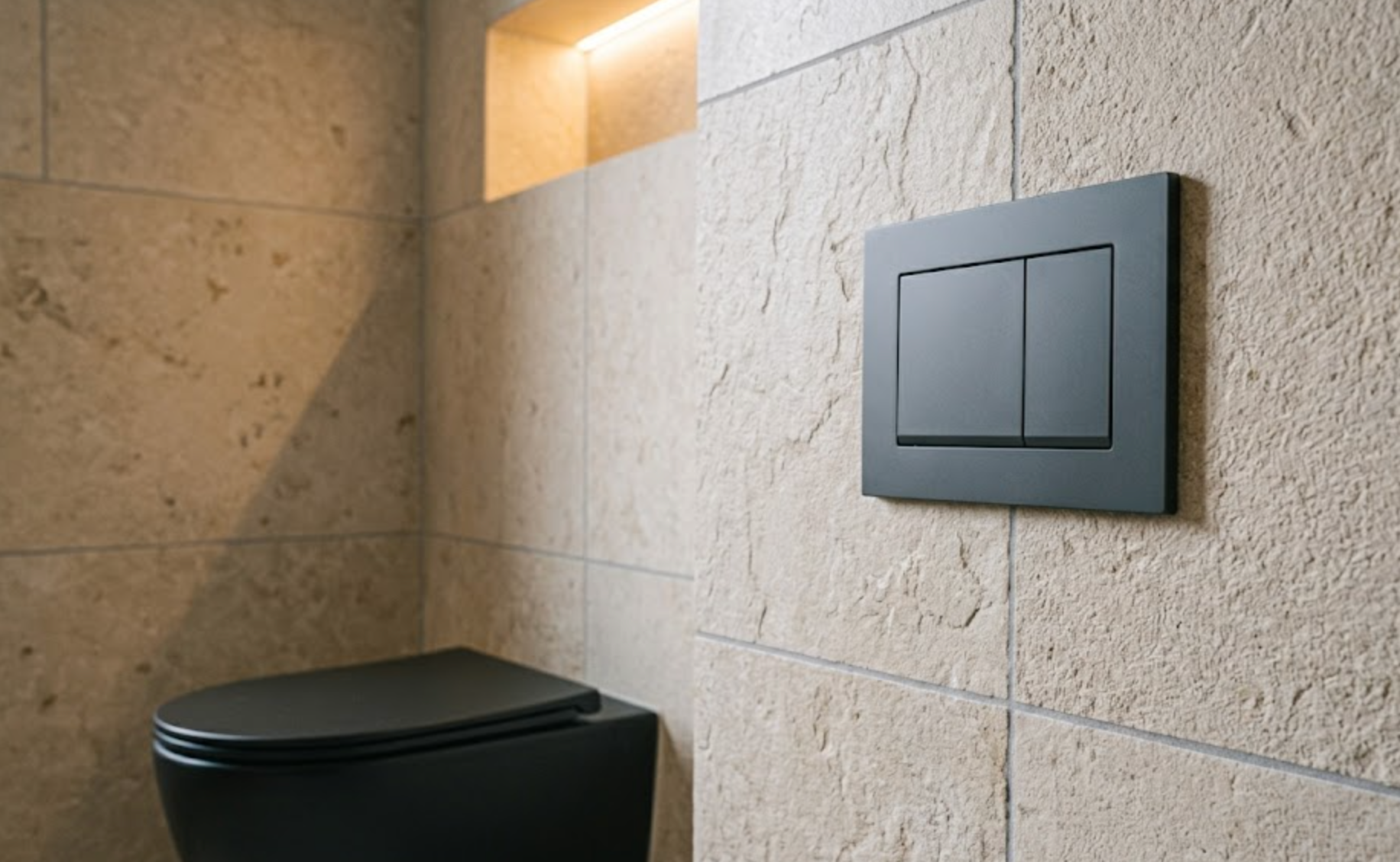
For a wall-hung toilet, extra attention is paid to the stability of the frame, the correct height, and the neat finish around the flush plate. For a basin, the connection to the water supply and drainage is particularly important, as leaks in a small space can quickly cause damage.
Example of a cost estimate for toilet renovation
A sample calculation helps to understand how the price is structured in practice. The amounts mentioned are indicative, as the final price always depends on the site survey, material choices, and the technical condition of the room.
For a compact restroom with a standard layout, Bricknest can provide a clear toilet renovation quote. This will detail labor, materials, preparation, and installation separately, so the client can see exactly how the total cost is calculated.
Costs of preparatory work
Preparatory work includes site assessment, protecting the home, demolition, waste removal, and technical inspection of the space. This may also include minor repairs to walls or floors.
In a compact restroom, this phase is crucial because space is limited. The contractor must know exactly where pipes are located, which elements are to be preserved, and which surfaces are suitable for new finishes.
Material costs
Material costs depend heavily on the chosen tiles, sanitary ware, and finishes. Standard ceramic tiles keep costs manageable. Luxury tiles, special patterns, built-in lighting, or high-end faucets will increase the price.
An indicative breakdown might look like this:
- demolition, preparation, and waste removal: from €600 to €900;
- plumbing and technical preparation: from €500 to €900;
- tiles, adhesive, grout, and finishing: from €700 to €1,200;
- toilet, sink, faucet, and accessories: from €800 to €1,500;
- installation, finishing, and inspection: from €900 to €1,400.
These items explain why a total price starting at €3,500 is more realistic than a price per square meter. The space is small, but the amount of specialized work remains significant.
Costs of installing sanitary ware
Installation costs depend on the type of toilet and the desired configuration. A wall-hung toilet with a concealed cistern requires more time than simply replacing an existing floor-mounted toilet. The sink, faucet, trap, and any lighting must also be installed safely and neatly.
Proper installation prevents movement, leaks, and cracking in grout or sealant lines. Therefore, it is wise to consider not only the purchase price of the sanitary ware but also the technical requirements for installation.
Total costs of the renovation plan
The total cost for a complete toilet renovation at Bricknest starts at €3,500. Prices may be higher for high-end finishes, moving plumbing, or additional structural work.
A reliable toilet renovation quote clearly shows which items are included in the cost estimate. This allows the owner to make informed choices without being surprised by unclear additional costs later on.

What determines the final renovation price?
The final price is determined by a combination of technical condition, material choices, sanitary ware, and additional work. A restroom may seem simple, but small differences in the substrate, connections, or finishing can have a major impact on the execution.
That is why a reliable price estimate always begins with an assessment of the existing space. Only then can we determine which work is necessary and which choices are primarily aesthetic.
Technical condition of the space
The existing condition of the floor, walls, pipes, and drainage is one of the most important factors. If the substrate is level, dry, and stable, the finishing can be installed more quickly. If there are cracks, damp spots, or old pipes, extra preparation is required.
Older homes sometimes feature narrow pipe shafts, limited ventilation, or uneven walls. These conditions require professional expertise, as new finishes will only remain durable if the foundation is sound.
Choice of finishing materials
Finishing materials determine both the look and the labor time. Simple wall tiles are faster to install than large-format tiles or decorative patterns. Grout width, cutting waste, and corner finishing also play a role.
If you want to keep toilet renovation costs down, you can opt for solid ceramic tiles and a simple layout. If you prefer a more luxurious look, you should account for more labor and higher material costs.
Choice of sanitary ware
The choice of sanitary ware has a direct impact on the total costs. A simple toilet and a standard sink are cheaper than a wall-hung toilet with a concealed cistern, a high-quality faucet, custom furniture, or rimless ceramics.
Important choices include:
- floor-mounted toilet or wall-hung toilet;
- standard sink or custom solution;
- simple faucet or high-quality mixer tap;
- visible or concealed connections.
Bricknest helps you make choices that fit your budget, the space, and your desired level of finish.
Additional work
Additional work may be necessary if the space requires technical improvements. This includes extra ventilation, repairing damaged walls, relocating pipes, adjusting electrical work, or painting the ceiling and door frame.
Logistics can also play a role. In busy urban areas, such as Amsterdam, accessibility, parking, and waste disposal can affect the schedule and costs. Proper preparation prevents such practical issues from only becoming apparent during execution.
Why do property owners choose Bricknest?
Property owners choose Bricknest because we don't approach renovations as a series of disconnected tasks, but as a controlled process. This is especially important in compact spaces, where technical errors are quickly visible and repairs can be relatively disruptive.
Bricknest combines practical execution with clear communication, project oversight, and a pre-discussed cost estimate. This ensures the client knows exactly what is happening, when it will happen, and how their choices impact the final price.
Renovation from start to finish
Bricknest manages your toilet renovation from the initial assessment to final handover. This means that demolition, preparation, material selection, tiling, plumbing installation, and finishing are all seamlessly coordinated.
For the client, this is much more straightforward than working with multiple separate contractors without central coordination. Having a single point of contact reduces the risk of misunderstandings and delays.
Clear budgeting
A good budget shows exactly which tasks are included and which choices might change the price. Bricknest uses a transparent structure, so that labor, materials, preparation, and installation are clearly and understandably presented.
This is crucial for toilet renovations, as the difference between a simple replacement and a full technical overhaul can be significant. A clear quote prevents mismatched expectations.
Quality control
Quality control doesn't just happen at the end; it takes place throughout multiple phases. The subfloor, plumbing, tiling, grouting, sealing, and installation are all assessed step by step.
This approach minimizes the risk of leaks, uneven tile lines, poor connections, or sloppy finishing. In a small toilet space, these details make a huge difference in the final result.
Adhering to the schedule
A toilet is a functional space that needs to be back in use quickly. That’s why planning is essential. Bricknest coordinates the work in advance so that demolition, delivery, installation, and finishing follow a logical sequence.
When materials are chosen and technical decisions are made in advance, the execution can proceed more efficiently. This helps to minimize delays and unnecessary costs.
Request a renovation cost estimate
Anyone looking to renovate a toilet starts with a technical assessment and a clear price estimate. Based on the current condition, desired materials, and sanitary choices, Bricknest can provide a tailored calculation.
Requesting a toilet renovation quote helps make the project concrete and provides clarity on costs upfront. We look at demolition, plumbing, tiling, sanitary ware, finishing, and scheduling to create a clear foundation for your decision-making.
A careful toilet renovation doesn't start with buying tiles, but with a solid plan. With Bricknest, owners gain insight into the technical possibilities, the costs, and the steps required for a durable, neat, and ready-to-use toilet space.

