
A kitchen backsplash protects the wall from grease splatters, moisture, and dirt. Which material is most suitable depends primarily on the location of the backsplash and how you cook. Different requirements apply behind a gas stove compared to a sink or an induction cooktop. Additionally, maintenance, connections, aesthetics, and budget determine which solution is the best fit.
Tiles, glass, composite, ceramic, plastic, and aluminum each have their own characteristics. A glass backsplash is easy to clean, while ceramic tiles offer great freedom in color and pattern. Plastic is often more affordable, but not every panel is resistant to the heat of a cooktop.
In this guide, we compare materials for a kitchen backsplash, discuss technical considerations, and look at the costs of purchase and installation.
Which materials are suitable for a kitchen backsplash?
When choosing the backsplash for your kitchen heat resistance, water resistance, and maintenance are important criteria. The number of grout lines and the ability to create cutouts for electrical outlets also play a role.
Kitchen backsplash materials compared
Not every material is suitable for every cooking zone. The table below provides an overview of the most important characteristics.
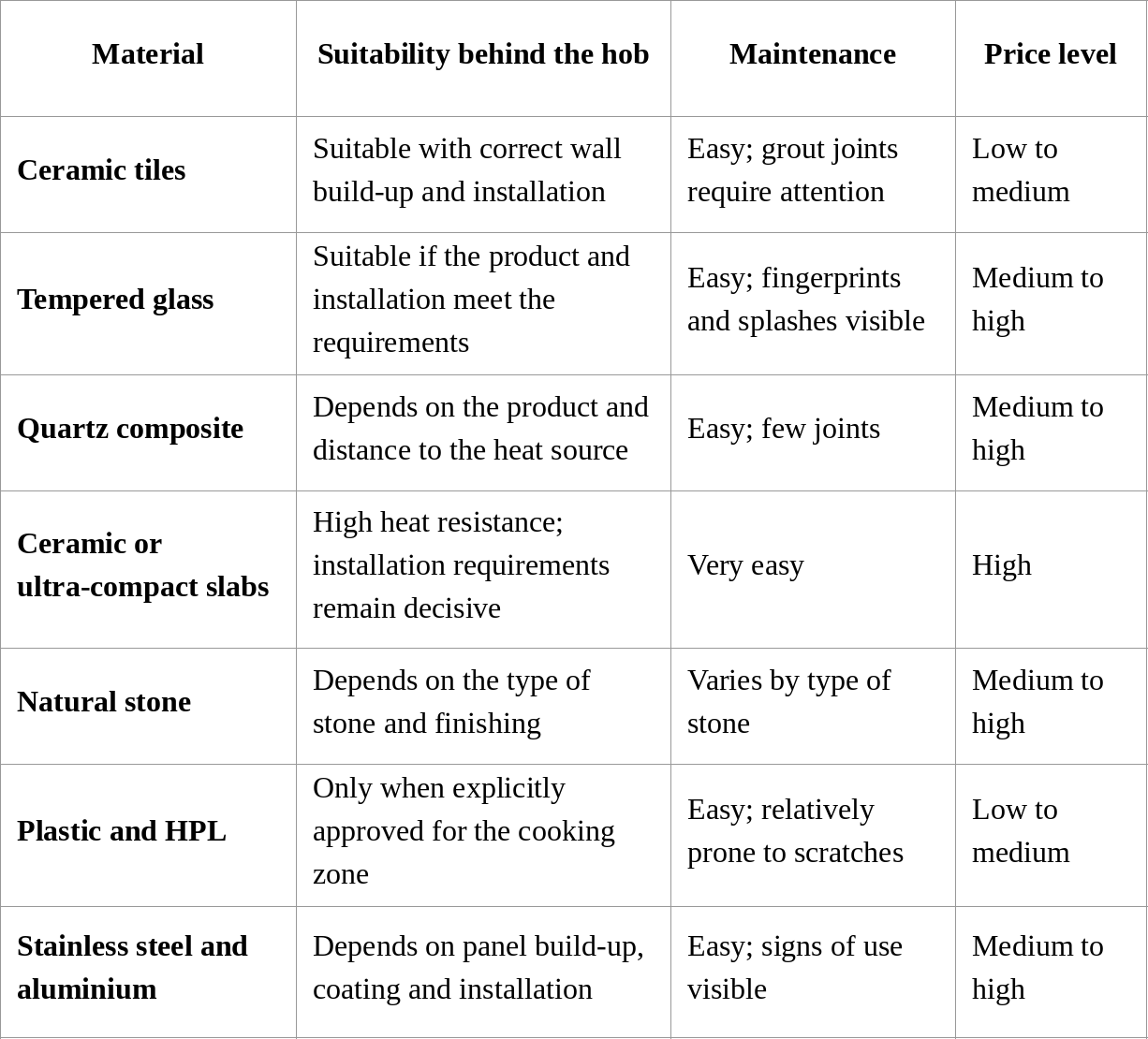
The material name alone is therefore not enough to guarantee suitability. Especially with glass, composite, and metal panels, you must verify what the specific product was developed for.
Tiles as a kitchen backsplash
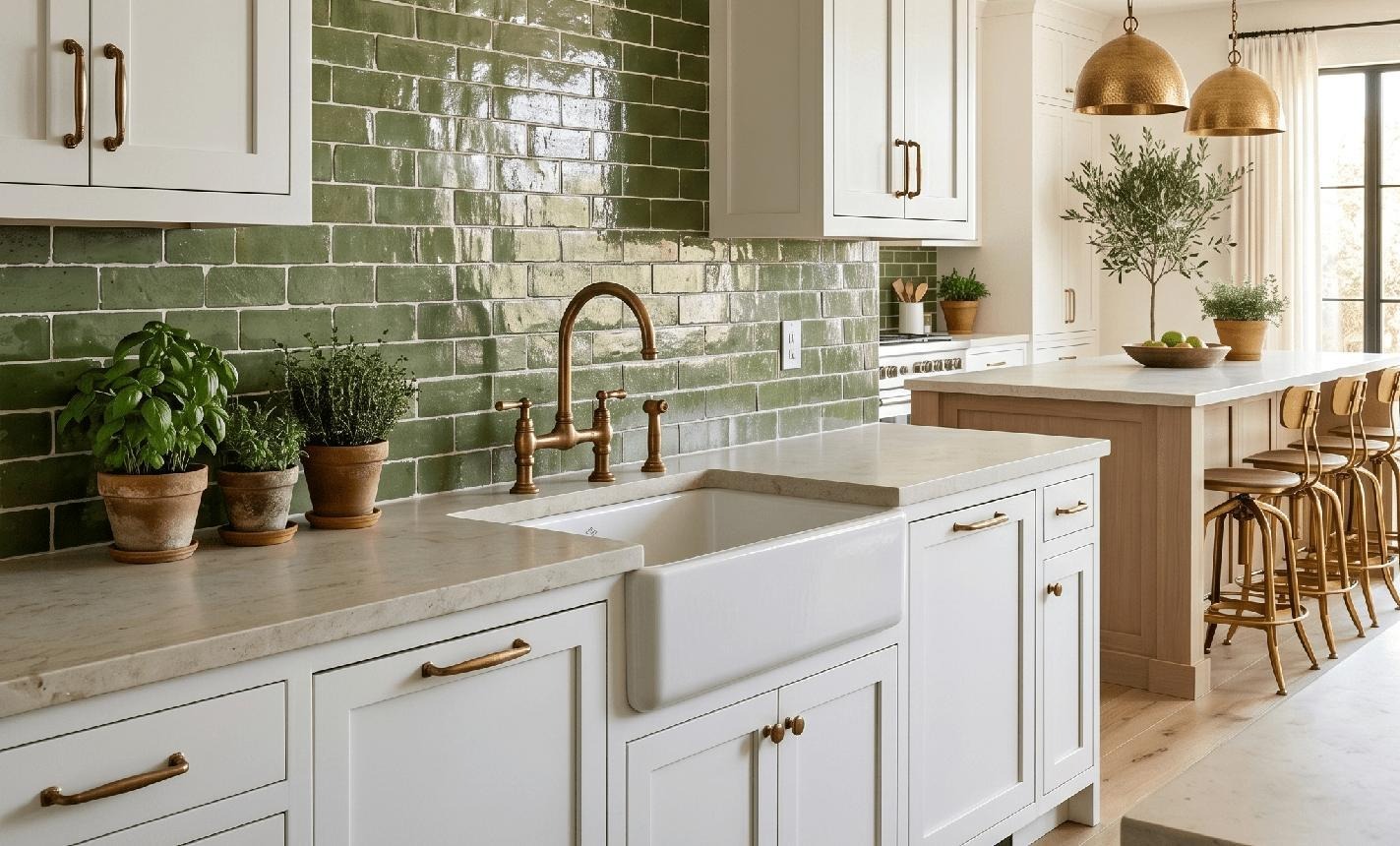
Tiles for a kitchen backsplash are durable, resistant to normal kitchen moisture, and available in a wide range of finishes. From white subway tiles to large porcelain tiles and decorative Portuguese or Moroccan patterns.
Ceramic tiles are highly resistant to high temperatures and are therefore a popular choice behind a gas stove. The quality of the entire wall assembly remains important: the tile adhesive, grout, and connections must also be suitable for the application.
The most important point of attention is the grouting. Small tiles and mosaics create many grout lines, where grease and dirt can accumulate. Large tiles limit the number of grout lines and are therefore generally easier to keep clean.
For a tiled backsplash, choose a suitable grout and a flexible connection to the countertop. This prevents small movements between the wall and the counter from causing cracks in a rigid grout line.
Glass kitchen backsplash
A glass backsplash in the kitchen has a sleek surface without tile grout. Glass is available in various colors, matte and glossy finishes, and decorative prints.
Behind a cooktop, the type of glass is decisive. Standard, non-tempered glass can be damaged or break due to localized temperature differences. For a cooking zone, you should therefore choose a thermally tempered glass product specifically designed for this purpose. Any color coating and mounting hardware must also be approved for the application.
The distance between the cooktop and the backsplash must comply with the regulations of both the appliance manufacturer and the glass manufacturer. Especially with a gas stove with rear burners, the heat load can be significant.
Another point of attention is the measurements. Tempered glass cannot be cut or drilled after the tempering process. All cutouts for electrical outlets and mounting points must therefore be determined in advance.
For this reason, it is best to take final measurements for a glass backsplash only after the kitchen and countertop have been installed.
Composite and natural stone
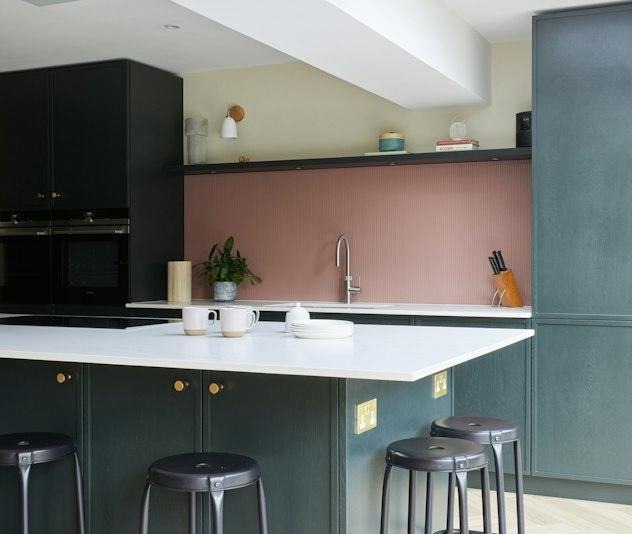
A composite kitchen backsplash is often paired with a countertop in the same color and finish. This creates a continuous surface with minimal visible seams.
Quartz composite combines mineral components with binding agents. The material is generally non-porous and resistant to everyday grime. However, the binders can be sensitive to prolonged localized heat or sudden temperature changes.
Quartz composite is therefore not automatically suitable for use directly behind every gas cooktop. Always check the technical specifications of your chosen product.
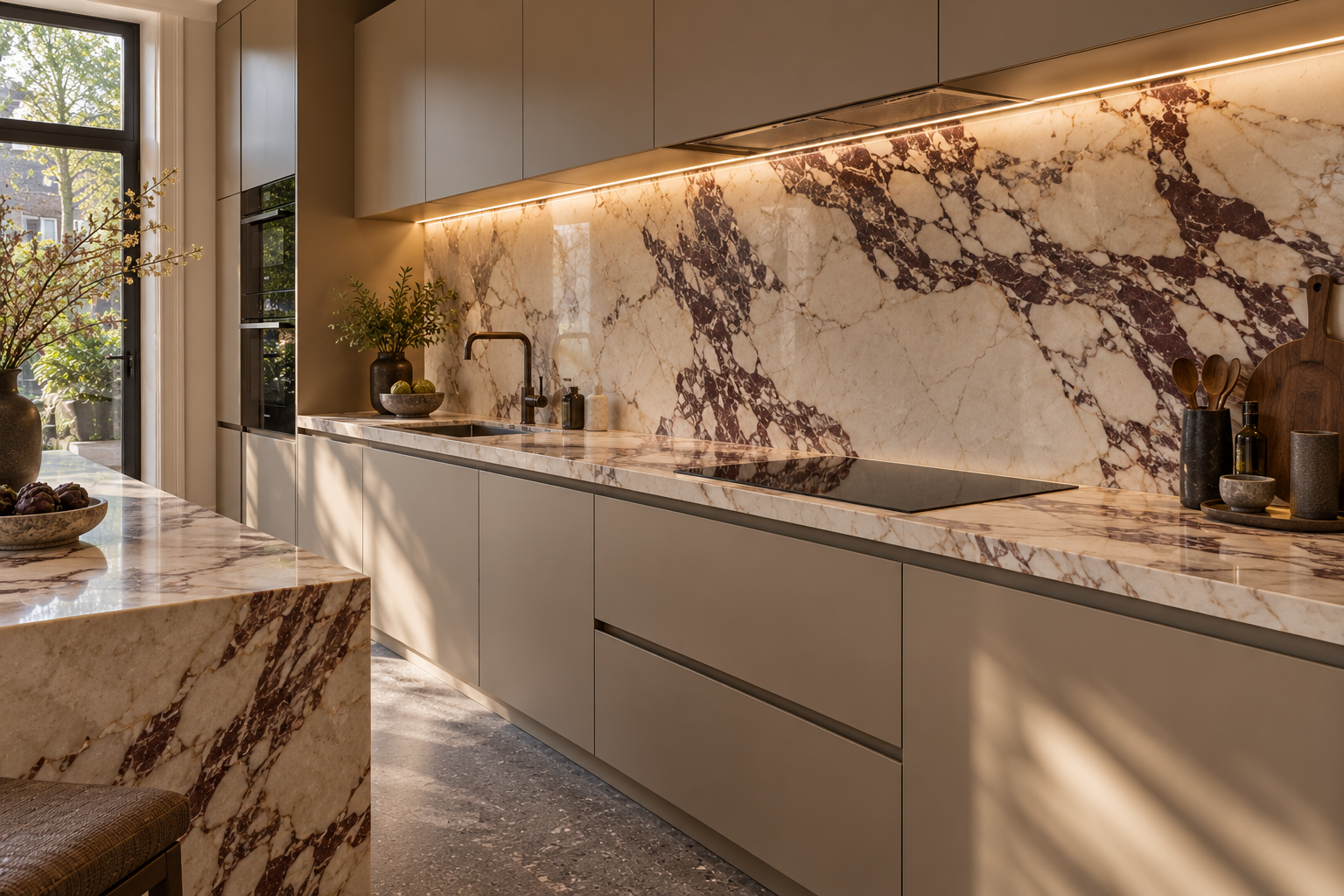
With natural stone backsplashes, properties vary by stone type. Granite is generally well-suited for normal kitchen use. Marble is more sensitive to acids, such as lemon juice and vinegar, which can cause permanent dull spots. Sealing can reduce staining from liquids, but it does not prevent acid damage.
If you would like to match the material of your backsplash to your countertop, you can find additional information in our guide on the differences between countertop materials.
Ceramic backsplash
A ceramic kitchen backsplash can consist of large, thin slabs with a stone, concrete, or marble look. Unlike quartz composite, ceramic slabs do not contain a resin-based structure.
Ceramic generally has high resistance to heat, scratches, and common household stains. This makes it an attractive solution for a heat-resistant kitchen backsplash, even in high-use cooking areas.
Large ceramic slabs also have very few joints, which makes the surface easy to clean.
Installation requires precision. Large, thin slabs can be damaged during transport or if not properly supported. Cutouts and edges must be carefully finished, and the substrate must meet the manufacturer's installation requirements.
Plastic and plexiglass
A plastic kitchen backsplash is lightweight, relatively affordable, and available in various colors and designs. Popular options include HPL panels, acrylic sheets, and decorative wall panels with a wood or stone look.
Plastic is practical behind a sink or on sections of the countertop where high temperatures do not occur. The material is generally easy to clean but is often more prone to scratching than ceramic or glass.
Plexiglass, standard plastic panels, and self-adhesive vinyl film are not necessarily suitable for use behind a cooktop. Heat can cause them to discolor, warp, or become damaged.
This does not apply only to gas. An induction cooktop, hot pan, or electric cooking zone can also transfer heat to the backsplash. Therefore, only use plastic in a cooking area if the manufacturer explicitly permits that specific application.
Stainless steel and aluminum backsplash
A stainless steel kitchen backsplash has a functional look and is easy to clean. Stainless steel is widely used in professional kitchens because the material is generally highly resistant to moisture, cleaning agents, and high temperatures.
The surface may show scratches and fingerprints. With brushed stainless steel, minor signs of wear are often less noticeable than with a mirrored finish.
An aluminum kitchen backsplash is lighter than stainless steel and can provide a sleek, modern look. However, aluminum is relatively prone to scratching. Any lacquer or decorative coating also has its own usage and temperature limits.
Pay close attention to the difference between a solid aluminum sheet and an aluminum composite panel. The latter may contain a plastic core. Consequently, its fire and heat properties differ from those of a solid metal sheet.
Backsplash behind the cooktop: gas or induction?
Choosing a backsplash for behind the cooktop requires extra attention. Not only must the visible material be suitable for the heat load, but so must the coating, adhesive, mounting method, and substrate.
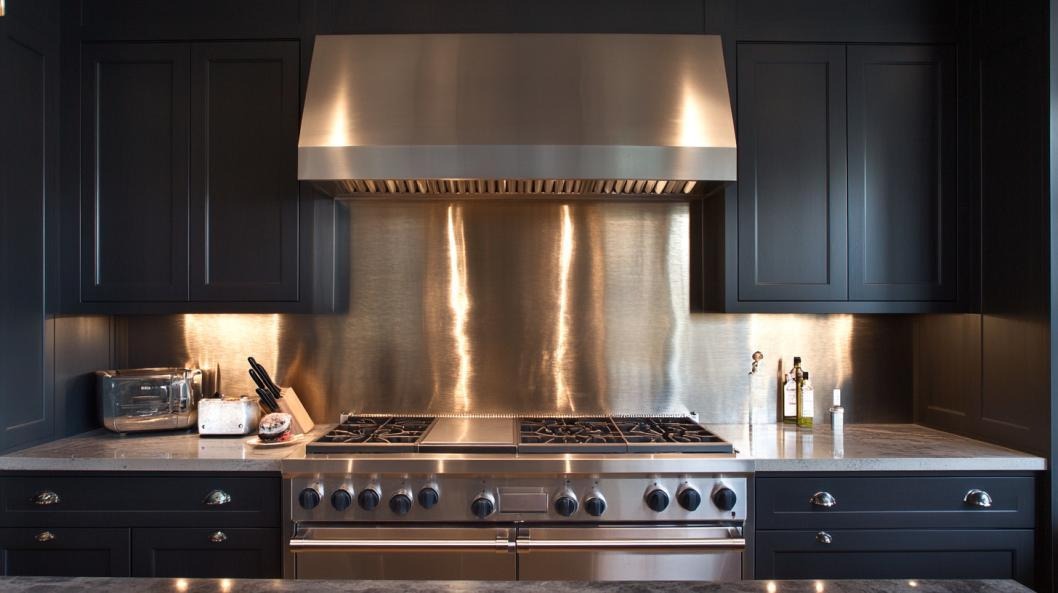
Backsplash behind a gas stove
With a gas stove, open flames and hot pans can cause the backsplash to heat up significantly in certain areas. The load increases when large pans are used on the rear burners or when a wok burner is positioned close to the wall.
Ceramic tiles, suitable ceramic slabs, and stainless steel are commonly used solutions. Specially tempered glass can also be suitable, provided the product was developed for this purpose and all required clearances are maintained.
For quartz composite, natural stone, and aluminum panels, the manufacturer must specify whether the intended application is permitted.
There is no universal minimum distance that applies to all combinations of cooktops and backsplashes. Therefore, always check the installation manual of the cooking appliance as well as the technical documentation for the wall cladding.
Backsplash behind an induction cooktop
With induction, the pan is heated directly by an electromagnetic field. This creates a different heat load compared to an open gas flame.
That does not mean the backsplash remains cold. Hot pans, rising warm air, and heat emitted by the cooking surface can still put a load on the wall.
Glass, ceramic, composite, and certain plastic panels can be used behind induction, depending on product specifications and mounting distances.
Here too, approval for the specific application is more important than a general label such as "heat-resistant."
A suitable range hood also helps to remove cooking vapors and grease particles. In our guide, you can read which range hood suits your kitchen.
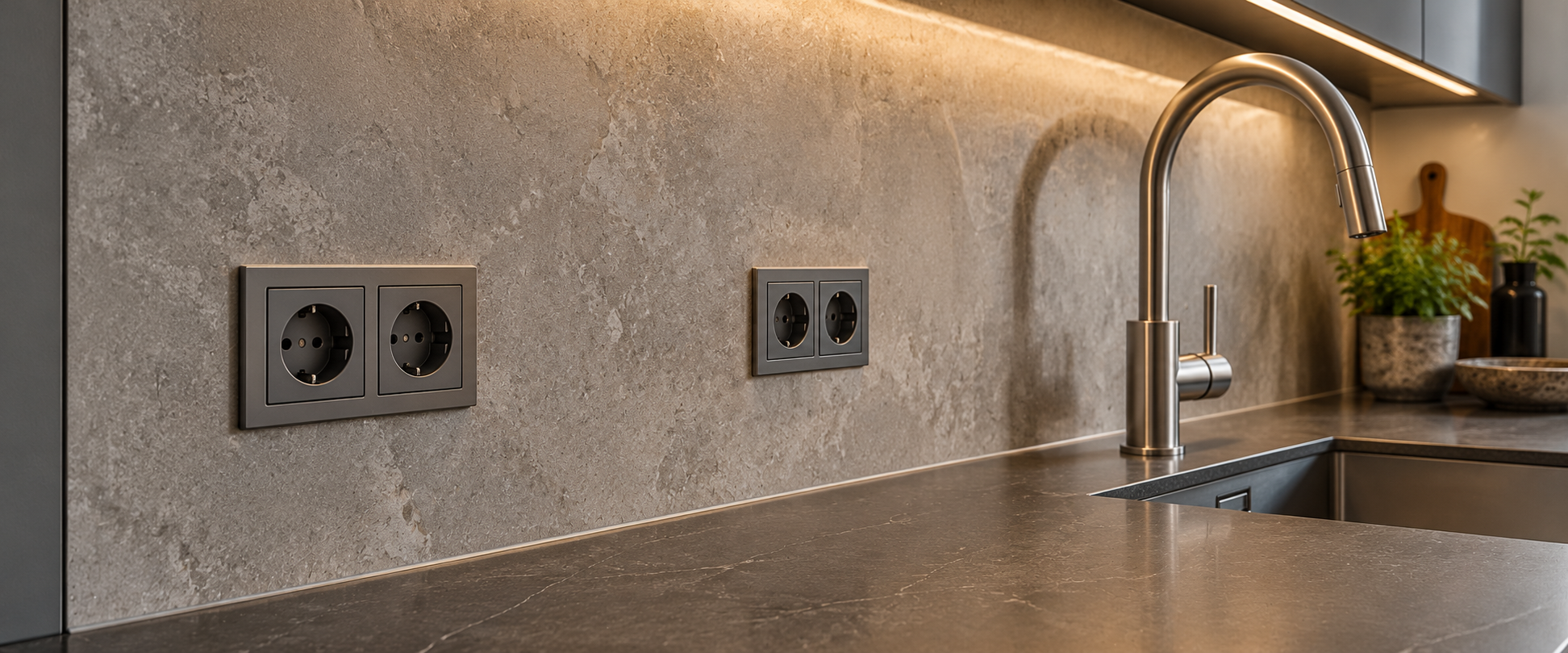
Height, connections, and power outlets
The height of a kitchen backsplash depends on the kitchen layout. Usually, the backsplash runs from the countertop to the underside of the upper cabinets or the range hood. Without upper cabinets, you can choose a lower splashback or full wall cladding.
From a technical perspective, the connections are particularly important. Before ordering the backsplash, three things must be clear:
- Connection to the countertop: a suitable flexible sealant joint or connection profile prevents splash water from running behind the cladding.
- Outlets and switches: the positions and dimensions of the cutouts must be determined in advance, especially with tempered glass and natural stone.
- Edges and corners: the finish must match the panel thickness, wall irregularities, and the chosen mounting method.
For existing outlets, check whether the additional thickness of the wall cladding requires an adjustment. Electrical connections and modifications to the installation must be carried out safely by a qualified electrician.
Installing a kitchen backsplash: preparation and assembly
Installing a kitchen backsplash requires more than just attaching tiles or panels. The substrate, measurements, and sequence of work determine whether the finish fits the kitchen properly.
Measuring the backsplash and preparing the substrate
The wall must be sufficiently sturdy, level, clean, and dry. Loose paint, poorly adhering tiling, or moisture problems must be addressed beforehand.
For glass and large ceramic panels, precise measuring is essential. Take into account wall irregularities, the exact countertop height, and the position of outlets.
A practical installation sequence is:
- Check the substrate and finish the necessary piping and electrical work.
- Install the kitchen cabinets, the countertop, and the relevant appliances.
- Take final measurements for the backsplash, including cutouts and connections.
- Have custom panels produced or prepare the tiling.
- Mount the backsplash and finish all edges and connections.
During a complete renovation, this sequence is part of the kitchen renovation step-by-step plan.
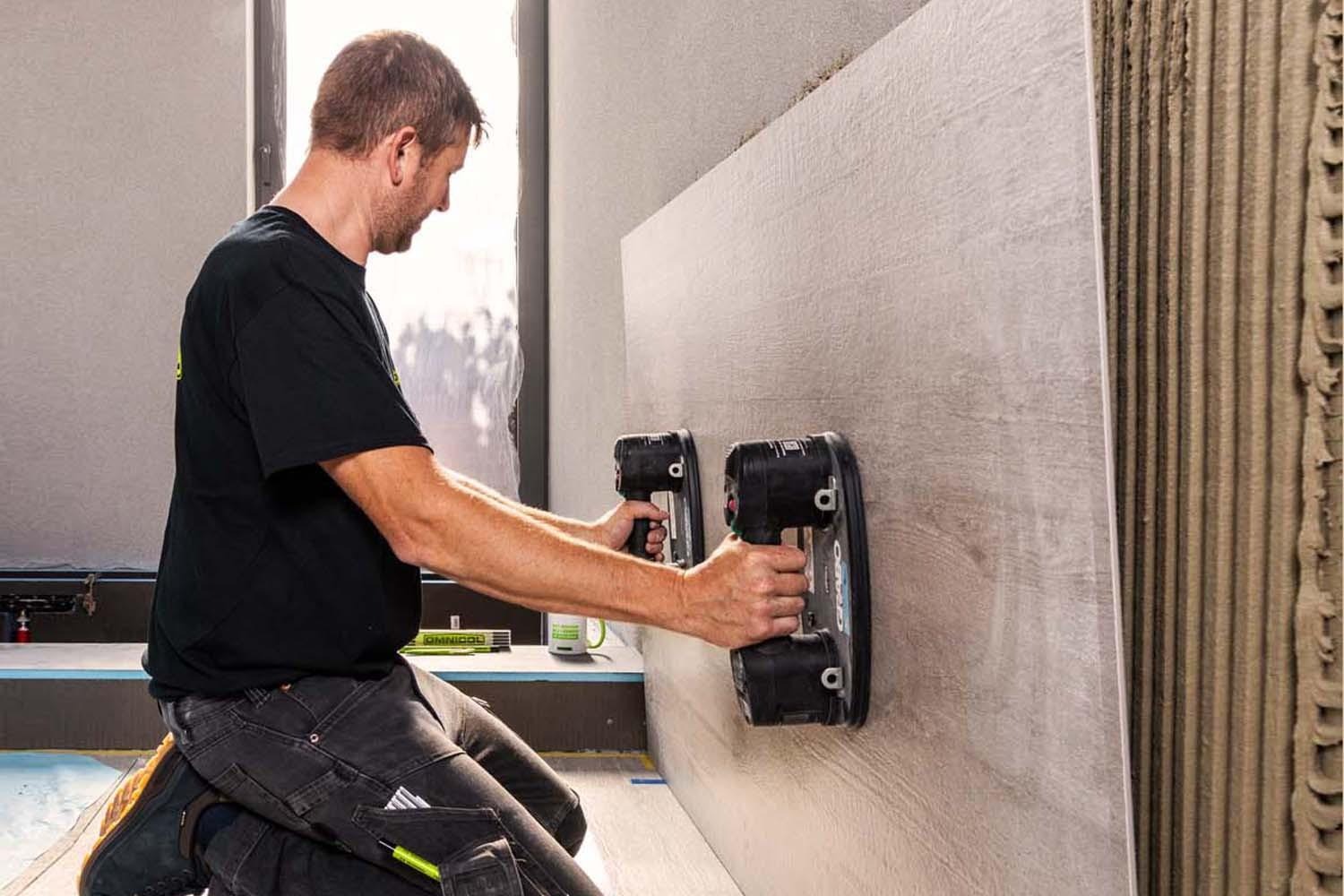
Fixing and sealing
Tiles are applied using a suitable tile adhesive and finished with grout. For glass, the mounting adhesive must be compatible with the glass panel and any coating on the back.
Heavy natural stone or composite panels require a mounting method suitable for their weight. Large ceramic slabs also require a suitable substrate and installation according to the technical instructions.
The connection between the backsplash and the countertop is an important part of the finish. Use a suitable flexible sealing system or connection profile. A rigid joint can crack when materials move slightly due to temperature differences or normal load.
Maintaining a kitchen backsplash
Maintenance requirements vary by material. For almost every kitchen backsplash, grease splatters are easiest to remove before they have a chance to bake on.
Clean a glass backsplash with a soft cloth and a suitable glass cleaner. For stainless steel, use a product suitable for the specific finish; brushed steel should preferably be cleaned in the direction of the grain.
Ceramic tiles are easy to clean, but the grout lines require extra attention. For quartz composite and ceramic slabs, a mild detergent is often sufficient, provided it complies with the manufacturer's maintenance instructions.
Natural stone requires more care. Especially with marble and other calcareous stone types, acidic cleaning agents must be avoided. Clean synthetic panels with a soft cloth to minimize fine scratches.
Also regularly check the sealant joint at the countertop. If it comes loose or cracks, water can get behind the cladding.
How much does a kitchen backsplash cost?
The cost of a kitchen backsplash depends on the material, dimensions, wall preparation, and the number of cutouts. For glass, composite, and large ceramic slabs, custom work, transport, and specialist installation play a significant role.
Price per m² and installation costs
Dutch price indications from 2026 vary widely. For common solutions, material costs of approximately €25 to €200 per m² are cited, plus about €75 to €500 in installation costs. Exclusive slabs and complex custom work can be significantly more expensive.
These broad figures are only useful for initial orientation. The price difference between materials becomes especially clear when you compare the full quote.
Synthetic panels are often among the more affordable solutions. With tiles, the chosen size, pattern, and labor hours influence the price. Tempered glass requires custom work and any cutouts before tempering. For composite, ceramic, and natural stone, material price, slab thickness, edge finishing, and transport can increase costs.
A metal backsplash can also vary greatly in price. A simple stainless steel splash guard is not comparable to a fully custom-made, brushed, or coated panel.
Which costs are often overlooked?
A backsplash 3 meters wide and 60 centimeters high has an area of 1.8 m². However, the total price is not determined solely by this surface area.
For small projects, fixed costs for measuring, transport, preparation, and installation weigh relatively heavily. A low price per square meter can therefore still lead to a higher total bill.
Before agreeing, check whether the quote includes the following items:
- Material, thickness, color, surface finish, and any custom surcharges.
- Removal of the existing backsplash and repair of the substrate.
- Measuring, cutouts for electrical outlets, and finishing of visible edges.
- Installation, sealing, transport, waste disposal, and VAT.
Request quotes from different providers based on the same dimensions and work. This allows you to compare the total costs of the kitchen backsplash rather than just the price of the panel.
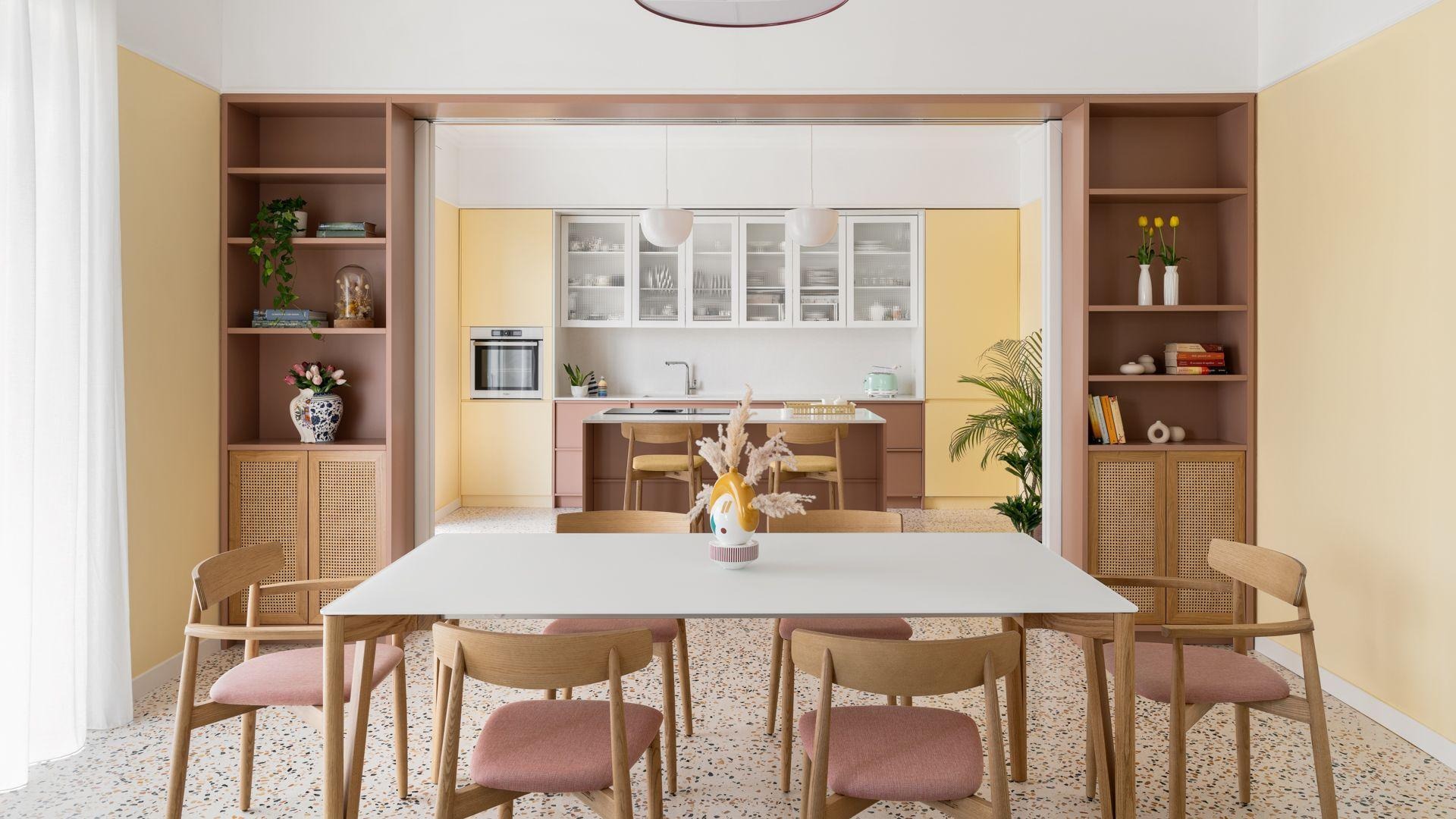
Which kitchen backsplash suits your kitchen?
The right choice depends on the cooktop, the intensity of use, and the desired level of maintenance.
If you want a low-maintenance kitchen backsplash without many grout lines, tempered glass and suitable large ceramic or composite panels are interesting options. For a kitchen where a lot of gas cooking is done, ceramic tiles, suitable ceramic slabs, and stainless steel offer practical possibilities.
Kitchen tiles are attractive if you want a lot of freedom in color, size, and pattern. A plastic splashback can be a good budget solution for parts of the kitchen where there is no high heat exposure.
If you want to use the same finish for the countertop and the backsplash, compare the material options in advance and check whether both applications are technically permitted.
During a full kitchen renovation, it is wise to make the choice for the backsplash during the design phase. After all, the positions of electrical outlets, the cooktop, the countertop, and the extractor hood influence the dimensions and installation.
For renovation projects, Bricknest coordinates the work on the kitchen, electrical systems, and finishing. Also use the checklist for a modern kitchen renovation to record important technical choices in good time.
Frequently asked questions about kitchen backsplashes
When choosing a new backsplash, questions about heat resistance, material usage, and maintenance come up most often.
Can a glass splashback be used behind a gas stove?
Yes, provided it is specially tempered glass and the installation meets the requirements of both the glass and cooktop manufacturers. The minimum distance to the burners depends on the specific products used. Standard decorative glass is not automatically suitable.
Is a synthetic splashback safe behind an induction cooktop?
That depends on the product. Although induction does not use an open flame, hot pans and rising heat can put stress on synthetic materials. Only choose a synthetic kitchen splashback behind an induction cooktop if the manufacturer explicitly permits this application.
Can you install a new splashback over existing tiles?
This is possible under certain conditions. The existing tiles must be firmly attached and sufficiently level. The chosen mounting method must also be suitable for the surface. Keep in mind that the wall thickness will increase, which may affect electrical outlets and the connection to the countertop.
Which kitchen splashback is the easiest to clean?
A smooth splashback without grout lines, made of suitable glass, ceramic, or composite, is generally easy to clean. Tiles are also low-maintenance, but the grout lines may require more attention. Regardless of the material, it is important to use the recommended cleaning agents.
What is cheaper: a glass splashback or tiles?
That varies by design. Simple ceramic tiles can be more affordable than a custom-made glass panel. However, labor costs increase with complex tile patterns. Therefore, always compare the total costs, including surface preparation, installation, and finishing.
Can you install a kitchen splashback yourself?
A simple tiled splashback or a lightweight panel is sometimes manageable for an experienced DIY enthusiast. Tempered glass, large ceramic slabs, and heavy composite panels require precise measurements and specialized handling. If you are in doubt about the mounting or heat resistance, professional installation is advisable.
Conclusion: which kitchen splashback should you choose?
The best splashback for your kitchen is not necessarily the most expensive or the easiest to maintain. The right choice depends on your cooktop, the required heat resistance, the wall surface, and your budget.
Tiles and ceramic slabs are versatile and suitable for high-use kitchens. Tempered glass offers a sleek surface, provided the product is used correctly. Composite can match the countertop beautifully but requires attention regarding heat exposure. Synthetic materials, stainless steel, and aluminum each have their own specific applications and limitations.
Check the technical specifications before purchasing, and for custom work, only have the splashback measured once the kitchen layout is finalized. This prevents unnecessary adjustments and ensures you choose a kitchen splashback that is safe, practical, and durable.

