
Demolition is the invisible hero of every successful renovation project. In a country like the Netherlands, where the housing market is dominated by both historic buildings and modern transformation projects, professional dismantling is essential for a solid basis. Simply 'smashing' structures is a thing of the past; today, demolition is about precision, safety and environmental awareness. Whether it's creating an open floor plan or completely stripping an outdated home, the technical implementation of the demolition determines the quality of everything that comes next. At Bricknest, we understand that a clean slate starts with professional demolition, taking into account the architectural integrity of the building and the applicable Dutch regulations.
Types of demolition work
Within the Dutch construction sector, we distinguish between different categories of demolition work. The complexity of the work is closely related to the function of the object to be removed and the impact on the surrounding structures. It is a technical process in which the order of dismantling is crucial to prevent unforeseen damage to pipes or supporting structures.
Demolition of walls and partitions
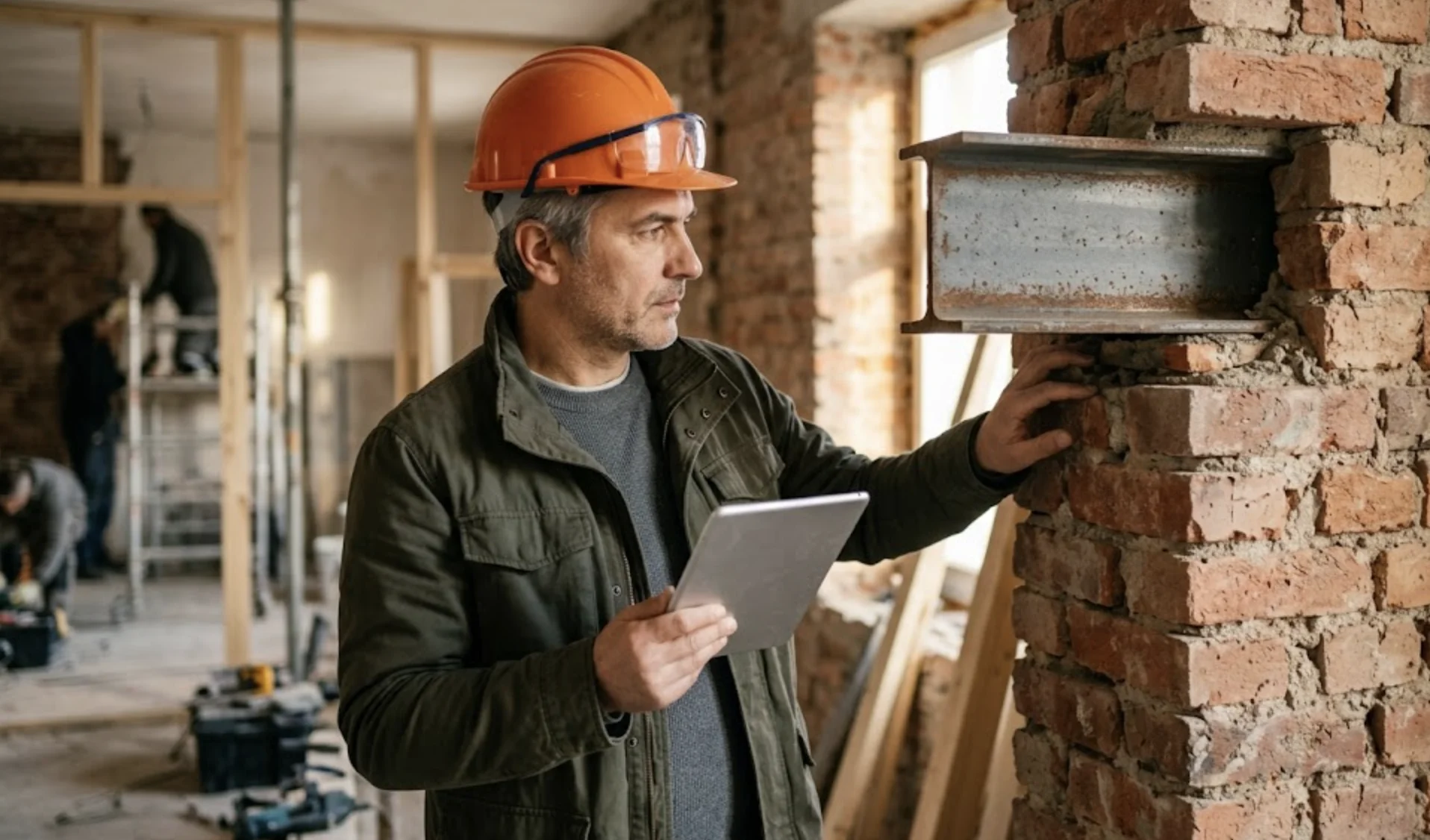
The most common procedure when rearranging a home is the removal of walls. Here, we make an essential distinction between load-bearing walls and non-load-bearing partitions. A supporting wall supports upper floors, walls or the roof structure. Removing or changing them almost always requires a construction calculation and an appropriate support solution, for example a steel beam, portal structure or other structural facility. The Environment Counter must check beforehand whether a permit, notification or additional technical substantiation is required. When customers request the price of the partition wall removal, it often involves non-load-bearing walls made of gypsum blocks, cellular concrete or woodwork. Although these are technically easier to remove, account must still be taken of the existing electricity and water pipes that are often hidden in these walls.
Disassembling the kitchen
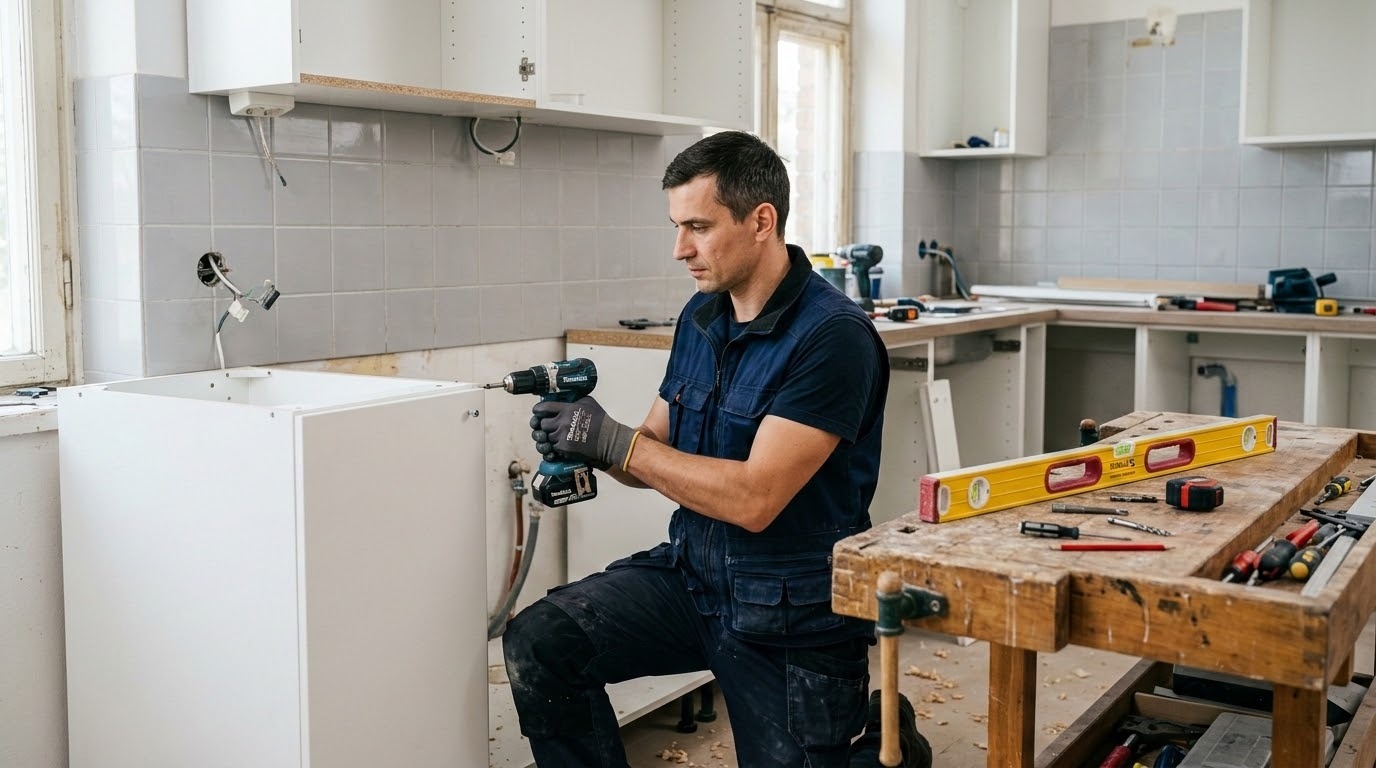
Demolishing a kitchen is a process that requires a great deal of accuracy, especially when certain elements or equipment have to be reused. The technical focus here is on safely shutting down and diverting the utilities. The costs of disassembling the kitchen partly depend on safely closing, capping or moving gas, water and drain points. Careless dismantling can lead to leaks or short circuits, which can significantly delay the further renovation process. Professional dismantling ensures that the underlying walls and floors are minimally damaged, saving the stucco and installer a lot of work after demolition.
Work on gas pipes, electrical connections and water pipes must be carried out by an appropriate professional. The demolisher can dismantle the kitchen, but the safe closure, sealing or adjustment of installations must be clearly agreed in advance and included separately in the quote.
Demolition of the bathroom
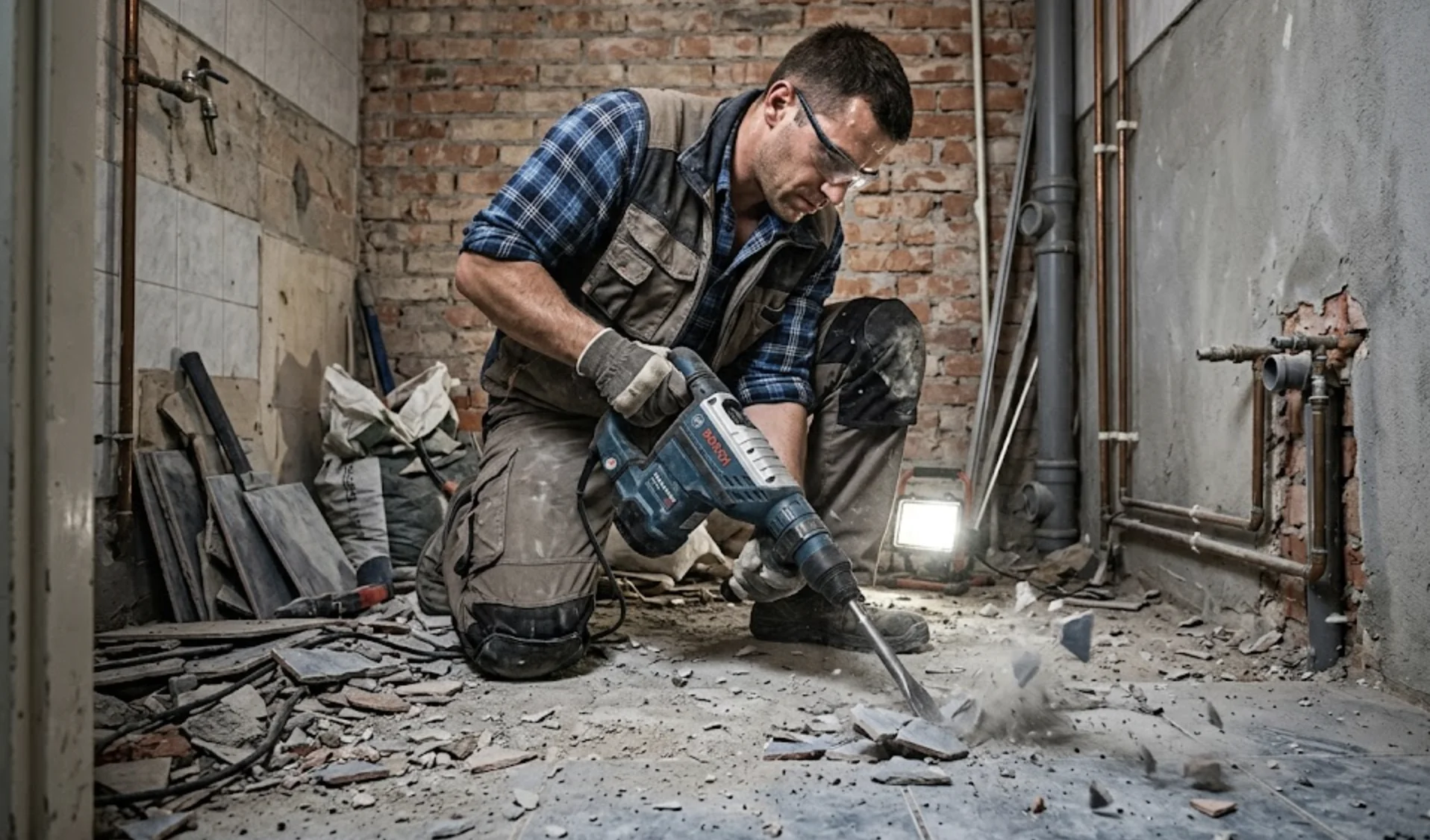
A bathroom renovation almost always starts with the complete stripping of the space down to the bare concrete floor or brick walls. The price of demolishing a bathroom includes not only removing the plumbing, but also cutting away the cement screed and the often thick layers of tiles. Technically, this is one of the toughest parts of demolition work, using heavy breakers. The risk of damage to the standpipe or the main supply is high here. Demolition work in wet areas requires a fixed method to prevent leaks, damage to standpipes and damage to surrounding structures as much as possible. Water pipes must be closed beforehand and vulnerable connections protected.
Removing finishing materials
In addition to the rough demolition work, a large part of the demolition work consists of removing the finish layer from a home. This process is often underestimated, but is technically very labour-intensive due to the types of adhesives and mounting methods used.
Before a new finish layer can be installed, the following activities must often be carried out:
- Dust-free removal of ceiling structures and stucco.
- Chipping off wall tiles without unnecessarily damaging the underlying layer of plaster.
- Removing glued carpeting, parquet or laminate.
- Clearing stairs or removing skirting boards and architraves.
A thorough cleaning of the surface after these activities is essential for the adhesion of new materials.

Costs of demolition work
The pricing for demolition work in the Netherlands consists of various variables: man-hours, equipment usage and the costs of removing and processing construction waste. In the Netherlands, strict rules apply to the separation of waste streams (BSA: Construction and Demolition Waste), which has a direct impact on the total project costs. The better the waste can be separated at source, the more efficient the process is.
As a rough market indicator, small dismantling jobs are often priced per hour or per part, while floor, tile and wall removal is usually calculated per m². The final price depends on material, thickness, accessibility, amount of waste, container costs, dust limitation, asbestos risk and any installation work. That is why a quote should always clarify which activities, disposal and preparatory safety measures are included.
Also pay attention to special waste streams. Asbestos, tar-containing materials, old insulation, electrical appliances, paint and glue residues or chemically contaminated materials are not allowed in regular construction waste. The method of disposal and processing must be coordinated in advance, as this can strongly influence costs and planning.
Price for demolishing walls per m²
The query price to demolish a wall per m² only provides an initial indication; the actual costs depend on material, thickness, accessibility, waste stream and any constructive measures. A single-stone wall or a sand-lime brick wall requires more manpower and heavier tools than a lightweight system wall. When we look at wooden structures, the costs of dismantling wooden walls are often lower per square meter, but the amount of bulky waste can drive up the container costs again. It is technically important to know whether there is rubble waste or wood waste, because landfill rates vary by category. At Bricknest, we always provide a transparent specification of these costs, so that you are not surprised at the final bill.
Dismantling kitchen and built-in furniture
When removing a kitchen, the size and complexity of the built-in appliances play a major role. Disassembling the built-in kitchen (price) varies depending on whether the kitchen has to be disposed of in its entirety or whether elements must be retained for resale or reuse. In the price calculation, we also include the time needed to safely cap or adjust pipes in accordance with applicable installation regulations and by a suitable professional. A simple kitchen module is removed more quickly than a luxury kitchen island with integrated exhaust in the floor, which is immediately noticeable in the quote.
Removing tiles, floors and ceilings
For surface-related demolition work, the costs are usually calculated on the basis of the square meters to be removed. The cost of removing tiles per m²2 can rise if the tiles are placed in the grout instead of glued, as this requires considerably more breaking work.
During the calculation process, we take into account the following technical aspects:
- The price of dismantling the ceiling in relation to the height of the room and the presence of insulation materials such as glass wool.
- The cost of floor removal where a hardwood floor takes more time than a floating laminate.
- The accessibility of the house; demolition work on the third floor without an elevator requires more time to carry the debris to the container.
Together, these logistical and technical factors determine the final price structure of the demolition work.
Order demolition work
The demolition process starts with a thorough inventory on site. In the case of demolition work in or on buildings built before 1 January 1994, it must be assessed in advance whether an asbestos inventory report is necessary. In many cases, such a report is mandatory, especially when work is carried out on a business basis or when materials containing asbestos can be hit. In principle, this obligation does not apply to buildings built after 1 January 1994, unless there are concrete indications of uses containing asbestos. Ignoring these technical and legal frameworks can result in huge fines and health risks. A professional approach reduces the chance that important risks, such as asbestos, hidden pipes, structural dependencies or waste streams, will be overlooked.
Check beforehand whether a demolition report is necessary. When demolishing a building or part of it, a demolition report is usually mandatory when more than 10 m³ of demolition waste is expected to be released or when asbestos is removed. The report is submitted via the Environment Counter, usually at least four weeks before the start of the work.
Assessment of the activities
An expert assessment on site is essential. A technical specialist not only looks at what needs to be removed, but also at what needs to be left standing. It must be determined where the dust walls will be placed and how the walking routes for removing the debris run. When requesting a quote for demolition work, it is essential that the client indicates which parts should be retained, such as an authentic fireplace or original paneled doors. Good preparation prevents accidental structural damage to elements that are part of the new vision for the home.
In the case of apartments, VvE rules, working hours, noise pollution, elevator use and the protection of common areas must also be checked. Demolition work can cause dust, vibrations and noise; that is why dust walls, extraction, walking routes and covering floors or stairs should be included in the work plan in advance.
What's in the quote?
A clear quote for demolition work serves as a technical roadmap for execution. It offers certainty about the scope of the activities and the responsibilities of the demolisher.
A complete quote usually includes the following components:
- A detailed description of the parts to be demolished per room.
- The costs of renting containers and the type of waste that is disposed of.
- The expected turnaround time and the deployment of staff.
- Measures for dust control and the protection of the remaining parts of the dwelling.
- Any costs for disconnecting utilities by certified technicians.
By requesting a specified quote via Bricknest, you are assured of realistic planning and a result that meets all safety standards. Professional demolition work is the best guarantee for a flawless start to your renovation, making the home technically and aesthetically ready for its new future.

