
The year 2026 marks a crucial phase in the transformation of the Dutch construction sector. After the introduction of the Environmental Act and the Quality Assurance for Construction Act (Wkb), the focus in 2026 will mainly be on further application, adjustment and practical implementation of the new system. For both professionals and private clients, it is essential to navigate through a legal landscape that is influenced by digitization, circularity, energy performance requirements and the further implementation of European sustainability rules. The government strives for faster housing production, but it inevitably places higher requirements in terms of environmental impact and construction quality.
Key changes to the 2026 building rules
The dynamic within the building regulations 2026 Netherlands changes is mainly characterized by the further application of the Building and Living Environment Decree (Bbl), the Environmental Act, the municipal environmental plan and the phased introduction of quality assurance. Where the first years after introduction were mainly about adapting to the new system, in 2026, compliance with structural safety, fire safety, health, energy performance and usability will remain the focus of new construction and relevant renovation projects.
Changes in building regulations
The core of the current building regulations lies in performance requirements: the design must demonstrably comply with the technical regulations of the Bbl, while some solutions remain subject to technical substantiation. In 2026, the initiator must provide sufficient data to assess whether the construction plan meets the functional and technical requirements of the Bbl. When an equivalent solution is chosen instead of a directly prescribed method, the equivalence must be technically substantiated; this does not mean that each deviation automatically requires a separate statement of equivalence with validated calculation models. The emphasis here is on preventing construction errors through timely assessment of structural safety, fire safety and execution quality, especially for parts where errors can have major consequences.
New Bbl requirements
Within the Building and Living Environment Decree (Bbl), technical regulations for safety, health, sustainability and energy performance will remain decisive for construction projects in 2026, while new changes will be partly prepared in connection with European energy performance rules. A careful new building rules 2026 Netherlands explanation should distinguish between applicable BBL requirements, policy developments and project-based choices, such as attention to indoor air quality, ventilation, summer comfort and TOJuli for new-build homes. Environmental Performance Buildings (MPG) also remains important in new buildings, so designers are more likely to look at biobased materials, recycled building components and products with a lower environmental impact; however, these materials are not automatically required by law for every project.
Influence of European directives
The European Energy Performance of Buildings Directive (EPBD IV) will influence the further development of Dutch building regulations and energy performance requirements in 2026. This leads to the preparation of new rules and policy choices for energy-efficient and low-emission buildings, where the exact obligations depend on the Dutch implementation of EPBD IV. For large-scale renovations, this means that energy performance, installations, phasing and future sustainability steps are increasingly being considered integrally, but a generally mandatory renovation passport should not be presented as a standard requirement without a specific legal basis. This European development increases attention to building data, energy performance and documentation, but the exact form of technical files remains dependent on national implementation, project type and applicable regulations.

Environmental Act and Building Regulation
In 2026, the Environmental Act will form the central legal framework for the physical living environment, but the practice of environmental plans, DSO processes and construction activities remains dependent on local rules and further implementation. Digitization via the Digital System Environmental Act (DSO) makes applications, reports and permit checks digitally accessible, but at the same time sets high standards for the completeness and consistency of the submitted data. The digital age does not mean that all technical drawings and reports must legally comply with BIM standards; BIM can help better coordinate design, execution and quality assurance, especially for larger projects.
What changes in the Environmental Act
When asking Environmental Act 2026 what's new, it is particularly important that the cut between technical construction activity and environmental plan activity is well understood in practice. Municipalities can include general rules in the environmental plan and determine when an environmental permit is required for an environmental plan activity; the practical effect varies by municipality and location. An independent quality assurance officer is required for notifiable technical construction activities in consequence class 1, but the Wkb does not automatically apply to all projects and effect class 2 should not be presented as already integrated into the system in 2026.
Building permits
The building permit rules 2026 Netherlands must be explained from the intersection between the technical construction activity and the environmental plan activity: for each component, it is assessed whether a permit, building notice or exemption applies. Many internal renovations can be license-free if they have no consequences for construction, fire safety, user function or environmental plan rules, but they do not automatically fall under the regime of a quality assurance officer.
For projects to which the Wkb and effect class 1 apply, the following steps in 2026 are important:
- Submission of the building report via the Environment Counter at least four weeks before the start, if there is a notifiable technical construction activity in consequence class 1.
- Appointment of an independent quality assurance officer when the technical construction activity falls under the Wkb and effect class 1.
- Preparation of the required documentation for construction notification and completion, including data that shows that the building complies with the technical regulations.
- The ready notification before commissioning, where the building may only be used if the legal conditions for notification of readiness have been met.
This shift mainly applies to WKB projects in consequence class 1 and requires good coordination between client, contractor, consultants and quality assurance.
New building standards and standards
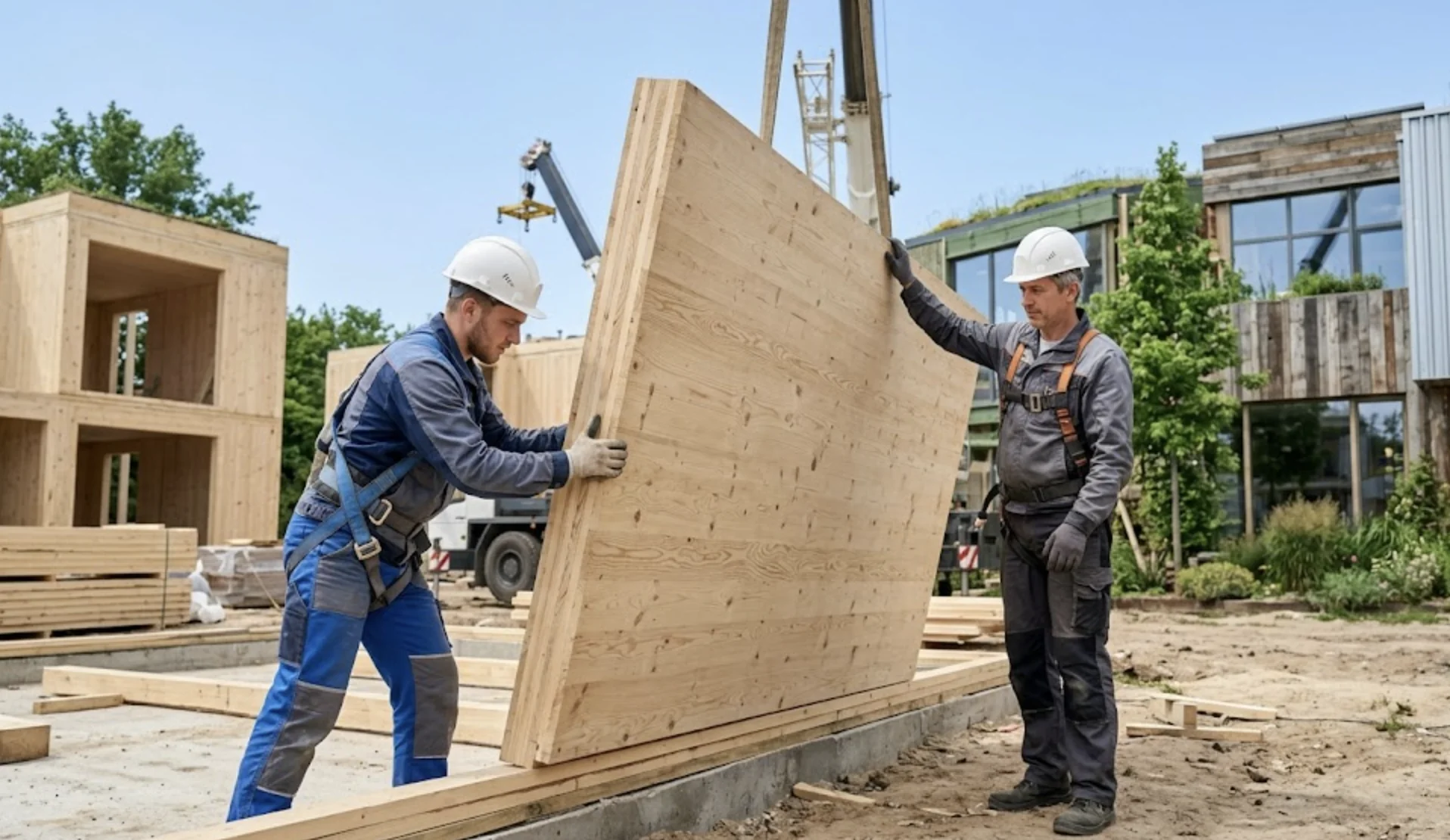
A careful Dutch 2026 building regulations explanation shows that circularity is becoming increasingly important, but that not every circular design choice is automatically a legal obligation. A materials passport is increasingly being used in circular construction projects to record materials, origin and reuse potential, but it is not a general legal obligation to present every new building by 2026. Circular projects often opt for detachable and mechanical connections, because they can facilitate reuse in the future.
Construction Requirements Updates
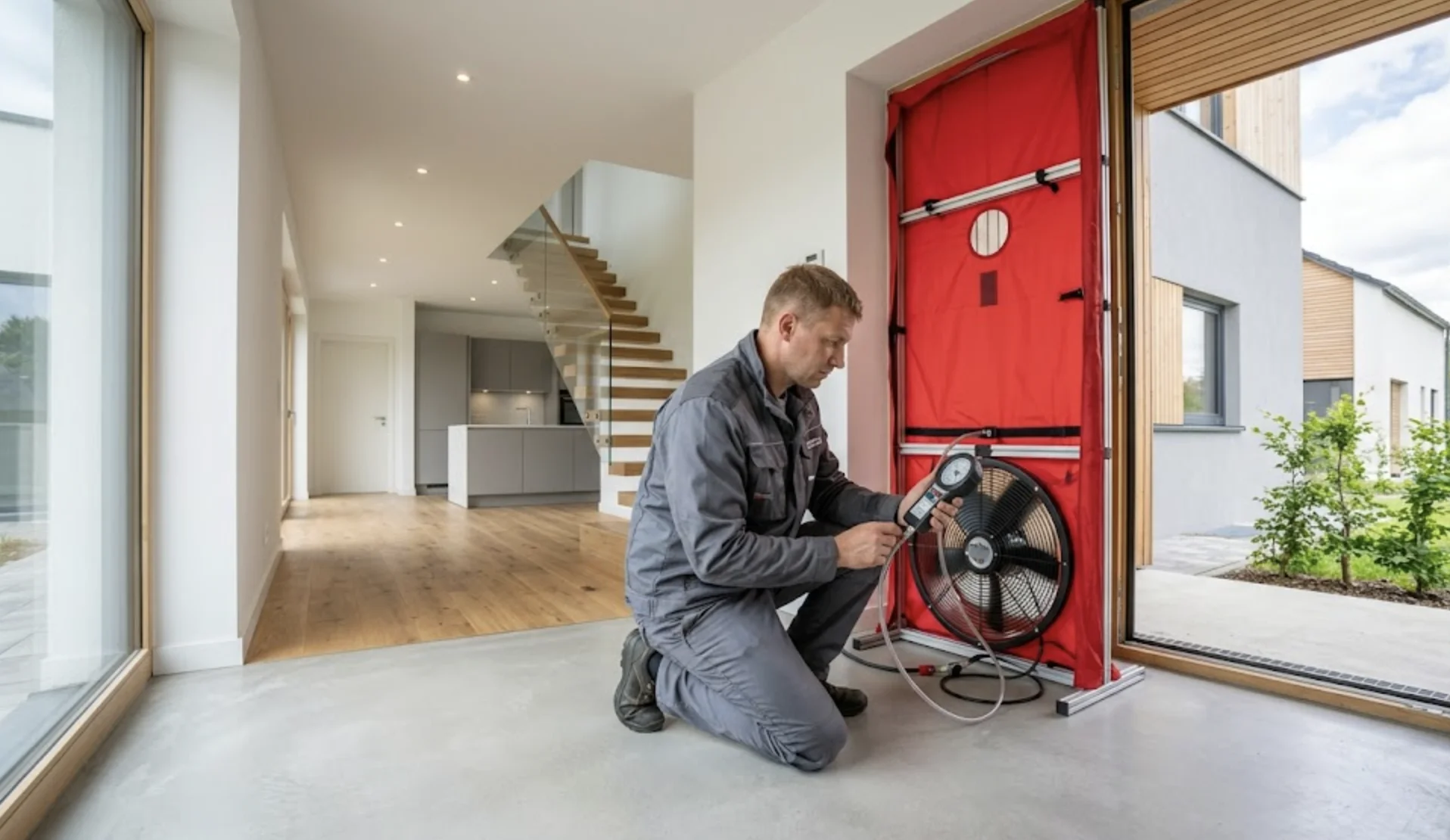
The technical specifications for insulation, ventilation and energy performance will remain important issues within the Bbl and energy performance regulations in 2026. Airtightness, including the qv10 value, gets a lot of attention in design and implementation; practical measurements such as a blower door test can be used when this results from calculation, contract, quality assurance or certification, but are not automatically mandatory for every building upon completion. For buildings with a wooden support structure, fire safety, compartmentalization, detailing and load-bearing capacity in the event of fire must be carefully substantiated, especially now that biobased construction is receiving more attention. Solid wood construction, such as CLT, may require calculations for burn-in rate, fire load capacity and fire resistance of compartmentalizations, depending on the design and applicable standards.
Ecological construction
The sustainability building rules 2026 Netherlands are influenced by energy performance requirements, MPG, circularity and European climate goals, while Paris Proof remains primarily an important market and policy reference. This means that material-related CO₂ emissions, source of materials and environmental performance are becoming increasingly important in design choices and MPG calculations.
In practice, the focus is often on:
- Lowering the MPG score within the applicable limits and project ambitions.
- Use of biobased, renewable or recycled materials when technically, financially and project-wise appropriate.
- Improving detachability and reuse potential, so that materials can be reused more easily later.
These developments encourage architects and constructors to think about the entire life cycle of the building from the first sketch.
Practical impact on construction projects
For the professional in the chain, the question of what will change in construction in 2026 remains mainly practical: what requirements apply to documentation, quality assurance, energy performance and cooperation between parties? The most immediate impact of quality assurance projects is the need for clear documentation of design choices, risk points and critical implementation moments. Photos, measurement reports and execution records may be required to demonstrate that critical components have been carried out correctly, but the exact evidence follows from the assurance plan, contract and applied quality tool. In practice, this leads to more digital recording at the construction site, especially for projects where quality assurance, certification or contractual reporting requirements apply.
What's changing for developers
Developers and contractors must take into account changed attention to liability, quality assurance and file formation. Under the Wkb, the contractor remains primarily liable after delivery for defects that were not discovered upon delivery, unless he can demonstrate that the defect is not attributable to him. This increases the importance of clear contracts, good file formation, careful selection of subcontractors and timely coordination with quality assurance agencies when the Wkb applies. Bricknest facilitates this transition by setting up processes in such a way that technical risks are identified and documented early, which minimizes the risk of delay in reporting.
Increasing supervision
In projects to which the Wkb applies, part of the technical quality control shifts to implementation and to the independent quality assurance agency, while the municipality remains competent authority for permits, reports, supervision and enforcement. The quality assurance officer carries out checks on WKB projects based on a risk assessment and a guarantee plan.
Depending on the project, controls may focus on:
- The reinforcement of foundations and floors before concrete is poured.
- The implementation of fire-resistant penetrations in walls, floors and shafts.
- The installation of heat pumps and ventilation units in accordance with design, BBL requirements and manufacturer regulations, when these components fall under control.
If the quality assurance officer cannot determine that the building complies with the technical regulations, he cannot issue the statement necessary for notification of completion. In the case of a WKB project, the absence of the required statement may mean that a full report of readiness cannot be made and that the building may not be put into use yet. In 2026, construction quality will be more strongly linked to demonstrable documentation, clear responsibilities and correct application of the Bbl, the Environmental Act and the Wkb where it applies.

