
Good bathroom heating ensures the room becomes comfortably warm, the floor doesn't feel cold, and wet surfaces can dry after showering. Often, a combination of primary and supplemental heating is the best solution: a radiator or underfloor heating keeps the bathroom at a steady temperature, while an electric towel radiator or infrared panel provides extra warmth whenever you need it.
Which solution is right for you depends on the heat source, the insulation, and how you use your bathroom. For example, a water-based radiator that works well with a central heating boiler may not provide enough heat when paired with a heat pump. Electric heating reacts faster, but is generally more expensive for long-term use.
In this guide, we compare the different types of bathroom heating, explain how to determine the required capacity, and calculate the costs of electric heating. We also discuss safety regulations and the best solutions for a bathroom renovation.
Primary and supplemental heating in the bathroom
Many people prefer a higher temperature in the bathroom than in the living room. During a shower, 22 to 24 °C is often considered comfortable, although the desired temperature varies from person to person.
The primary heating system must have sufficient capacity to keep the room warm under normal winter conditions. Supplemental heating provides extra comfort during short periods of use.
How much heating capacity does a bathroom need?
The required heating capacity for a bathroom is determined by the room's heat loss.
A small bathroom with an exterior wall, a poorly insulated window, and high ventilation loss may require more heating capacity than a larger, well-insulated interior bathroom.
Four factors are important for making a reliable choice:
- Heat loss: how much heat is lost through walls, floors, ceilings, windows, and ventilation?
- Desired temperature: what indoor temperature should the system be able to reach on cold days?
- Heat source: does the system work with a central heating boiler, a heat pump, or electricity?
- Available heating surface: how much floor or wall space is available for the heating system?
Suppose the heat loss calculation results in 600 watts. At the planned operating temperatures, the primary heating system must be able to emit at least enough heat to compensate for that loss.
However, a radiator with a catalog output of 600 W does not actually deliver 600 W under all conditions.
At a low flow temperature, such as in a system with a heat pump, the heat output of a conventional radiator typically decreases. Therefore, the capacity must be checked at the actual flow and return temperatures.
A fixed rule of thumb in watts per square meter can at best serve as an initial orientation and does not replace a heat loss calculation.
Types of bathroom heating compared
Several systems are available for heating the bathroom. They differ primarily in heat output, response time, installation costs, and service life.
The main options are hydronic radiators, electric radiators, infrared panels, and underfloor heating.
Comparison of bathroom heating systems
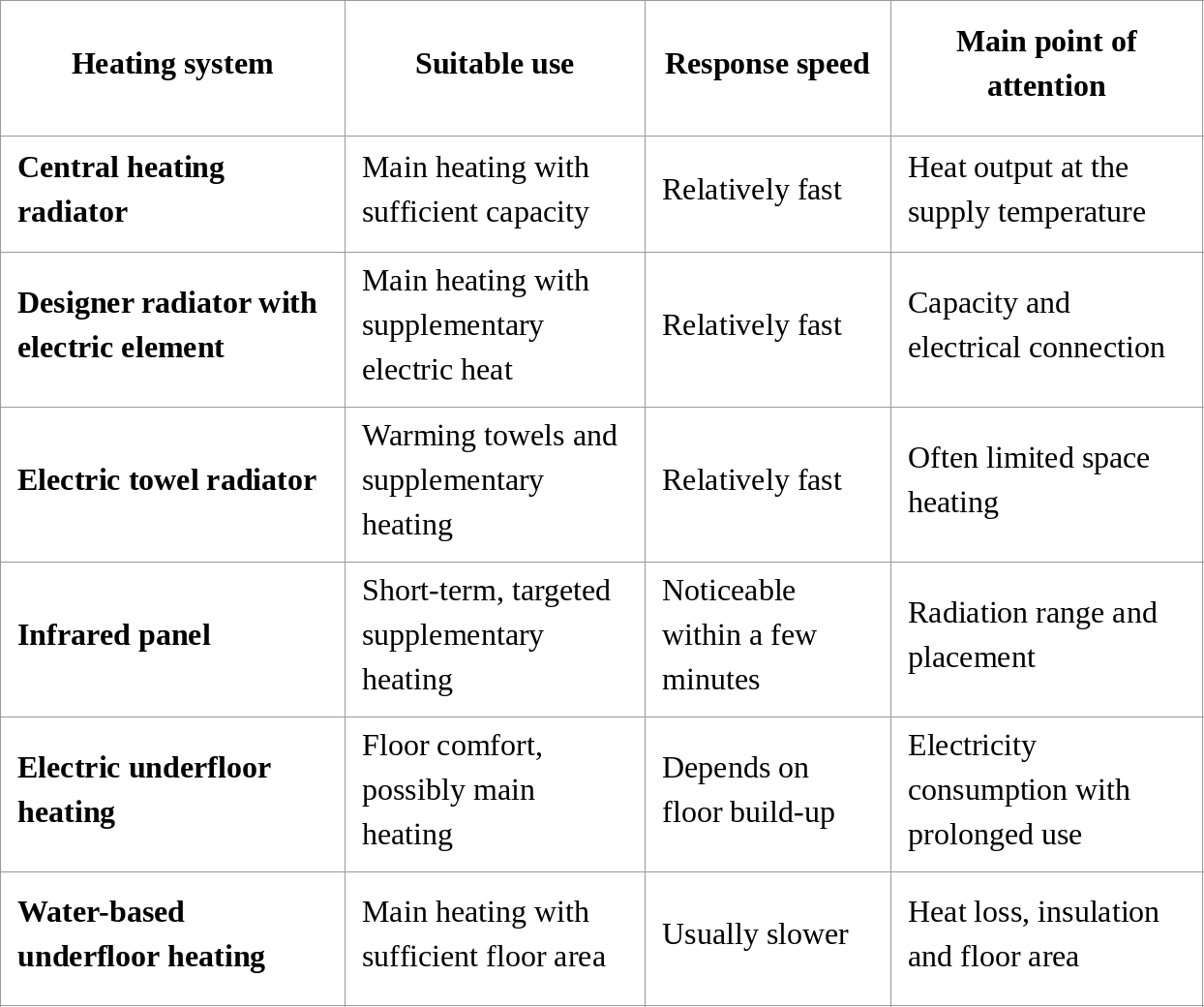
The best choice is not always a single system. In many bathrooms, a combination of base heating and short-term supplemental heat provides the desired comfort.
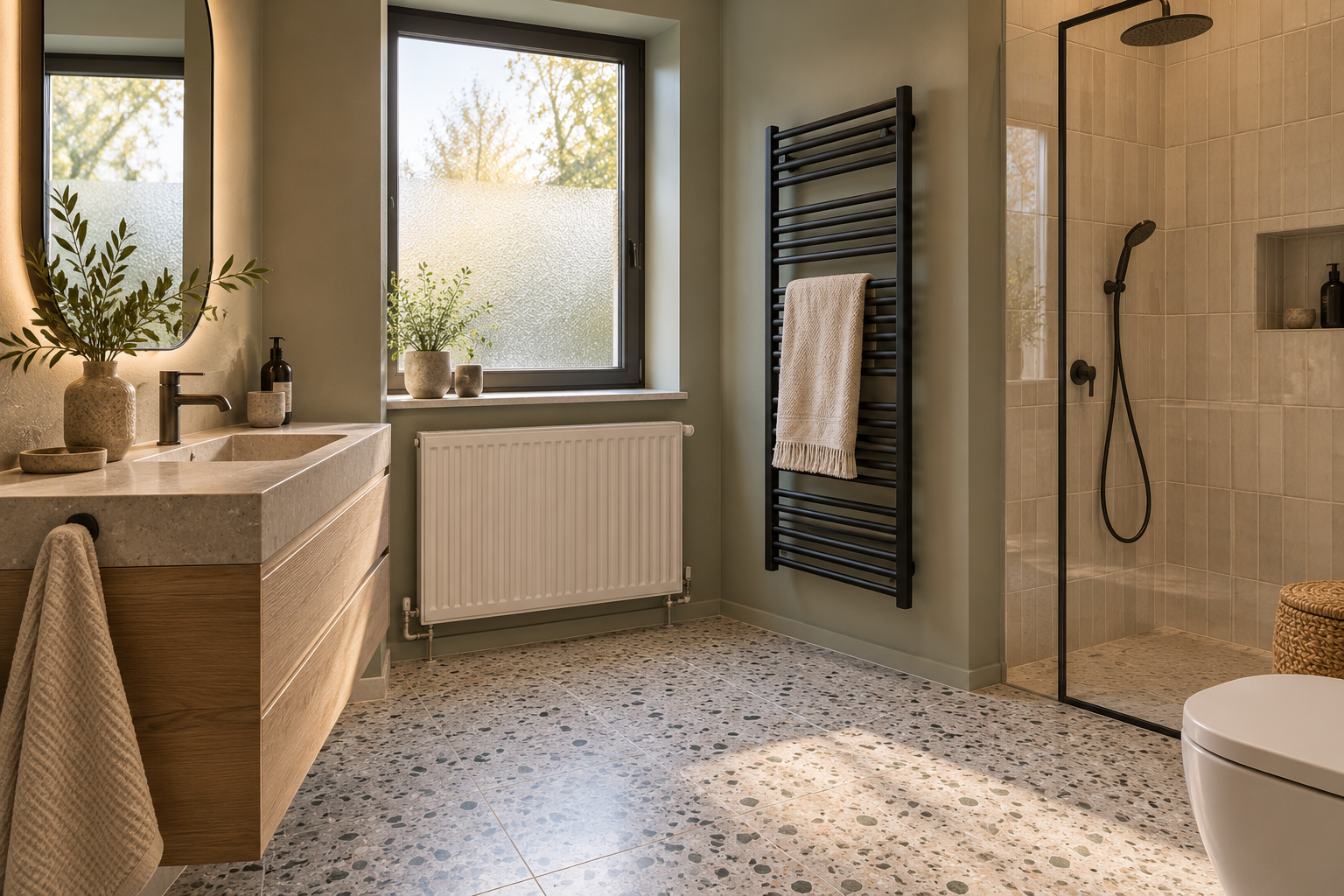
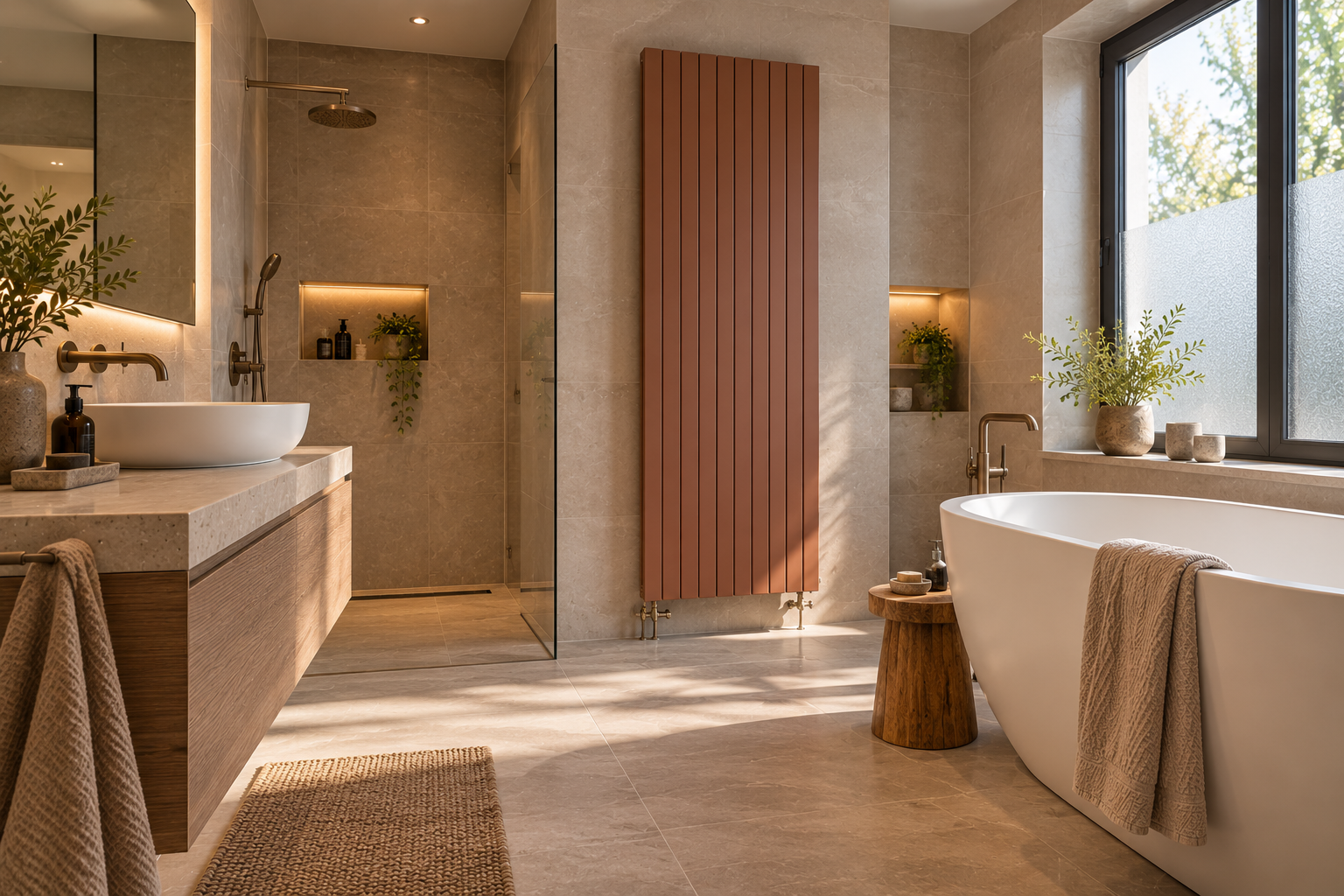
Radiator and designer radiator
A hydronic bathroom radiator is connected to the central heating system. The hot water releases heat into the room via the radiator.
A panel radiator often has a favorable heat output in relation to the available wall space. A designer radiator or towel radiator combines space heating with the ability to hang towels.
When choosing a towel radiator, pay close attention to the actual output. A slim radiator may fit the interior design well, but it might not provide enough heat to independently warm a larger bathroom.
With a central heating boiler that has a relatively high flow temperature, an existing radiator may have sufficient capacity. With a heat pump, it must be recalculated whether the same radiator is still suitable at a lower water temperature.
A designer radiator with an electric element can offer extra flexibility. The electric element can be used, for example, when the central heating is not active. The installation must be suitable for this combined operation.
You can read more about capacity, designs, and installation in our guide on choosing the right bathroom radiator.
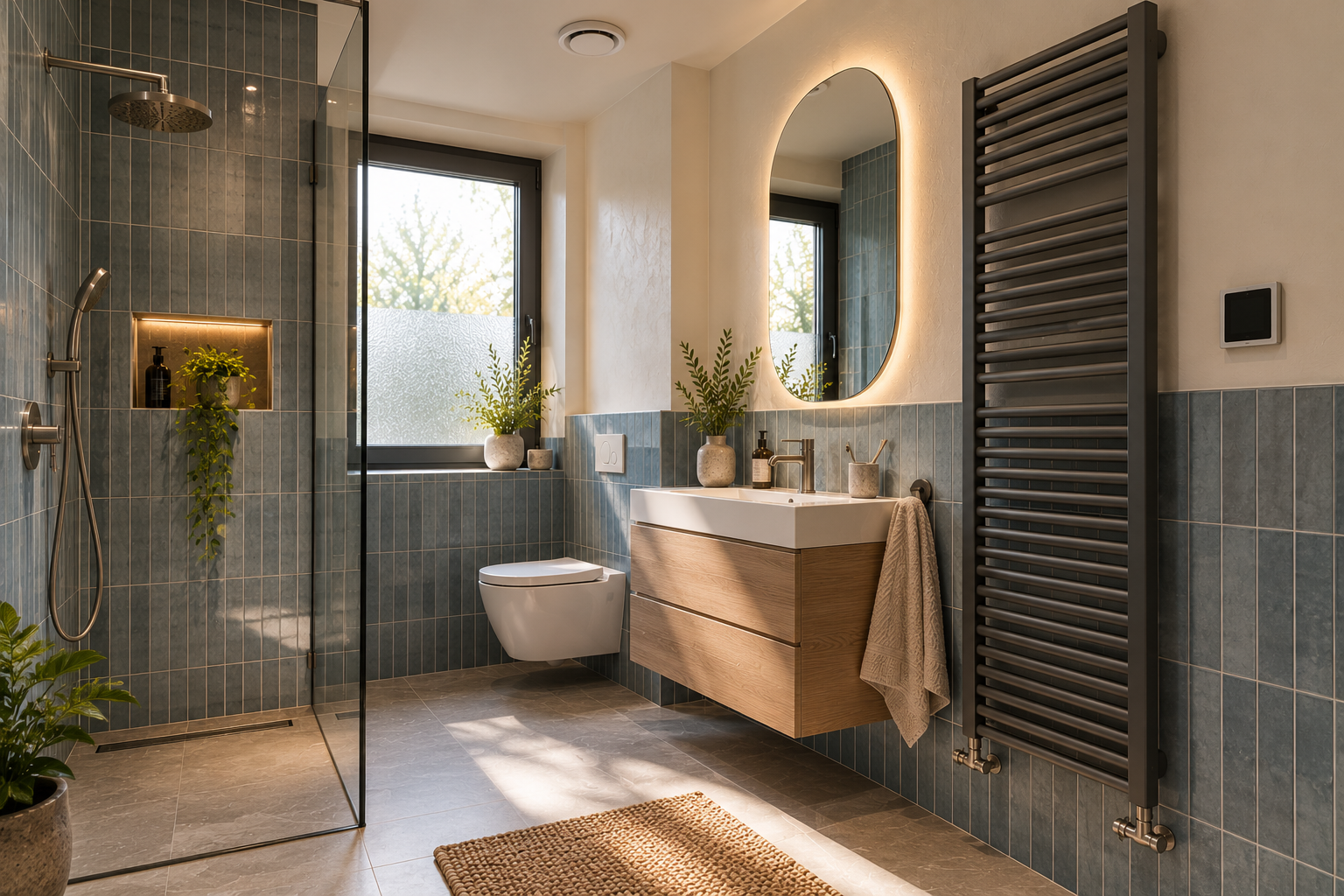
Electric towel radiator
An electric towel radiator works independently of the central heating system. This makes it suitable for a bathroom where no heating pipes are available or where only extra heat is needed.
A timer or programmable thermostat can prevent the unit from staying on longer than necessary.
Be sure to check the nominal power output. Some electric towel radiators are primarily designed to warm towels and provide relatively little heat to the bathroom itself.
As a sole heat source, they are therefore only suitable if their heat output is sufficient to cover the calculated heat loss.
Infrared panels in the bathroom
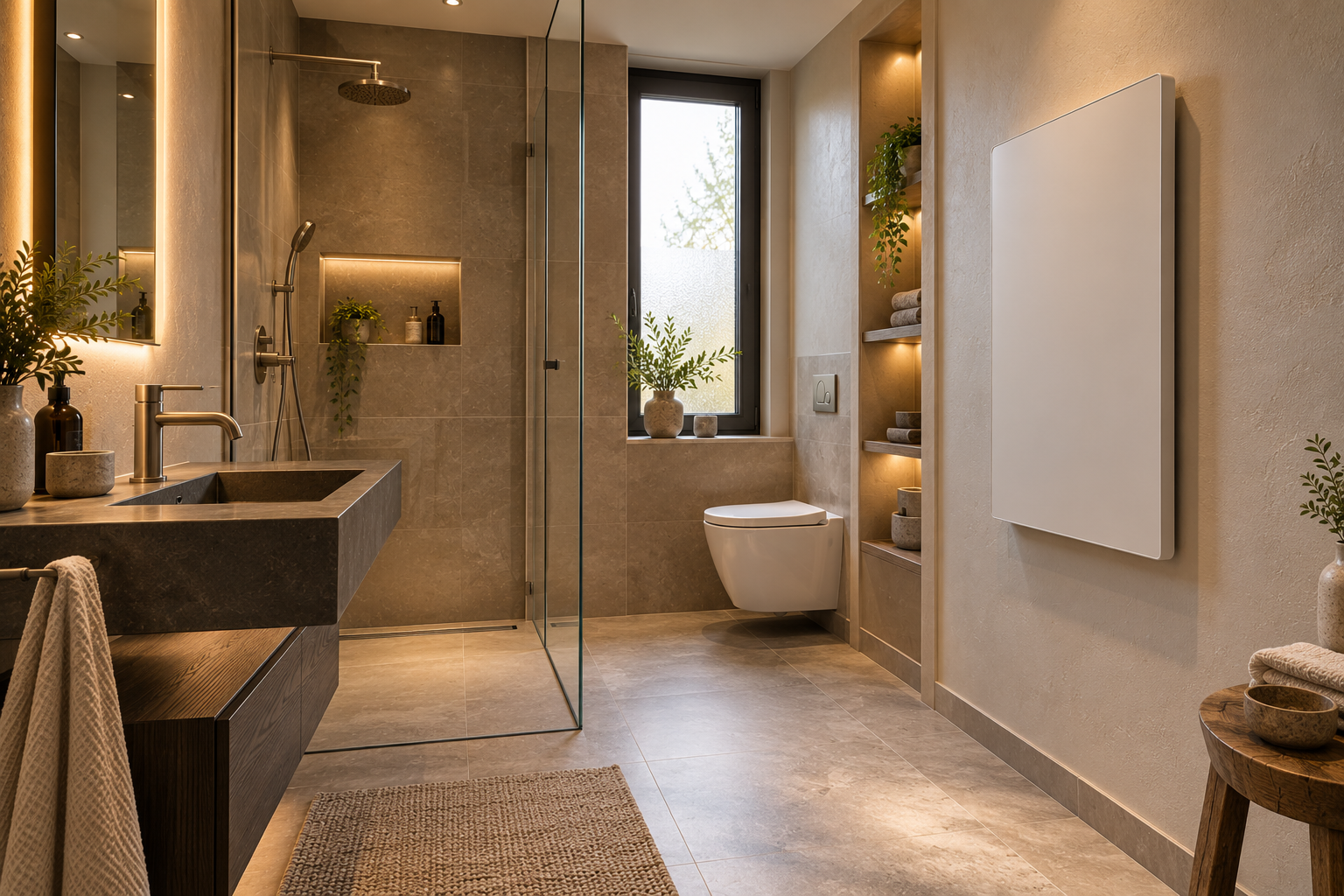
An infrared panel for the bathroom converts electricity into radiant heat. The panel primarily heats people and surfaces within its range.
As a result, the warmth feels pleasant relatively quickly, without needing to heat the entire volume of air in the bathroom first.
According to Milieu Centraal, infrared panels can be an interesting option for rooms that are used for short periods, such as a bathroom.
The potential energy savings come primarily from short-term, targeted heating. For example, you can keep your regular radiator set lower and only switch on the infrared panel while you are using the room.
An infrared panel is not automatically more efficient per kilowatt-hour than other types of electric resistance heating. For long-term primary heating, a suitable heat pump is generally more economical.
Placement is also important. The panel must be able to reach the area where you want to feel the warmth. Behind a wall or outside the radiation range, the effect is limited.
Electric and hydronic underfloor heating
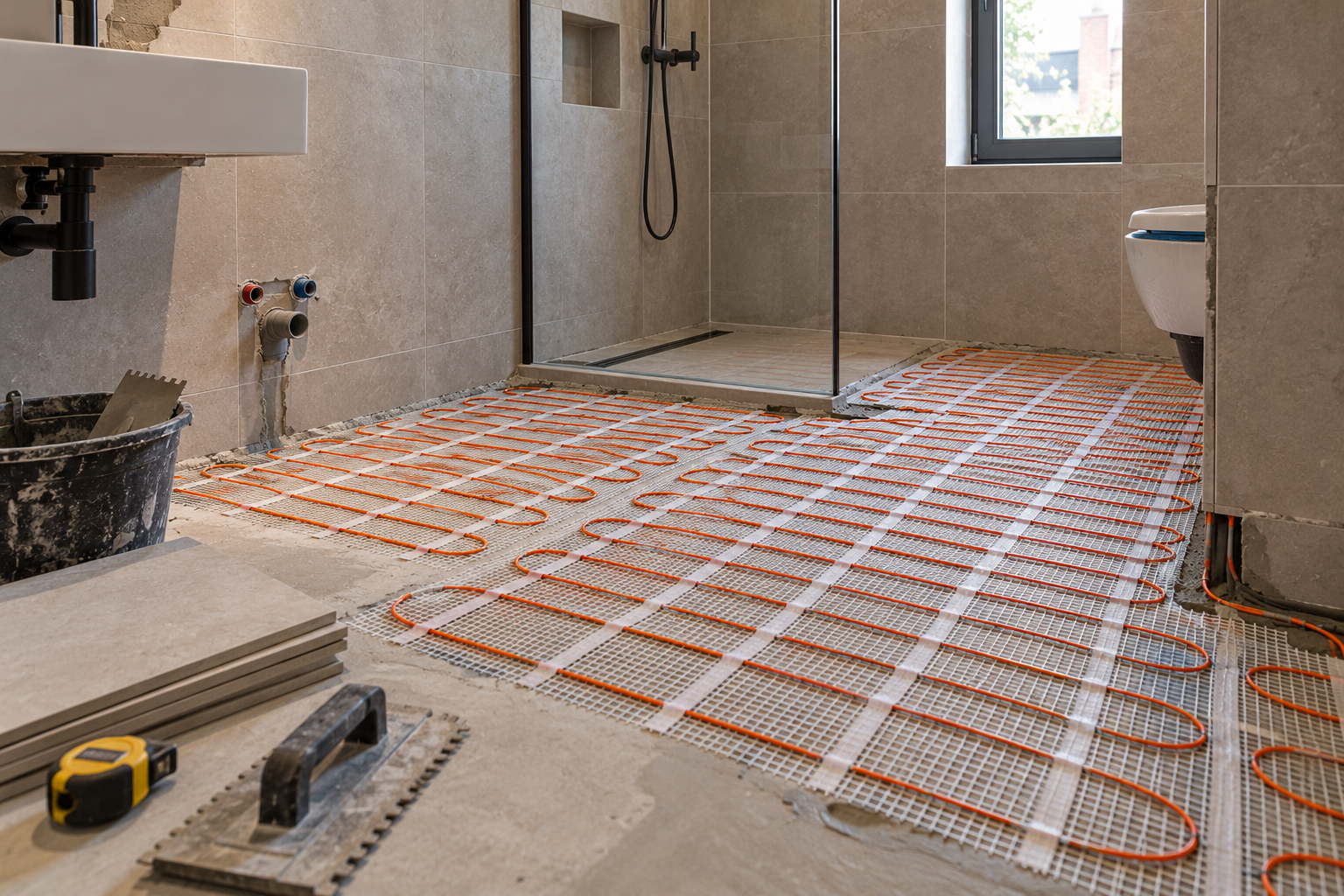
Electric underfloor heating in the bathroom usually consists of heating mats or cables installed beneath the floor finish.
These systems are particularly attractive when the tile floor is being replaced during a renovation. The heating mat can then be integrated into the new floor structure.
The warm-up time depends on the placement of the heating elements and the mass of the floor.
A thin system installed directly under the tiles can react relatively quickly. A thick screed floor generally takes longer to heat up.
Hydronic underfloor heating uses warm water and is particularly advantageous with a low supply temperature. This makes it a good match for a heat pump.
Whether underfloor heating is sufficient as a primary heat source depends on the calculated heat demand and the available heated floor area.
In a bathroom with a large bathtub, shower tray, or other fixed fixtures, that surface area may be limited. Supplemental heating is sometimes necessary in such cases.
For more information on wet-build, dry-build, and electric systems, you can consult our underfloor heating guide covering types and costs .
Heating the bathroom with a heat pump
Heating a bathroom with a heat pump requires sufficient heat output at a relatively low water temperature.
Many heat pump systems operate efficiently with flow temperatures of approximately 30 to 40 °C, depending on the installation and the outside temperature.
This is beneficial for underfloor heating, but not every existing radiator provides sufficient heat at these temperatures.
Why isn't the bathroom getting warm enough?
A common problem after lowering the water temperature is that the existing towel radiator does not provide enough output.
The radiator may have been selected for a higher flow temperature in the past. At a lower temperature, the difference between the radiator and room temperature decreases, which reduces the heat output.
If the bathroom does not get warm enough on cold days, you should check whether the problem lies with:
- a radiator that is too small;
- insufficient flow or incorrect balancing;
- excessive heat loss due to poor insulation.
The solution does not have to be increasing the flow temperature for the entire home. That can reduce the efficiency of the heat pump.
Which combination works best?
In many situations, a low-temperature radiator or water-based underfloor heating is suitable as a base heating system.
For short periods when a higher comfort temperature is desired, an electric towel radiator or infrared panel can provide extra heat.
This way, the central heating system does not necessarily have to run at a higher temperature all day.
The best combination must be assessed based on the actual heat loss, usage patterns, and available connections.
Electric bathroom heating: safe installation
When using electric heating in the bathroom, additional safety regulations apply because electrical equipment is used near water.
The installation must comply with the applicable requirements of NEN 1010, including the provisions for rooms with a bath or shower.
Electrical zones and IP protection
Bathrooms have different electrical safety zones. Which equipment may be placed there depends on the zone, the characteristics of the device, and the installation requirements.
When selecting and installing, you must check the following, among other things:
- Installation zone: is the chosen location permitted for the heating device in question?
- IP protection rating: is the device sufficiently protected against water for this specific position?
- Electrical protection: are the circuit and residual current device (RCD) suitable for the installation?
- Connection method: must the device be hardwired, and what are the manufacturer's requirements?
- Installation distance: are the required distances from sanitary facilities, walls, and other structures being maintained?
A device with IPX4 protection is not automatically suitable for every zone in the bathroom.
Furthermore, a separate electrical circuit is not mandatory for every heating device. This depends on the power output, the existing load, and the installation requirements.
Therefore, have the current electrical supply assessed in advance. If adjustments are necessary, they canelectrical work be part of the bathroom renovation.
How much does bathroom heating cost?
The costs of bathroom heating consist of the purchase, installation, and energy consumption.
Electric systems can be relatively easy to install if the necessary electrical connection is already in place.
Hydronic underfloor heating usually requires more installation work, especially if the existing floor needs to be removed and heating pipes need to be laid.
Comparing installation costs
An electric heating mat can be relatively easily incorporated into the new floor during a complete bathroom renovation.
However, the price of the mat says little about the total costs. Leveling, insulation, thermostat, electrical connection, and tiling must also be taken into account.
For a hydronic system, heating pipes, hydraulic connection, any necessary manifold, and balancing must be added to that.
When comparing quotes, it must therefore be clear which work is included. A price for heating materials alone is not comparable to a fully installed and finished system.
What are the operating costs of electric underfloor heating?
The consumption of electric underfloor heating is calculated based on the power output, the duration of use, and the electricity price.
Take a bathroom with 4 m² of actual heated floor area and an electric heating mat of 150 W/m².
The total power consumption is:
4 m² × 150 W = 600 W = 0.6 kW.
If the mat operates at full power for two hours a day, it consumes:
0.6 kW × 2 hours = 1.2 kWh per day.
For 200 days of use, that is:
1.2 kWh × 200 days = 240 kWh per year.
At an assumed electricity price of €0.30/kWh, the costs amount to €72 per year.
This is a calculation example. In reality, a thermostat switches the heating element on and off depending on the temperature. As a result, the actual operating hours and costs may vary.
Costs of infrared panels and electric radiators
For a 600 W infrared panel operating continuously for one hour, the electricity consumption is 0.6 kWh.
At the same example price of €0.30/kWh, that costs €0.18 per hour.
An electric radiator with the same power rating consumes about the same amount of electricity for the same duration of use.
The difference in operating costs arises primarily because one system may be used for a shorter time or only needs to heat a limited zone.
Insulation, ventilation, and control
A good heating system cannot fully compensate for comfort levels if the bathroom loses a lot of heat.
Therefore, bathroom insulation, ventilation, and heating control must be assessed together.
Insulation and heat loss
In a bathroom located above a crawl space, an uninsulated floor can lose a significant amount of heat.
This is particularly disadvantageous when using underfloor heating: some of the heat may escape downwards instead of warming the bathroom.
Good floor insulation under the bathroom reduces these losses and can improve floor comfort.
Cold exterior walls, poorly insulating glass, and gaps around window frames also affect the required heating capacity.
Ventilation and moisture control
Heating can help wet surfaces dry faster, but it does not remove moisture from the room.
Adequate ventilation is required for that.
The Bbl specifies a minimum ventilation capacity of 14 dm³/s—approximately 50 m³ per hour—for a bathroom, within the applicable regulations for the space.
A nominal fan capacity does not automatically guarantee that this amount of air is actually extracted after installation. Duct resistance, air supply, and dust buildup can affect performance.
Therefore, check that the bathroom has sufficient air supply and that the extraction continues to function after showering.
Thermostats and smart controls
A programmable thermostat for bathroom heating allows you to adjust the temperature to your daily routine.
For electric radiators and infrared panels, a timer schedule often works well because these systems provide heat relatively quickly.
With electric underfloor heating, a floor sensor may also be necessary to limit the maximum floor temperature.
A thick screed floor reacts more slowly. The control system must account for this to prevent the room from only becoming comfortable just as you are leaving the bathroom.
A smart thermostat does not automatically save energy. Savings are achieved when it causes the heating to run for less time or at a lower temperature.
Choosing bathroom heating during a renovation
The best time to replace bathroom heating is often during a complete bathroom renovation.
When the floor and walls are already being opened up, heating pipes, electrical connections, and floor insulation can be addressed at the same time.
The design should clearly define which heat source will serve as the primary heating, how much power is available, and where any supplemental heating will be placed.
Small bathroom or limited renovation
For a small bathroom where only extra heat is needed, an electric towel radiator or infrared panel can be a practical choice.
If the existing floor is being kept, such a solution may avoid the need for additional demolition work.
The capacity must be sufficient for the intended use. A towel radiator primarily used for warming towels does not necessarily need to be able to heat the room on its own.
Large bathroom or full renovation
In a larger bathroom, water-based underfloor heating can be a suitable foundation, especially if the home already has a heat pump or is being prepared for one.
Check whether the heatable floor area is sufficient. An additional radiator may be necessary to reach the desired temperature on cold days.
During a full renovation, heating, insulation, and ventilation can be coordinated from the very beginning.
In thebathroom renovation step-by-step plan you can read how these tasks fit into the complete project.
At Bricknest, the choice of heating, necessary electrical provisions, and available installation space are all taken into account during the design phase. This prevents discovering after the tiling is done that a radiator lacks sufficient capacity or that an electrical connection is missing.
Frequently asked questions about bathroom heating
When choosing heating for the bathroom, comfort, warm-up time, and electricity consumption are the primary factors.
How can I heat my bathroom quickly?
An electric radiator or a suitable infrared panel can provide extra heat relatively quickly.
A radiator helps to warm the air in the room, while an infrared panel primarily provides targeted radiant heat.
With a timer, the device can be switched on shortly before use.
Is an infrared panel energy-efficient?
An infrared panel used as supplemental heating can save energy when used for short periods, allowing you to set the main room heating lower.
Per kWh of electricity, it does not automatically provide more heat than other electric resistance heating.
Can electric underfloor heating serve as primary heating?
Yes, provided the calculated heat output is sufficient to maintain the bathroom at the desired temperature.
The available heated floor area and the maximum permissible floor temperature are the determining factors here.
With prolonged use, electricity costs can be relatively high.
How warm should a bathroom be?
During use, a temperature of approximately 22 to 24 °C is often considered comfortable.
The desired temperature is a personal preference. It is not always necessary to maintain this temperature all day, especially if the bathroom is only used for short periods.
Is a towel radiator sufficient as primary heating?
That depends on the output at the actual water temperature or the electrical power consumption.
A small designer radiator may be sufficient for a well-insulated bathroom, but additional heating is required in cases of higher heat loss.
Conclusion: which bathroom heating should you choose?
The best bathroom heating is tailored to the heat requirements and how the space is used.
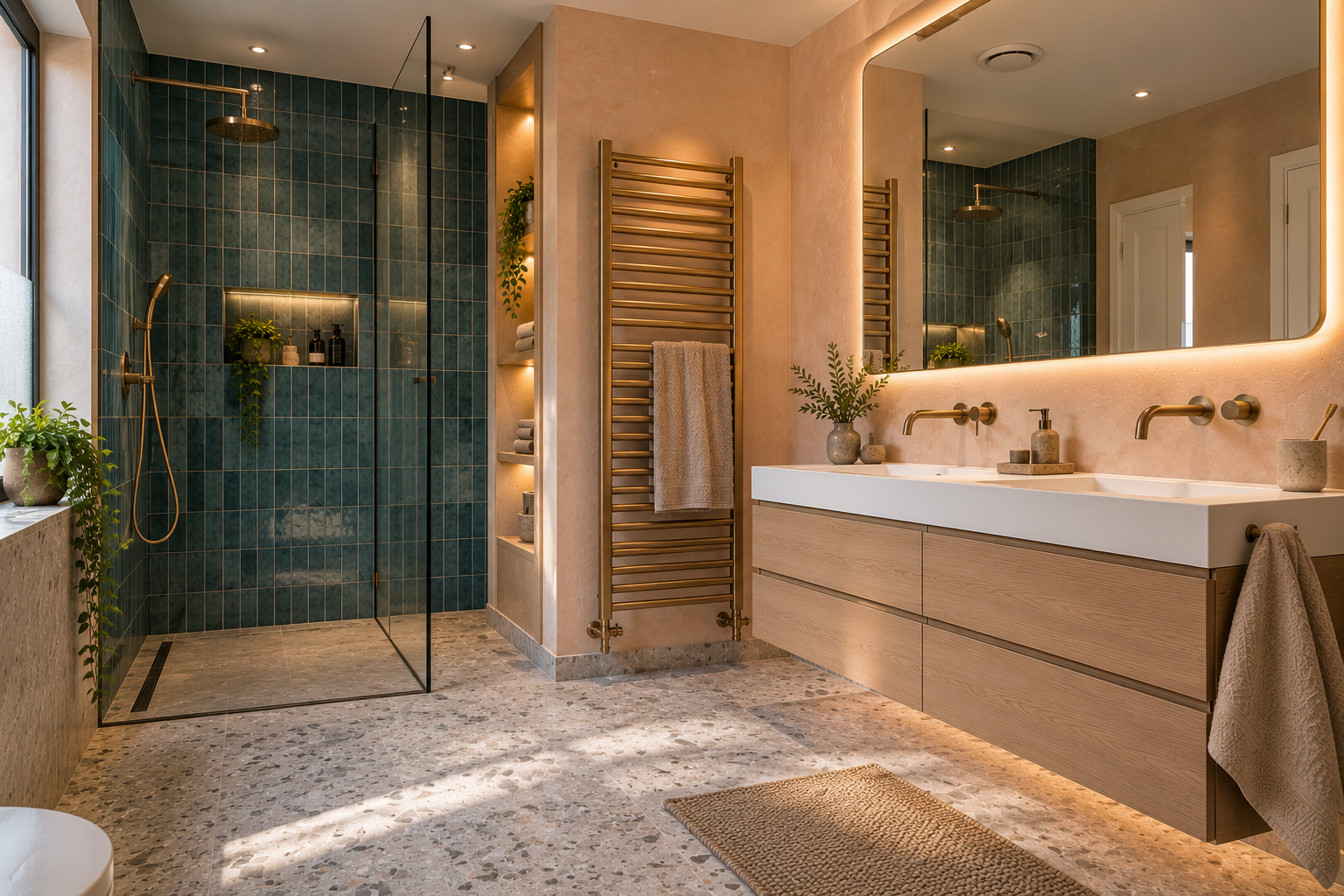
A hydronic radiator or underfloor heating can provide the foundation for long-term heating. An electric towel radiator or infrared panel is particularly useful when you want extra warmth at specific times.
With a heat pump, it is essential to check whether existing radiators still provide sufficient output at a low flow temperature.
Therefore, have the required heating capacity determined first and check the electrical installation before choosing a system.
This is how you combine primary and supplemental heating in the bathroom in a way that is comfortable, safe, and aligned with your actual energy consumption.

