
A tightly painted wall requires more than just a good color. The end result depends on the condition of the substrate, the choice of primer and paint, and on how the material is applied. If you work technically correctly, you prevent streaks, differences in gloss, poor coverage and premature wear. That is why Bricknest does not approach paintwork as a separate finish layer, but as an important part of the overall quality of the interior.
Preparing walls for painting
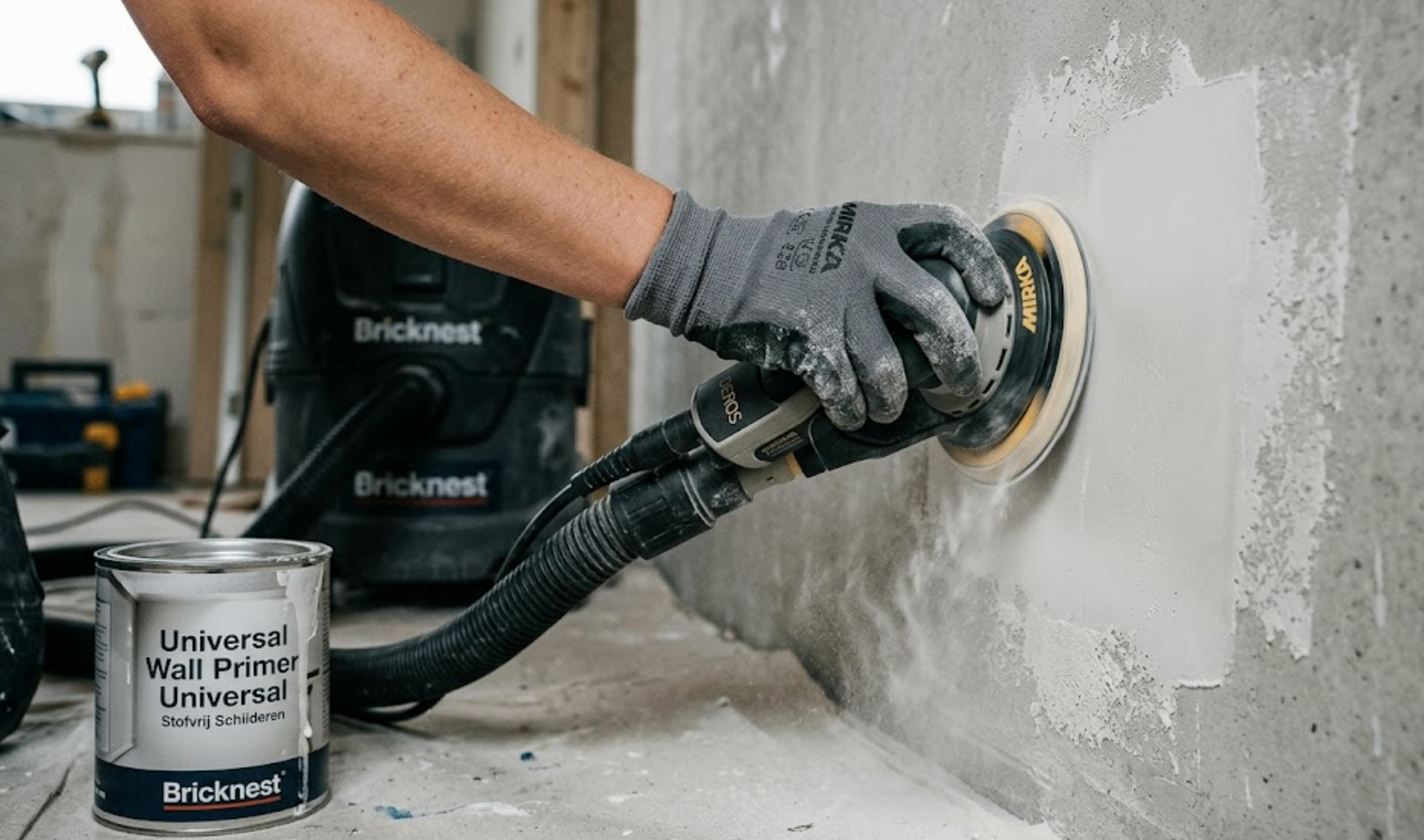
A sustainable finish always starts with the surface. Even high-quality paint cannot compensate for an uneven, soiled or too damp wall. Therefore, the preparation must be technically correct before applying the first coat.
The wall must first be dust-free, grease-free and stable. Loose old layers of paint, powdery plaster or small cracks must be removed or repaired. Unevenness is smoothed out with filler or a fine leveling layer, after which the wall is sanded again. It is precisely this phase that determines whether a painted wall looks tight later or remains restless.
This is followed by the primer and the choice of materials. An absorbent surface requires a different pre-treatment than a previously painted wall. The difference between matt, washable or extra wear-resistant paints must also be determined in advance. If you want to know more about technology, planning and material selection, you can also read an article about this on Bricknest about painting and painting: costs, techniques and inspiration.
Painting different spaces
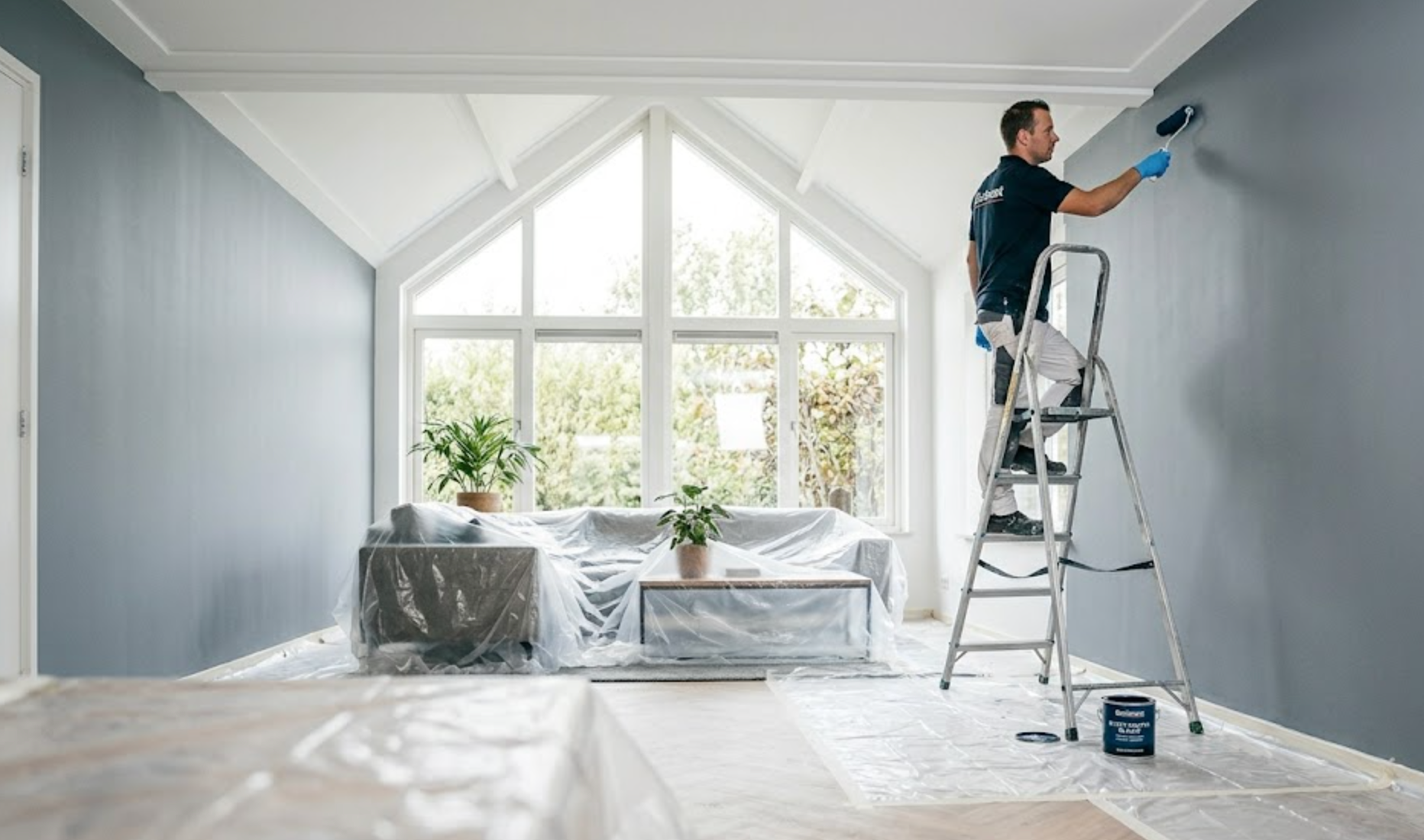
Not every room has the same requirements for paint and finish. Use, light, ventilation and moisture load together determine which system is most suitable. That is why paintwork should always be tailored to the function of the room.
Wall painting
Wall painting is not only about color, but also about layer structure and adhesion. A standard living room wall can often be finished with a well-opaque water-based wall paint, but repairs or color changes sometimes require additional layers. Dark tones, highly absorbent surfaces or large temperature differences make the design technically more sensitive.
For a tight result, these points are particularly important:
- an even and dry surface;
- a primer that matches the wall;
- uniform distribution of paint;
- work wet-on-wet to avoid starting.
After the first layer, coverage must be critically assessed. Repainting too quickly or rolling irregularly often causes shiny lines and visible transitions.
Living room painting
Living room painting usually requires more attention to light effects and wear resistance than a smaller or less intensively used space. In living rooms, runway formation, structural differences and color deviations are more likely to be noticed, especially with large wall surfaces and a lot of daylight. That is why professionals often opt for a smooth rolling direction and a carefully coordinated finish here. For inspiration about suitable finishes per room, you can also read an article on Bricknest about the best paint finishes per room.
Combination of painting and wallpaper
Painting and wallpapering can technically go well together, but only if the transition between the two materials is carefully worked out. This combination is often chosen to set accents without visually weighing down the entire space.
Painting and wallpapering
Painting and wallpapering works best when both finishes are coordinated at the design stage. It is important to determine in advance which wall parts will be painted and where the seam or transition will be. A poorly placed transition, on the other hand, draws extra attention and makes the space restless.
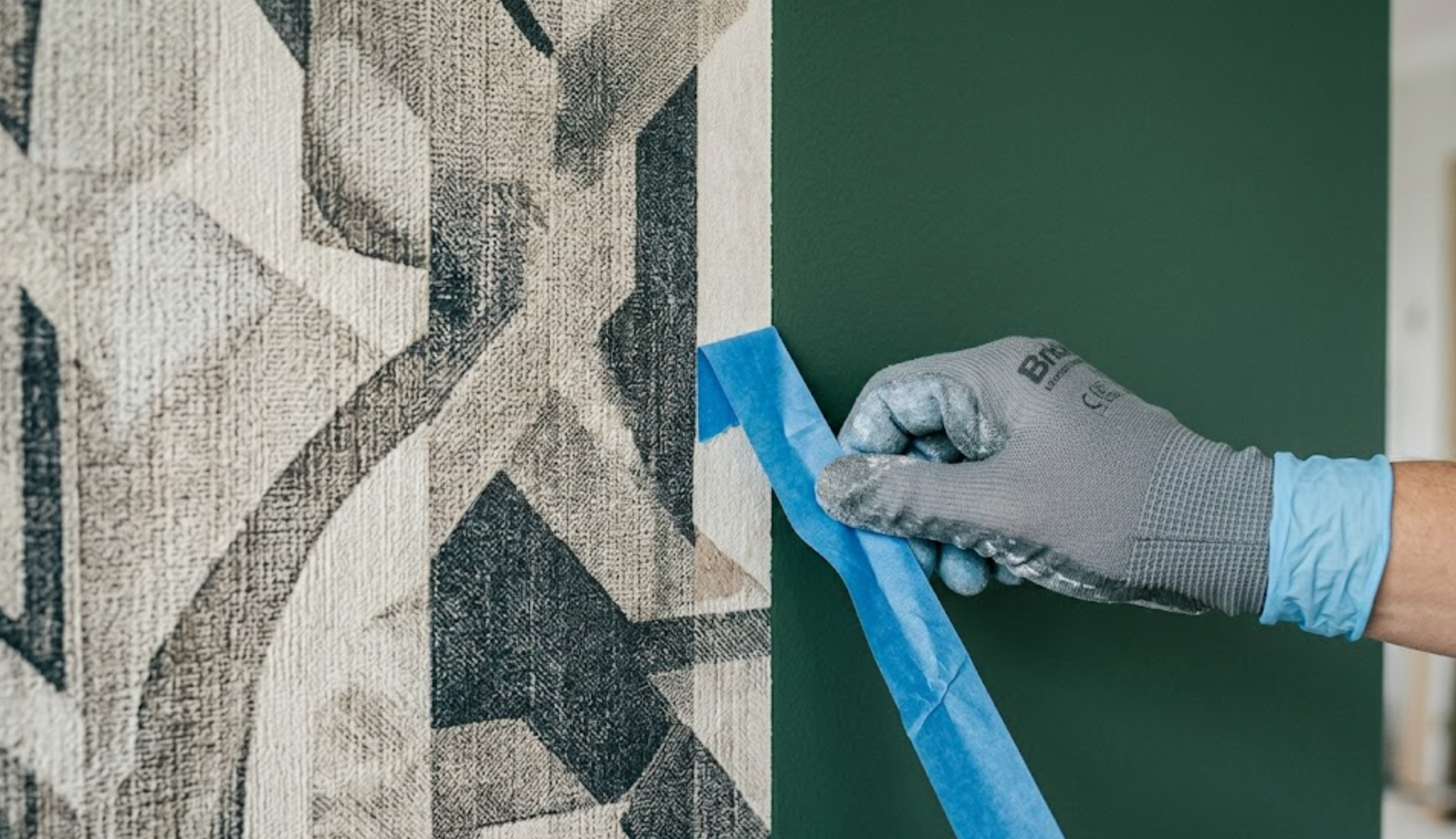
The technology of this combination is mainly about order and precision. Usually, the wallpaper is applied first and only then the adjacent painted parts are tightly taped and finished. This keeps the line sharper and reduces the risk of damage. At Bricknest, such processes often first look at the overall wall structure, so that the choice of materials, finish and use of the space reinforce each other.
Common mistakes include an unstable surface, insufficient drying time or a wrong combination of glue, primer and paint. Even too much contrast without a clear composition often works less well than expected in practice.
Features of painting with different types of paint
Not every paint behaves the same on the wall. Composition, pigment, coverage and drying time determine how the paint should be processed and what it is technically suitable for.
Ecoline dyeing
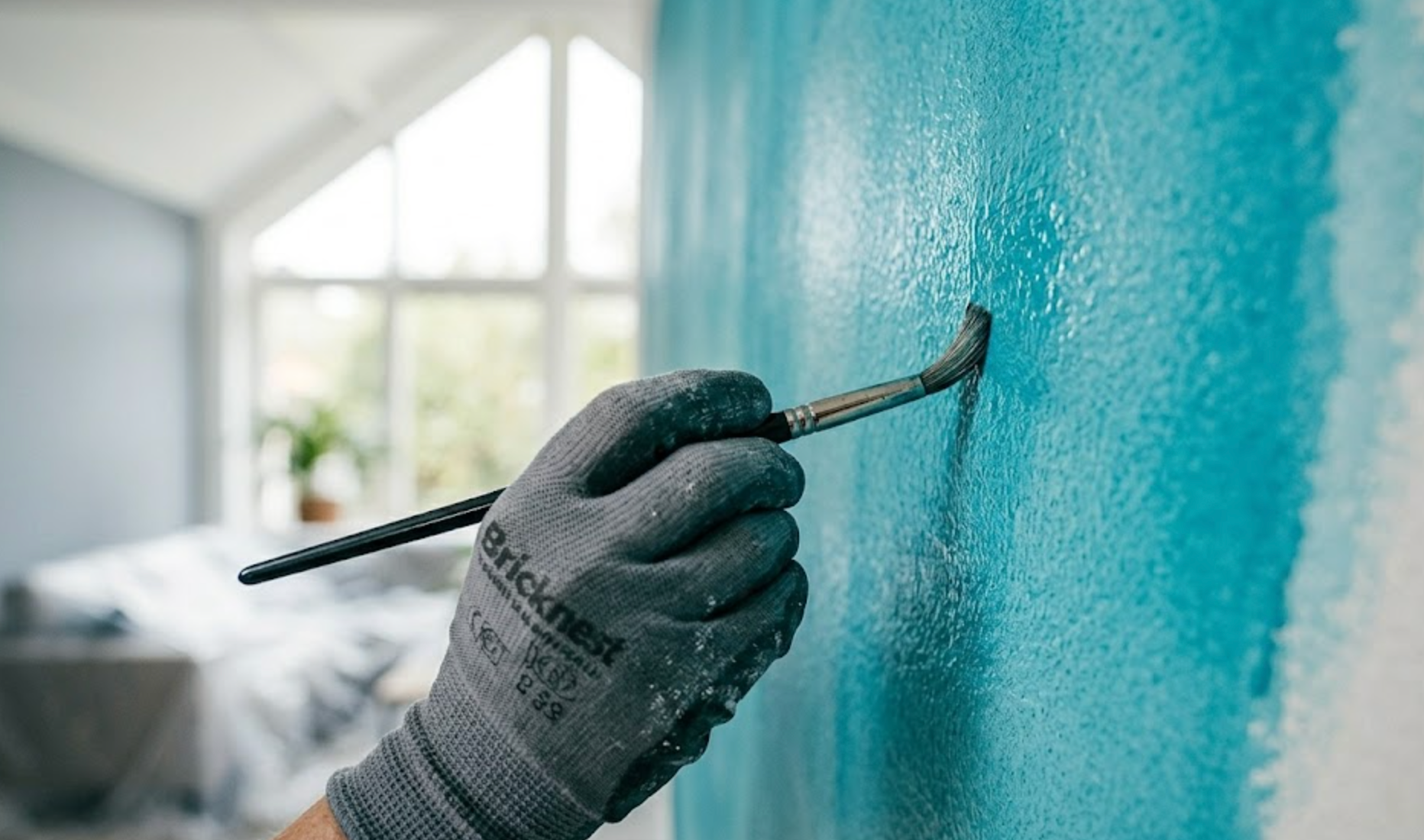
Painting with ecoline requires a different approach than working with classic wall paint. Ecoline is particularly suitable for decorative effects, transparent areas of color or creative accents, but less for heavy-duty wall surfaces that need to be fully opaque and washable. That is why it is important to clearly determine in advance what visual and practical purpose the finish has.
The advantages lie in the vibrant color effect and the ability to create playful, transparent effects. Disadvantages are the lower wear resistance, sensitivity to moisture and the limited applicability on large, intensively used walls. If you also want to consider sustainability when choosing materials, you can read an article about this on Bricknest about sustainable paint for your home.
When applying, control over the surface and moisture load are extra important. Ecoline is usually processed in thin layers and requires uniform surface absorption. Inadequate preparation quickly leads to the formation of stains, uneven saturation and uncontrolled edges.
Cost of painting
The price of paintwork depends on more than just the number of square meters. The condition of the substrate, the chosen paint system and the degree of preparation have a direct influence on the overall investment.
Paints cost per m²2
Paints cost per m²2 are a useful starting point, but do not provide a complete picture without context. A smooth, already prepared wall is faster and cheaper to finish than a surface with cracks, old layers of paint or repair areas. The chosen color also influences consumption: deep or dark tones often require additional layers.
The most important price factors are:
- the condition of the subsoil;
- the number of layers required;
- the type of paint and primer;
- surface accessibility;
- the desired level of finish.
Economic variants are possible, but should not be at the expense of basic preparation. It is precisely this that people often make unjustified savings, while a poor surface causes visible defects later. Technically good painting is therefore not only an aesthetic choice, but also an investment in a longer lifespan of the finish.
By opting for Bricknest's integrated approach, you prevent unforeseen costs due to construction errors and benefit from a result that is technically and aesthetically of the highest level. Our project managers monitor efficiency so that you can use the entire life of your investment.
Do you want to transform your home with professional painting that lasts for years? Contact Bricknest and find out how we will guide your project from planning to expert final inspection.

