
In the current Dutch housing market, energy optimization has become an absolute necessity for every homeowner. An uninsulated floor acts as an invisible leak, losing valuable heat, which not only increases energy bills, but also noticeably reduces home comfort. At Bricknest, floor insulation is therefore approached as an integral part of the thermal shell of the home.
Our approach combines technical expertise with a modern digital experience. Via the digital client portal, the customer stays up to date with the progress of the project, while a personal project manager monitors the technical details. In addition, extra security comes in the form of the Bricknest Double Guarantee: 1 year warranty on execution and project insurance up to €500,000.
Why floor insulation is necessary
From a technical point of view, insulating the floor is one of the most profitable interventions in a home. It forms the basis of a stable indoor climate and prevents cold and moisture from the soil from directly affecting the living environment.
Heat loss via the floor
Although warm air rises, a cold floor structure is continuously influenced by the low temperature of the crawl space or the surface. This causes an unpleasant cold zone at the bottom of the room, which lowers the perceived temperature. Without professional insulation, the heating system has to work harder to compensate for this loss, resulting in more inefficient energy management.
Higher energy efficiency
For low-temperature heating systems, insulation for floor heating is indispensable. Without a high-quality insulation layer under the heating pipes, a large part of the heat is lost to the foundation or underlying structure. That is why materials with good pressure resistance, a low thermal conductivity coefficient and a structure that directs heat upward in a targeted manner are used. If you also want to delve into a carefree installation and a well-tailored heating system, you can also check out the Bricknest article floor heating without worries consult.
Comfort and moisture protection
Floor insulation not only helps against heat loss, but also limits the influence of moisture from the crawl space. This is essential to prevent condensation, mildew and damage to finishing materials. A drier and more stable substructure increases the lifespan of the floor structure and makes the home noticeably more pleasant to use.
Types of floor insulation
Not every floor requires the same solution. The choice depends on the type of floor, the available space, the condition of the substructure and the purpose of the insulation. That is why the technology must always be tailored to the existing situation.
Wooden floor insulation
Wooden floor insulation usually involves working between or under the beams. Here, ventilation, humidity regulation and the condition of the wood are crucial. If the structure cannot breathe or when moisture is trapped, this can lead to mold, wood rot or reduced load-bearing capacity. That is why a wooden floor must always be technically assessed before installing insulation material.
Subfloor insulation
Subfloor insulation is often used under laminate, PVC or other finishing floors. This layer helps to reduce impact noise and makes the floor structure more stable. Thermally, this is particularly interesting when the main floor cannot be insulated from below. For renovations, where insulation and finishing are closely related, Bricknest leaves in the article a beautiful and warm floor see how a well-thought-out floor structure also provides visual and practical added value.
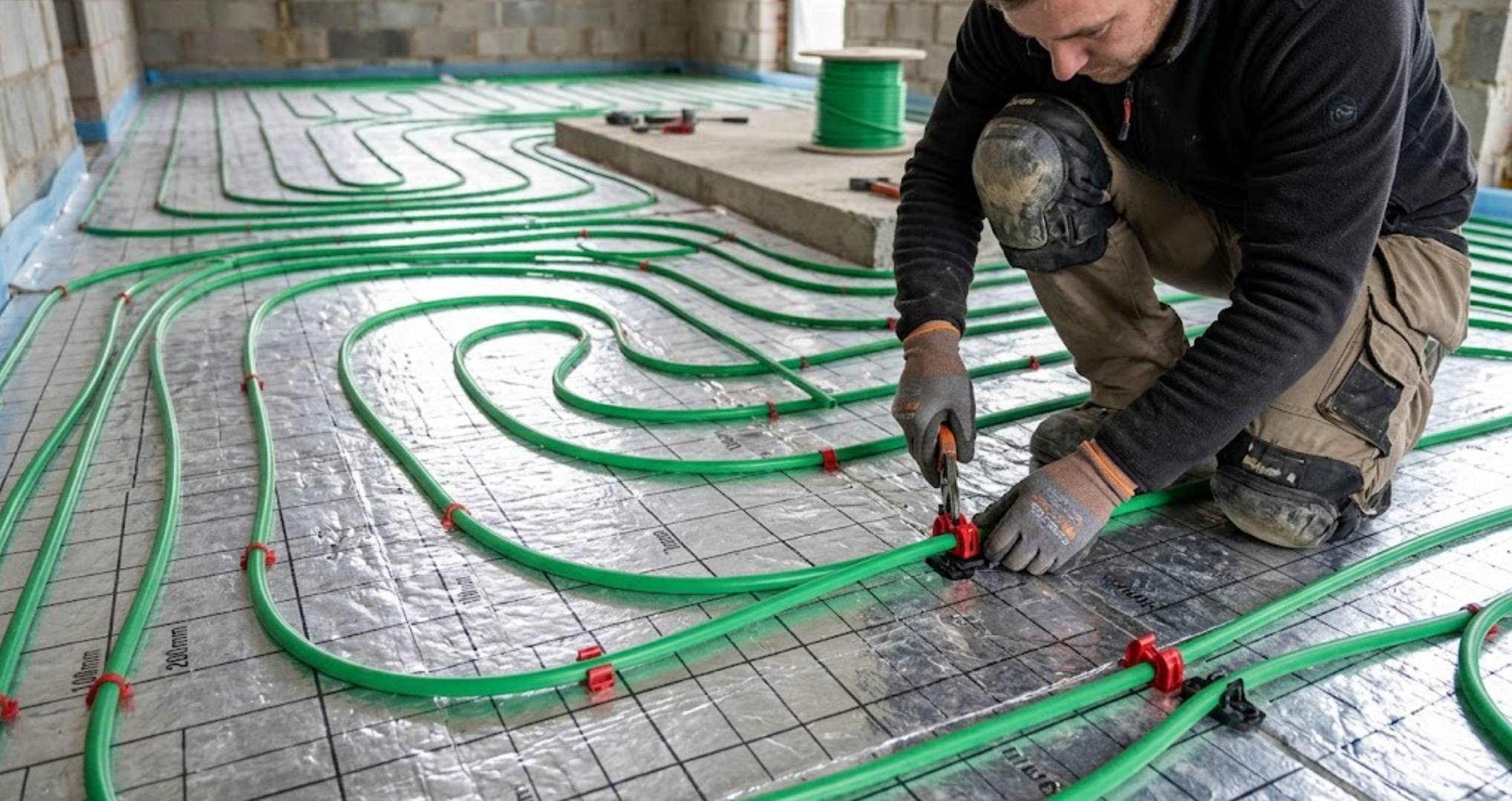
Insulation for floor heating
For low-temperature heating systems, specific insulation for floor heating is essential. Without a high-quality insulation layer under the heating pipes, a large part of the heat is lost to the foundation. We use materials with a high reflectivity and thermal resistance to send heat directly to the living space, maximizing the efficiency of your system.
Materials for effective insulation
The performance of floor insulation is strongly determined by the material chosen. Not only the insulation value is important, but also moisture resistance, compressive strength, construction height and workability. A material must therefore match the construction and the way in which the floor is used.
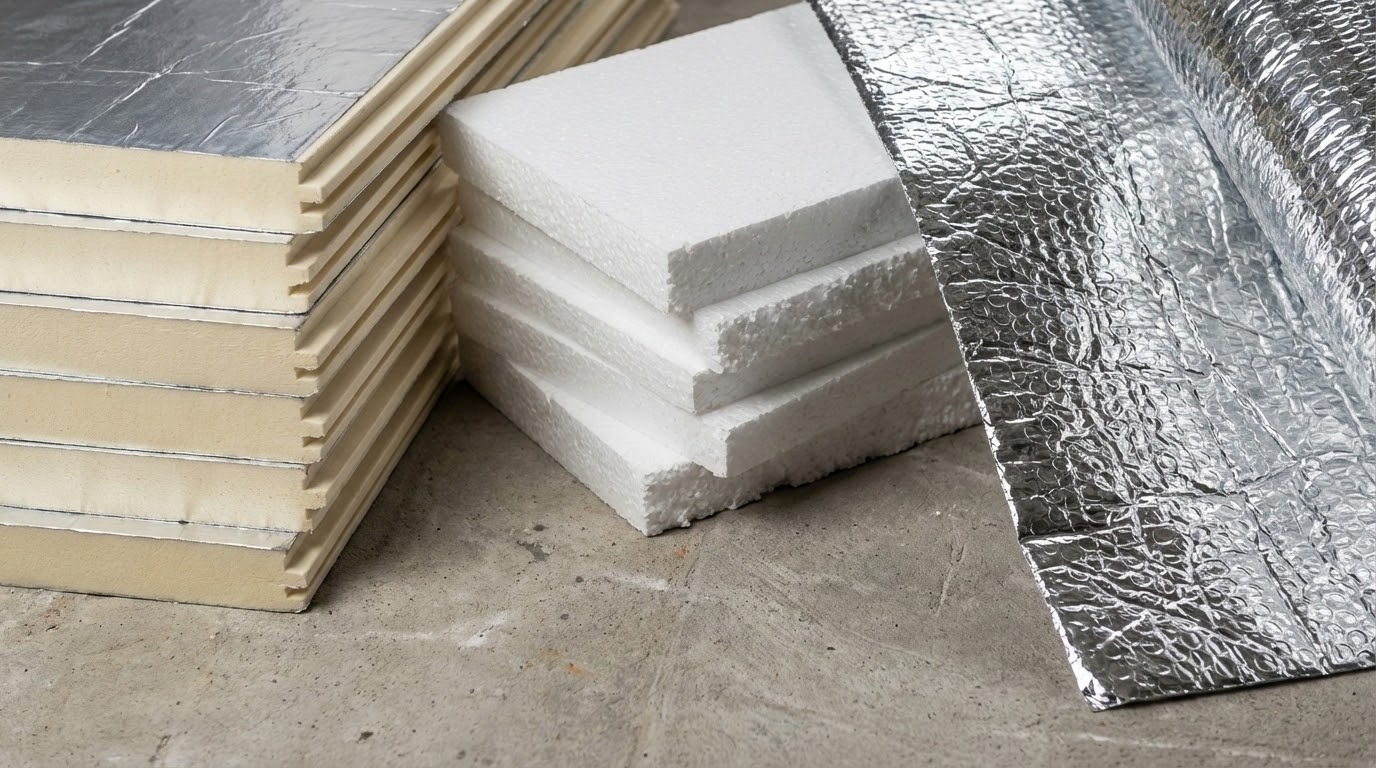
Floorboard insulation
Insulation floor boards are widely used because they are dimensionally stable and relatively easy to process. Depending on the project, EPS, XPS, PIR or other flameproof plates are chosen. Especially when it comes to renovation, the combination of high insulation value and limited thickness counts heavily. Poor connection between plates causes thermal bridges and reduces the technical effect of the entire structure.
In the case of floorboards, particular attention should be paid to:
- the compressive strength of the material;
- moisture resistance;
- the correct connection of seams;
- the available installation height.
It is precisely these details that determine whether the floor actually performs better in practice.
Insulation foil floor
Insulation foil flooring is usually not used as the main layer, but as an additional component in the structure. Foil can serve as a vapor barrier, moisture protection or reflective interlayer. In addition, the correct installation is particularly important. Open seams, poor overlap or damage make the layer less effective and can cause moisture problems later.
Other materials
In addition to plates and foil, mineral wool, sprayed foam and natural fibre materials are also used. Mineral wool is suitable for wooden floors where space between the beams is available. Sprayed foam can be interesting for irregular shapes, while natural materials are more often chosen in vapour-proof structures. The right choice depends on technology, budget and the desired performance in terms of heat and sound.
Insulation in the crawl space
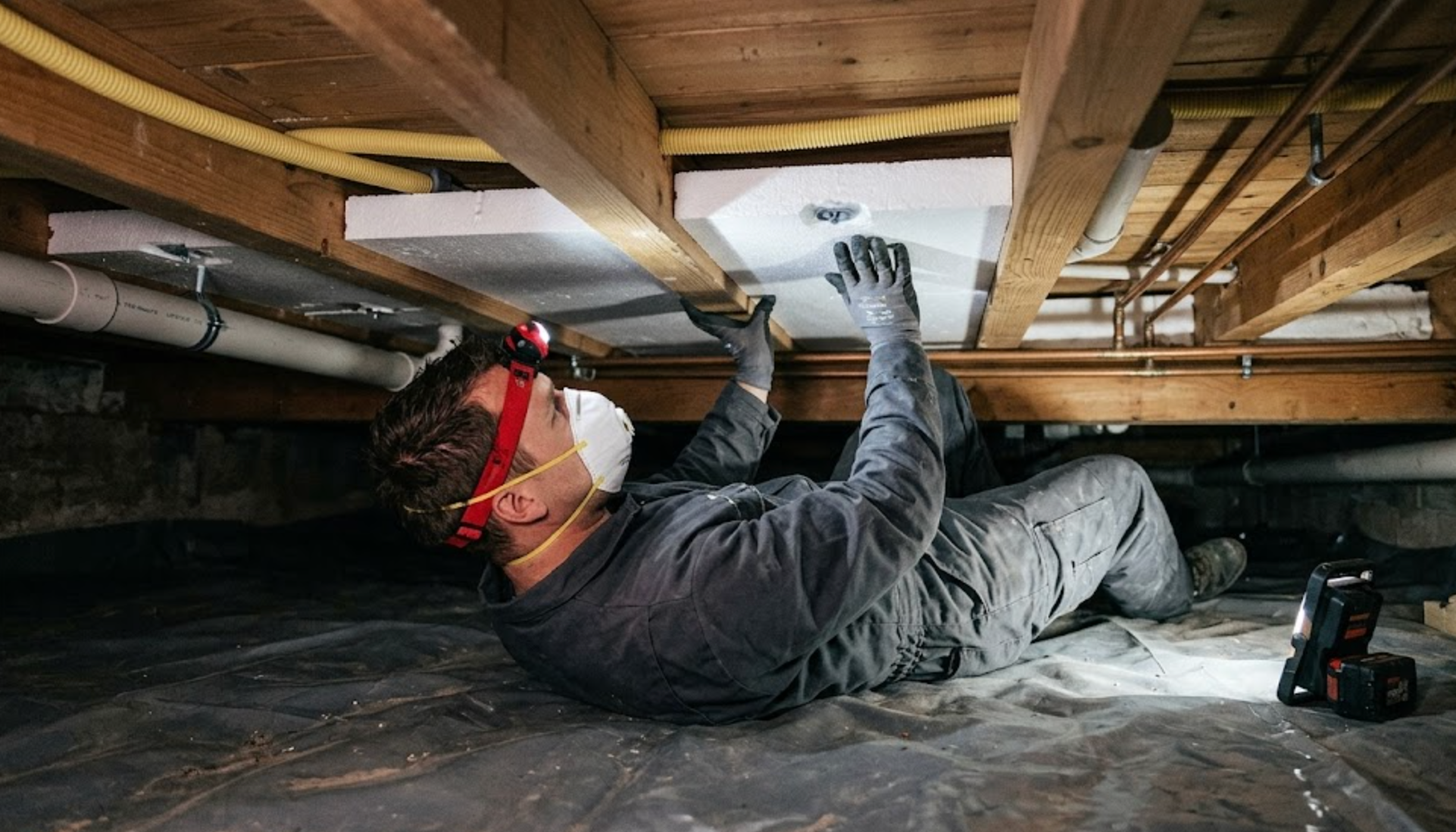
For homes with an accessible crawl space, insulation from below is often an efficient solution. The finish floor in the home can then remain intact, while the thermal performance clearly improves. At the same time, this method requires an accurate technical assessment of the space.
Insulation in the crawl space
Insulation in the crawl space is installed at the bottom of the floor structure. This method is particularly suitable when the crawl space is sufficiently accessible and the floor does not have to be opened from above. The system must match the type of floor: wood requires a different approach than concrete.
Installation details
Installation in a crawl space requires more than attaching material. First, it must be checked whether there is moisture, limited ventilation, mold or existing damage. Then we look at pipes, transits and accessibility.
During implementation, these points are particularly important:
- humidity and ventilation control;
- inspection of the existing floor structure;
- correct attachment of the insulation material;
- good finish around seams and penetrations;
- avoiding thermal bridges at edges.
Transparency is extra important when it comes to this type of hidden work. That is why Bricknest works with a digital customer portal in renovation projects, so that choices, planning and progress remain clear.
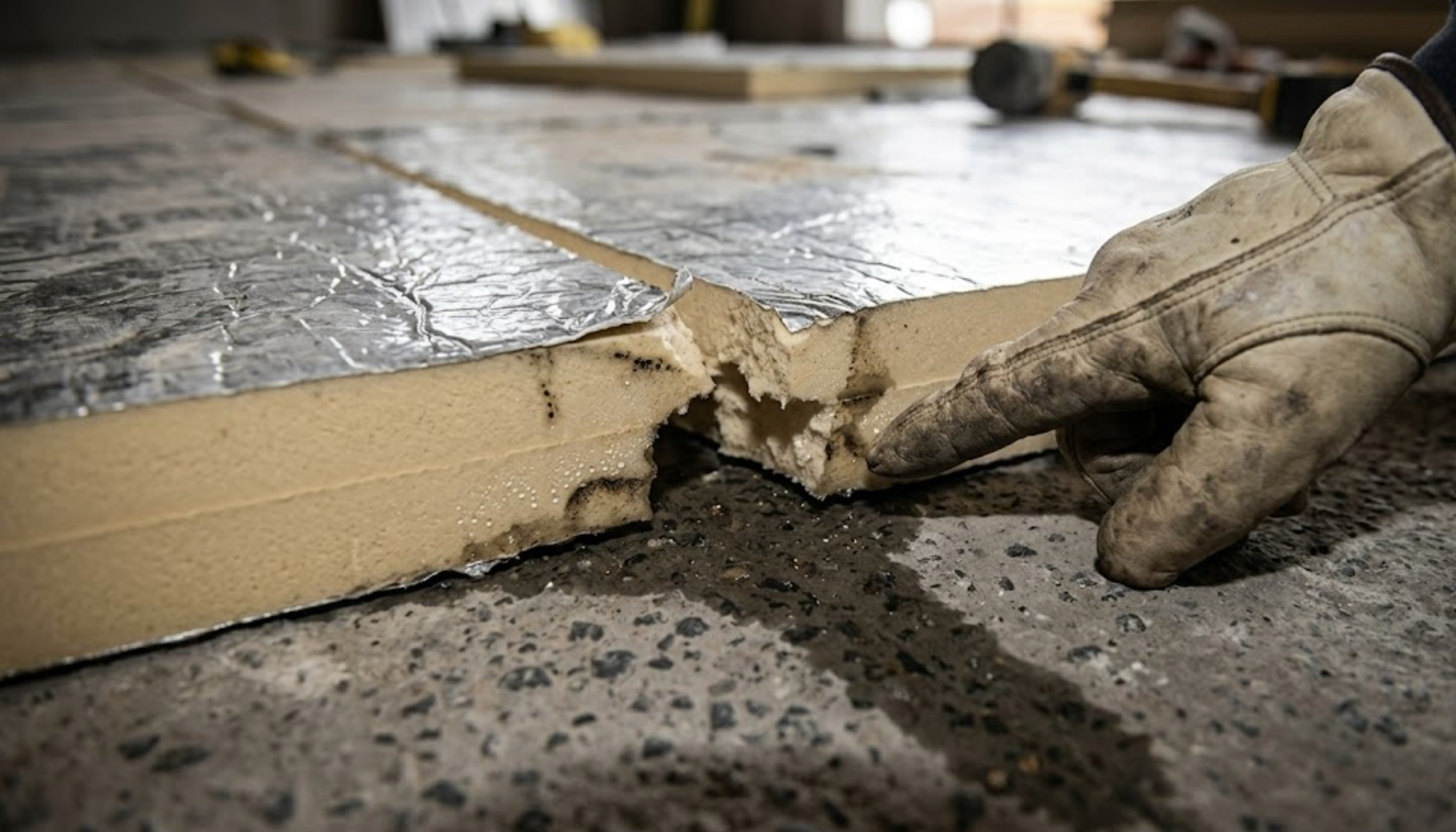
Insulating errors
Many errors occur due to the wrong combination of material and situation. A vapor-proof solution in the wrong place can trap moisture. Sloppy attachment, open seams or insufficient attention to ventilation also ensure that the insulation does not perform as intended. If you delve further into heat loss and comfort, you can also logically connect this theme to existing BrickNest content about energy savings and efficient heating.
Cost of floor insulation
The cost of floor insulation depends not only on the material chosen, but also on the condition of the floor, accessibility and technical complexity of the project. That is why a standard target price only provides a first indication.
General floor insulation costs
The insulation floor costs are usually calculated per square meter, but the total price depends on the entire structure. When additional repairs, moisture measures or preparatory work are necessary, the price increases. Renovation projects, in particular, vary greatly from one home to another.
Costs of crawl space insulation
The costs of crawl space insulation depend strongly on the accessibility of the space. A low, humid or hard-to-reach crawl space requires more working time and often extra preparation. As a result, the price is not automatically lower than other forms of floor insulation.
Price per m²
The price per m² is useful as a starting point, but says little without context. A technically simple floor is faster to treat than a structure with many pipes, edges or damage. That's why a professional quote should always look beyond the surface.
Factors that influence the price
The final price is mainly determined by:
- the type of floor and house;
- the choice of materials;
- the accessibility of the floor or crawl space;
- the presence of moisture or recovery points;
- the desired level of finish.
A clear cost structure prevents surprises. This is in line with Bricknest's service approach, where technical clarity and fixed guidance are important USPs.

How to choose the right solution
A good choice only occurs when technology, budget and purpose are considered together. A solution that is suitable for an old house with a wooden beam layer does not automatically work well in a modern home with a concrete floor. That is why the selection must always be made per project.
Based on the type of home
In older homes, ventilation, moisture and structural condition often play a larger role. There, the insulation must be carefully tailored to the existing floor. Newer homes sometimes offer more space for a compact system with higher pressure resistance.
Based on the budget
Not every project allows for a complete floor structure renovation. In that case, subfloor insulation or insulation in the crawl space can already provide a clear improvement. Technically, it is important not only to look at the lowest price, but at the effect per euro invested.
Based on the goal
The choice also depends on the desired result. Is it mainly about heat retention, moisture reduction, a quieter floor or how floor heating works better? Those who focus on insulation for floor heating have different requirements than someone who mainly wants to make a cold wooden floor more comfortable. The technical objective therefore ultimately determines the right structure.

