
At Bricknest, we know that comfortable living starts with the basics — the floor. A well-insulated floor not only provides pleasant warmth under your feet, but also reduces energy consumption and contributes to a healthy indoor climate. Nevertheless, it is understandable that costs are a decisive factor when planning floor insulation. In this article, we explain the most important elements that determine the costs of floor insulation, so that you can make the right choice for your home with knowledge of the facts.
Types of materials and their prices
Choosing the right floor insulation material has a direct impact on both the effectiveness of the insulation and the total cost of the project. The market offers a wide range of options, each with their own properties, price level and scope of application. Below are the most commonly used and popular types of insulation materials.
Environmentally friendly materials
The demand for sustainable insulation solutions is increasing every year. This is not only beneficial for the environment, but also for air quality and home comfort. Environmentally friendly insulation materials include:
- Ecowool: made from recycled cellulose and known for its excellent thermal and acoustic properties. The breathable nature also helps to regulate the humidity in the home. The price of ecowool starts around €25 per cubic metre, depending on the complexity of the installation.
- Cork: a natural product derived from the bark of the cork oak tree. It offers excellent thermal and sound insulation and is highly resistant to moisture and mildew. Cork is a bit more expensive and starts at around €40 per square meter.
- Jute: a natural fiber material that comes in mats or rolls. It is fully biodegradable and offers decent thermal performance. The price of jute starts at €15 per square meter.
Standard insulation materials
In addition to sustainable alternatives, there are also more traditional materials available that are known for their reliability, low costs and good insulation value. Some of the commonly used options include:
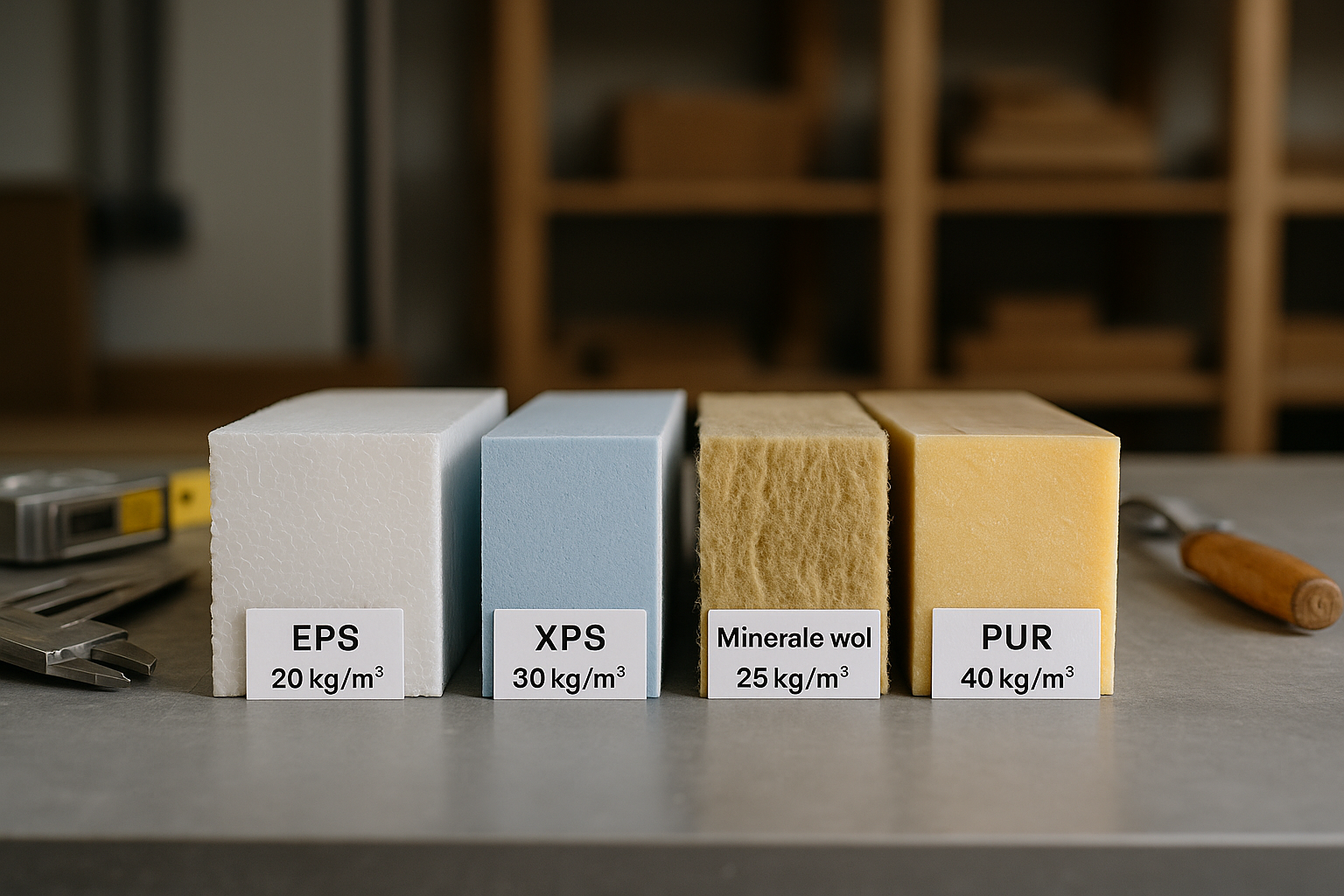
- Mineral wool: a classic insulation material in rolls or plates, with strong thermal and acoustic properties. The price starts at €10 per square meter.
- Expanded polystyrene (EPS): lightweight, inexpensive and easy to install. EPS offers good thermal performance, although it is less environmentally friendly. The price starts around €8 per square meter.
- Extruded polystyrene (XPS): a denser and stronger alternative to EPS, with improved moisture resistance and insulation value. Prices start at €12 per square meter.
- Polyurethane foam (PUR/PIR): one of the most efficient forms of insulation, applied by spraying that provides a seamless and waterproof layer. Costs start at €20 per square meter.
Installation costs
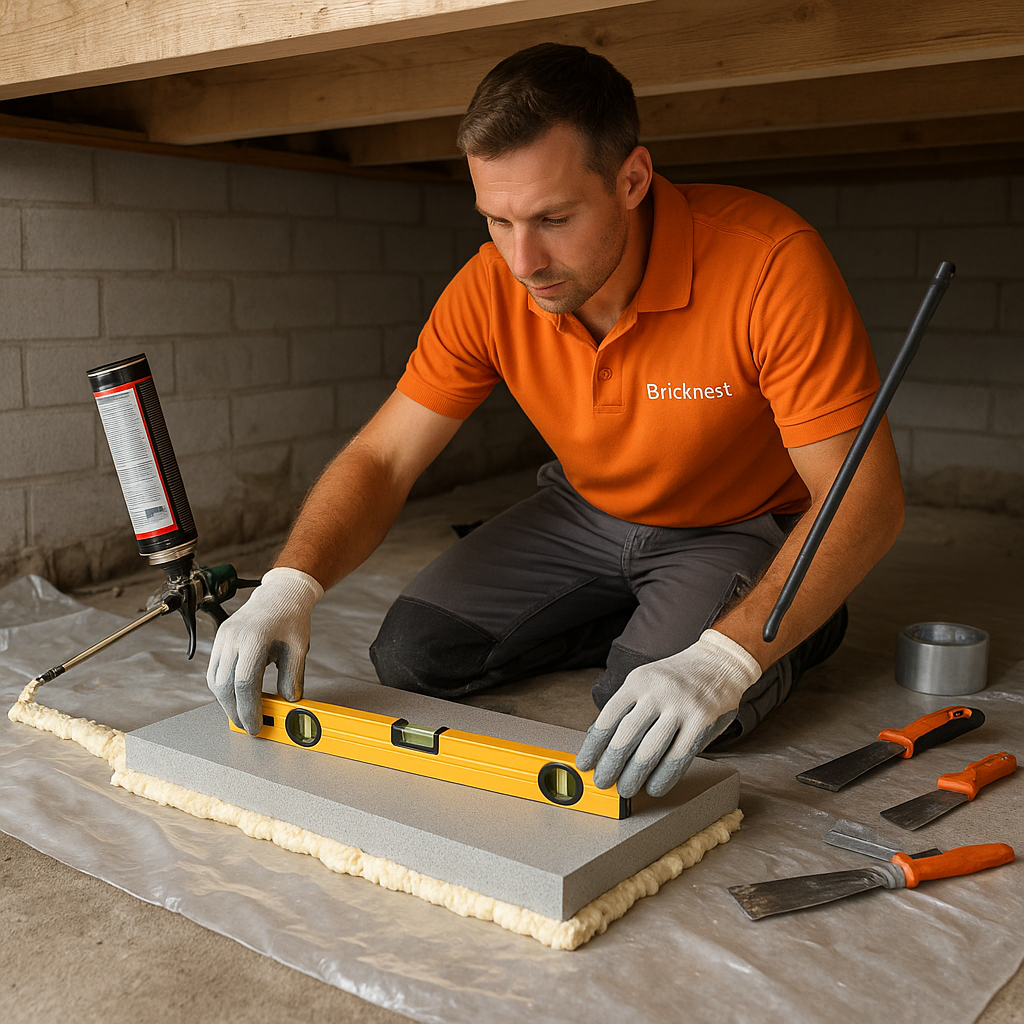
In addition to material costs, installation costs also play a major role in the overall budget for floor insulation. Here you have two options: you can do the work yourself or opt for a professional installation.
Do it yourself
Self-insulation can save money, but requires technical knowledge and accuracy. Incorrect installation can lead to thermal bridges and a lower insulation value. Moreover, not all materials are suitable for DIY projects — for example, sprayed polyurethane foam requires specialized equipment and experience. If you choose to get started yourself, you should consider the purchase of tools and sufficient time to master the correct installation techniques.
Professional installation
Hiring professionals offers security and quality. The Bricknest specialists have extensive experience and modern equipment to work with any type of insulation material. The cost of professional installation depends on factors such as the difficulty of the project, the material used and the total area. On average, the costs are between €15 and €30 per square meter. This is a worthwhile investment, because correct installation ensures sustainable, energy-efficient and comfortable results.
Additional factors
In addition to the choice of materials and the installation method, there are also various elements that can influence the total cost of floor insulation. These factors largely determine the final price and complexity of the project.
Area of the room
In general, the larger the floor space, the more insulation material and labour are required — and therefore the higher the costs. However, many companies, including Bricknest, offer attractive volume discounts for larger projects, making the price per square meter more favourable.
Floor features
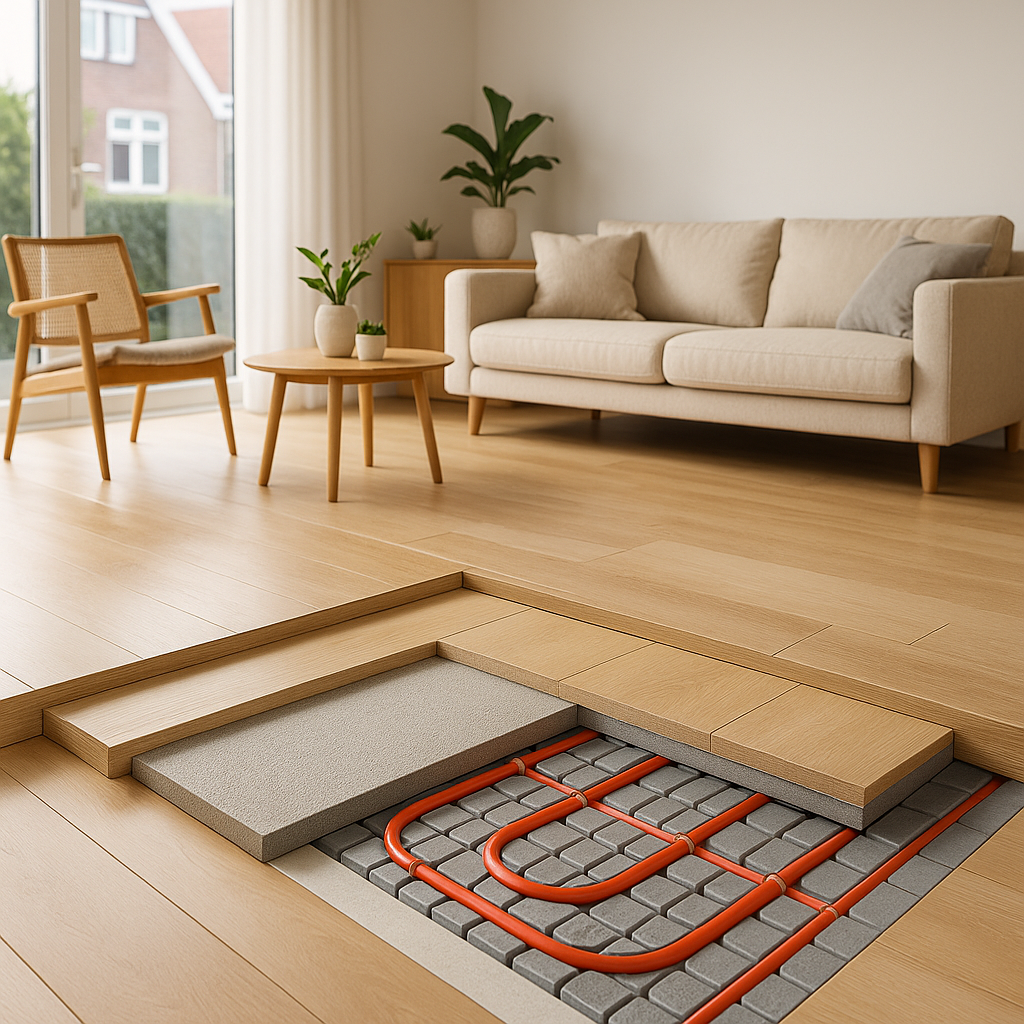
The condition of the existing floor also plays an important role in determining the costs. When the surface needs to be leveled or made extra watertight, the overall budget increases. The type of floor — for example concrete or wood — also influences the choice of insulation material and the installation method.
Important: If you want an accurate calculation of the costs, we recommend that the Bricknest specialists carry out an on-site inspection. We carefully analyse the condition of your floor and advise you on the most efficient insulation solution that suits your home, needs and budget.
Well-planned floor insulation makes your home warmer, more energy efficient and more comfortable. Get in touch with Bricknest today — we'll take care of professional execution from start to finish.

