
In the modern home, the bathroom has been transformed from a purely functional wet room to a private wellness area. In the Dutch climate, where humidity is often high and temperatures outside can fluctuate considerably, a sophisticated heating system is essential for both comfort and the structural condition of the home. After all, good heating prevents condensation and associated mold problems. At Bricknest, we see that the shift to gas-free living has accelerated the demand for innovative solutions. Choosing the right heat source requires a technical look at heat transfer, insulation values and energy consumption to create a climate that is inviting at any time of the day.
Electric heating
Electricity plays a key role in the current transition to sustainability, especially now that more and more homes in the Netherlands are being disconnected from the gas network. The technology behind the current systems has evolved in such a way that the efficiency is almost at the theoretical limit, with almost all the absorbed energy being converted directly into heat.
Fast warm-up and comfort
The biggest advantage of choosing to heat the bathroom electrically is the response speed of the system. Unlike traditional central heating systems that need to heat up a slow medium such as water, electric mats or panels respond almost immediately. This is crucial for a space that is often only used briefly but intensively. The heat is delivered directly to the floor via conduction or to the air via convection, so that the cold disappears from the room within a few minutes. For many Bricknest customers, this speed is the decisive factor for installing a modern electrical system.
Energy efficient solutions
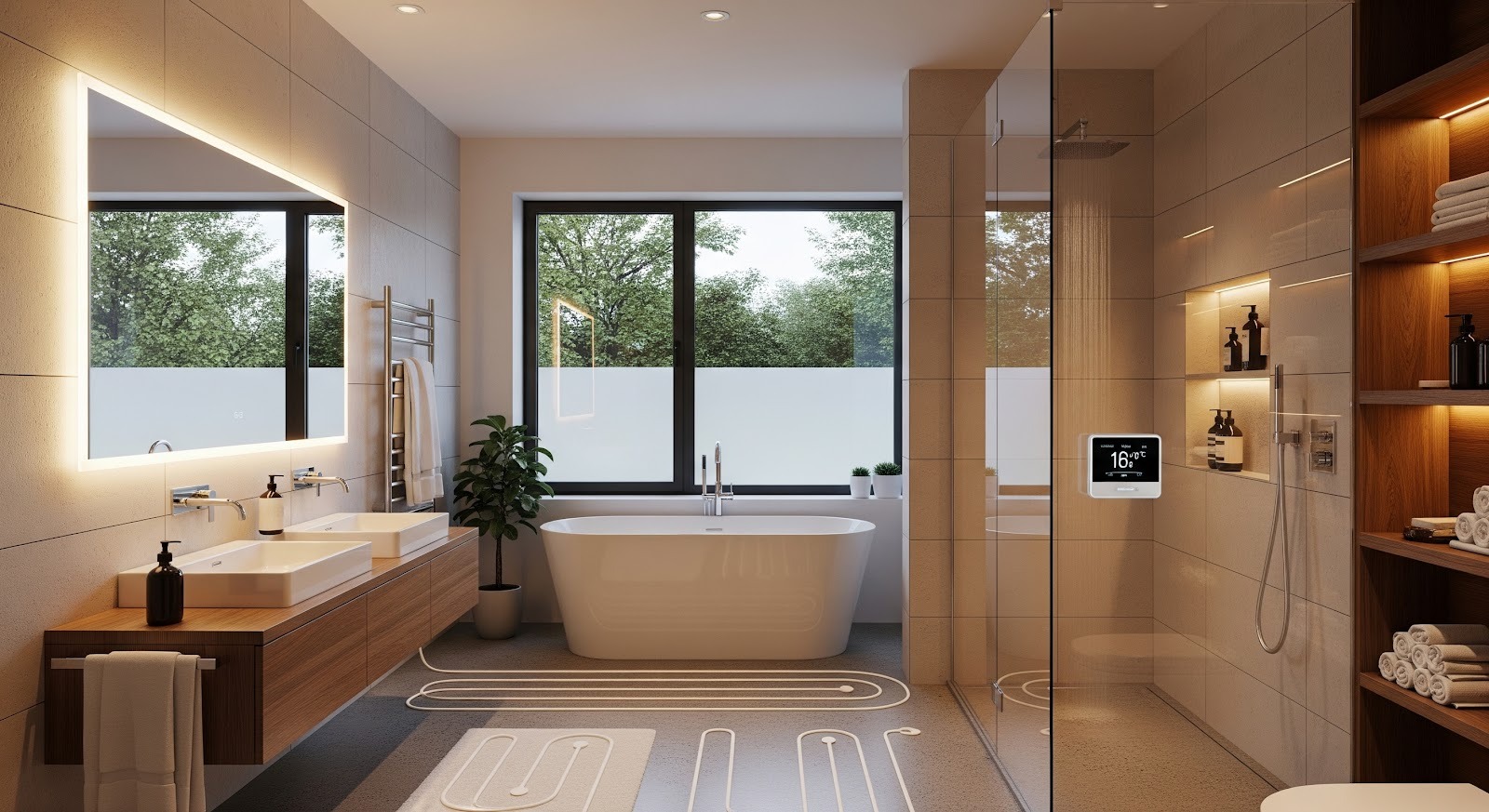
Although electricity can be more expensive per unit than gas, smart arrangements ensure that an electric bathroom heating can still operate cost-efficiently. By using self-learning thermostats and zone control, heating is only done when strictly necessary.
The technological components that contribute to this return include:
- Open-window detection that switches off the heating in case of sudden temperature drops.
- PID controllers that accurately dose the energy supply to prevent overshoots.
- Integration with solar panels, so that the bathroom can be preheated almost free of charge during the day.
- Dunbed floor heating mats that lie directly under the tiles, causing minimal heat losses to the subfloor.
This combination of techniques ensures optimal efficiency, provided that the installation is carried out according to the correct specifications.
Infrared heating
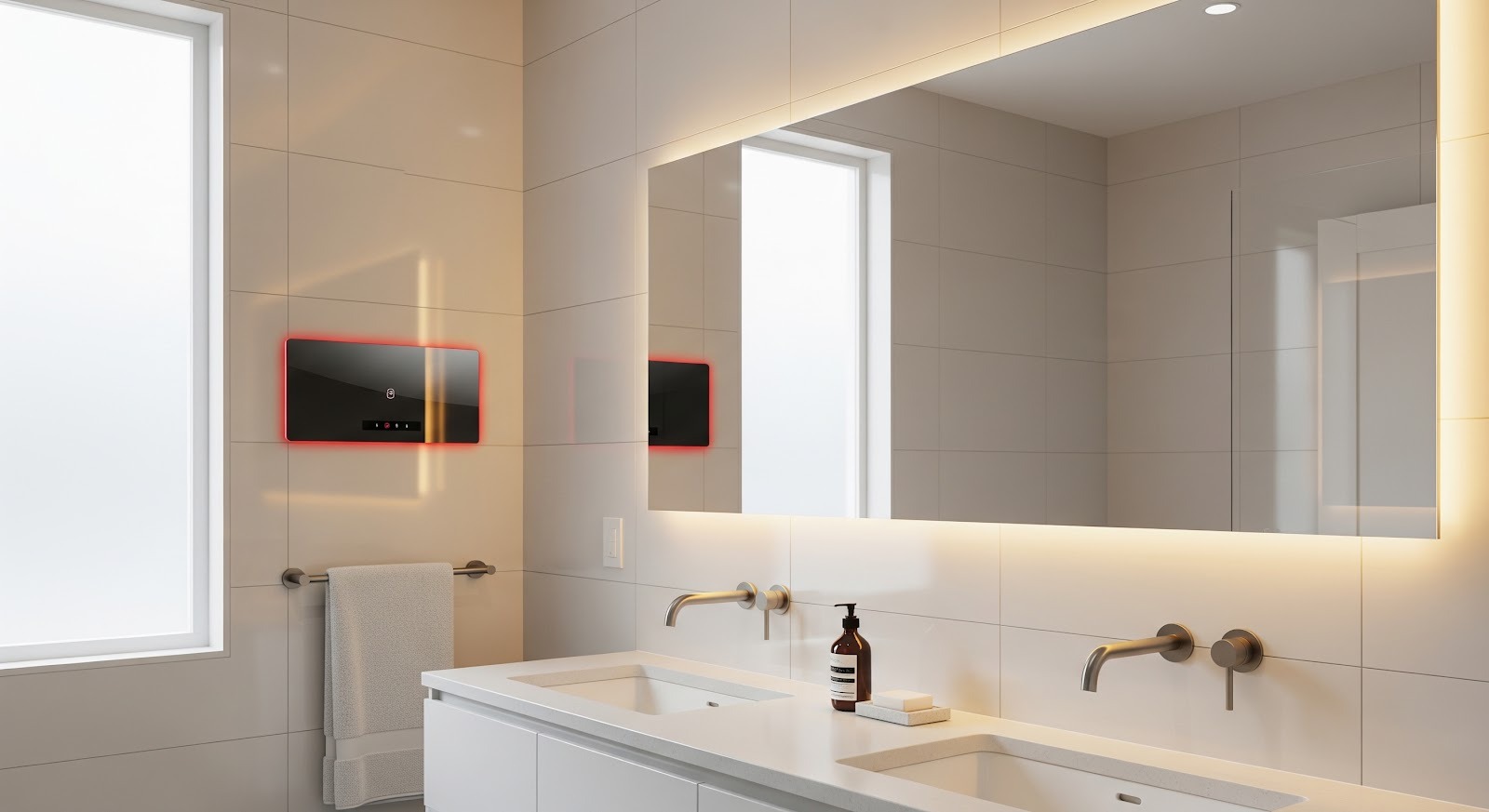
An alternative technology that is gaining popularity in the Dutch market for electric heating is infrared radiation. Where traditional systems heat the air, infrared focuses directly on objects and people in the room, providing a fundamentally different experience of comfort.
Direct and safe heating
When it comes to infrared heating for the bathroom, we speak of radiant heat. This is similar to the heat of the sun; it heats the skin and walls directly, without creating air currents. This has the major technical advantage that no dust particles or allergens are pumped around, which significantly improves the air quality in the bathroom. In addition, the walls stay dry due to direct radiation, which effectively prevents the formation of mold on sealants and joints. The panels reach their operating temperature very quickly, so you can immediately feel the pleasant radiation as soon as you enter the bathroom.
Save on energy costs
Because the perceived temperature is higher with infrared heating than with convection heat, the thermostat can often be set two degrees lower without sacrificing comfort. Each grade lower means savings of approximately 6% on energy consumption for that specific space. The panels have a relatively low wattage and can be used specifically where the heat is most desired, such as the sink or shower cubicle. At Bricknest, we often recommend combining infrared with basic heating for an optimal energy profile for the entire home.
Additional heating
In many cases, the existing main heating system is not sufficient to get the bathroom up to a comfortable level quickly enough during cold winter days. A strategically placed bathroom additional heating offers the solution here by absorbing peak moments without the entire central system having to continuously run high. For a deeper insight into how to best combine these systems, please refer to our earlier publication on bathroom heating solutions, in which we extensively discuss the difference between main and additional heating.
For cold bathrooms
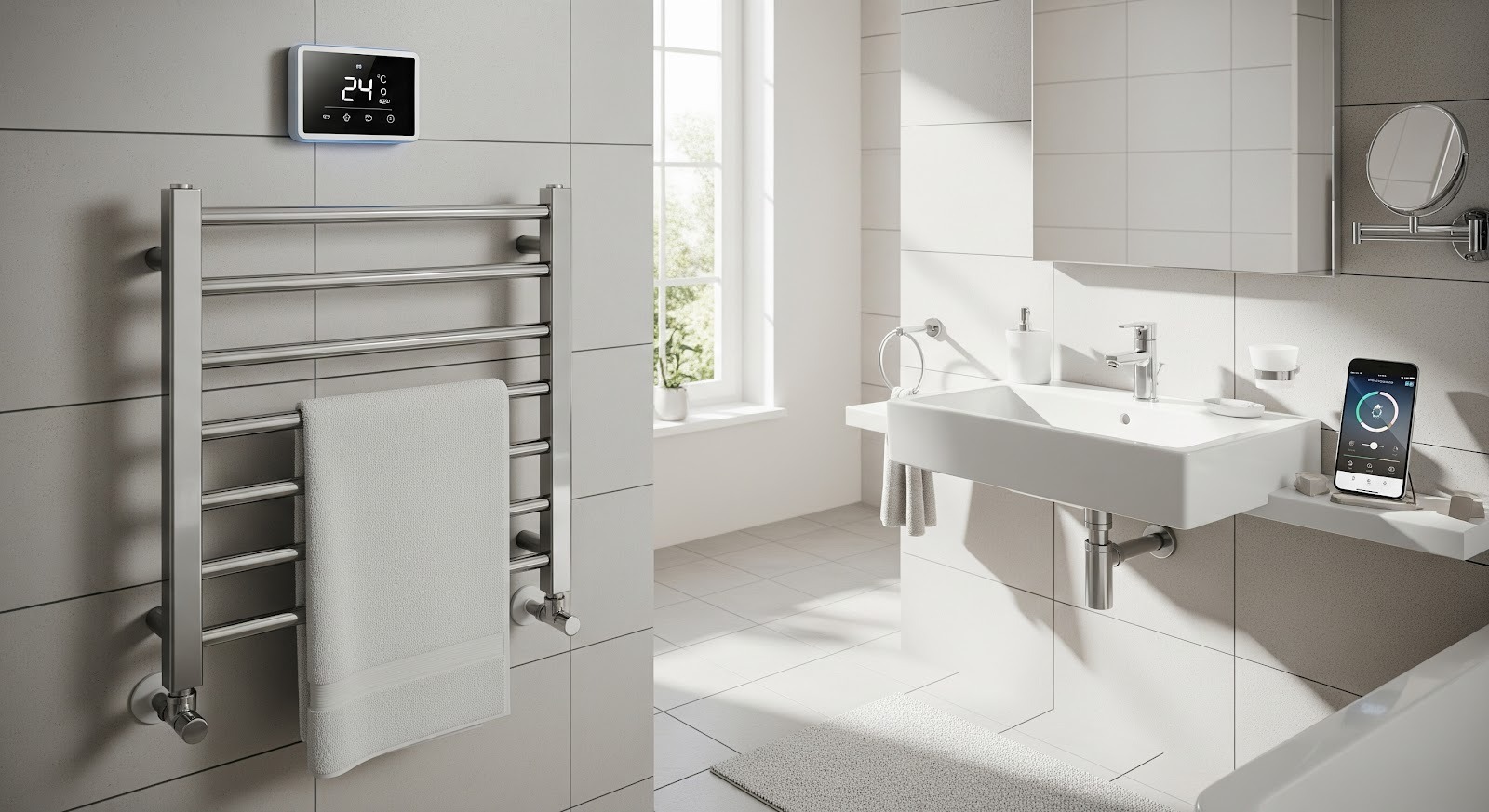
Especially in older buildings or bathrooms with an outer wall, the temperature can drop quickly. Adding electric heating for the bathroom in the form of a towel radiator or a wall panel ensures that the “cold radiation” from walls is neutralized. This increases comfort dramatically, as the temperature differences within the room are leveled. The Bricknest team sees that additional heating is often the most cost-effective way to take a renovation project to a higher level of comfort without having to modify the entire infrastructure.
Easy setup and operation
Modern additional heating systems are often “plug and play” or require only a minimal electrical connection. Thanks to wireless thermostats and smartphone apps, control has become extremely intuitive. You can turn on the heating while you are still in bed, so that the towels and floor are already warm when you get up. The simplicity of installation also makes these systems very suitable for existing bathrooms where a major renovation is not immediately desired.
Safety and use
Working with electricity in a humid area such as the bathroom places the highest demands on the technical security of the systems. Water and electricity are a risky combination unless international safety standards and IP ratings are strictly complied with.
Protection against moisture and overheating
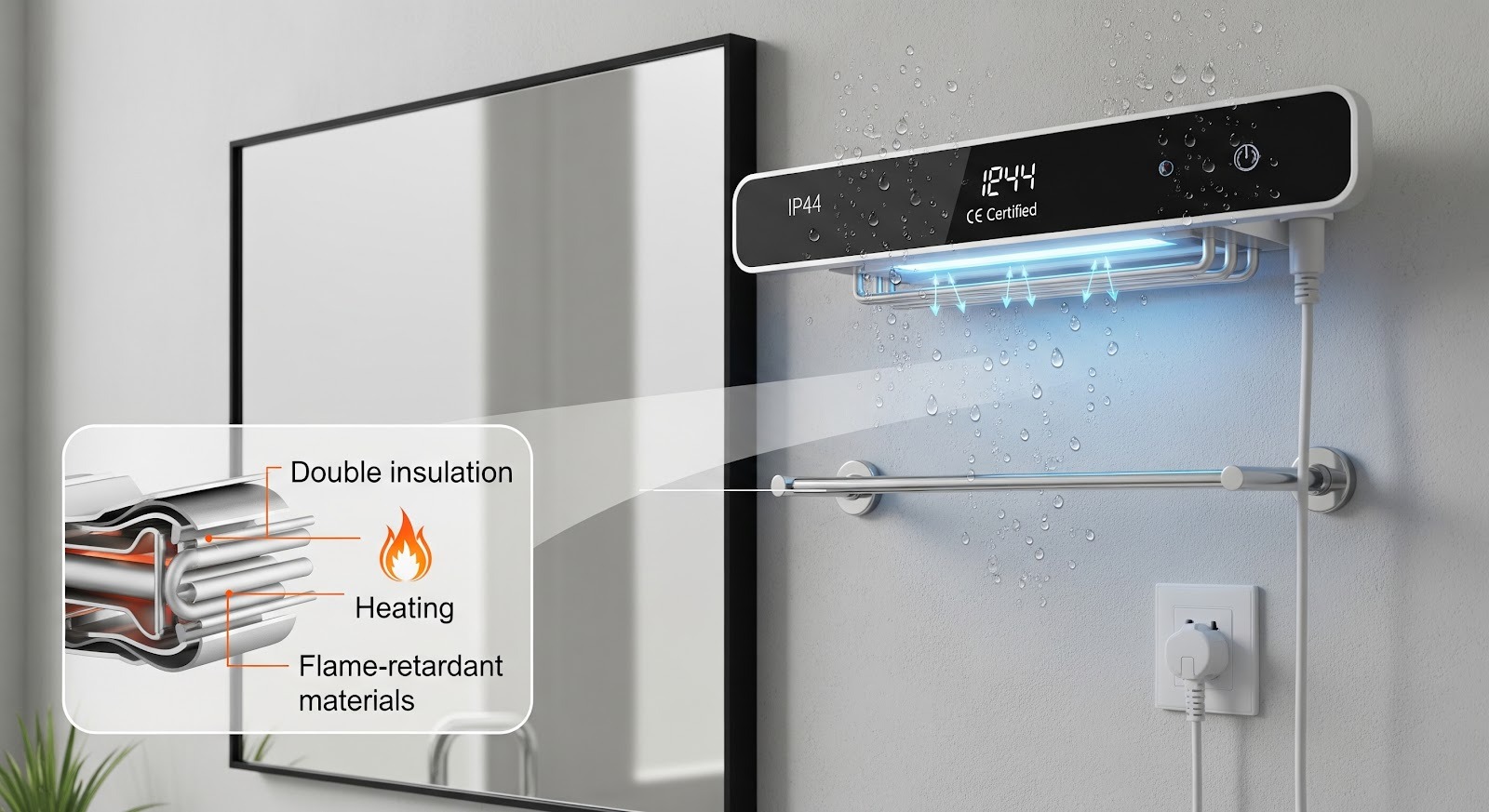
Each component of an electric bathroom heater must meet specific IP (Ingress Protection) values. Areas close to the shower or bath require a minimum of IP44, which means that the device is splash-proof. In addition, high-quality systems are equipped with dual thermal protections. Should a panel be accidentally covered, the overheating protection will shut down the system immediately before dangerous situations can occur. At Bricknest, we only install systems that have these redundant safety mechanisms.
Certified systems
Safety is guaranteed by certifications such as CE and specific labels for the Dutch market.
You can recognize a certified system by the following technical features:
- Double insulation of the heating cores.
- Earthed connection material that is corrosion-resistant.
- Tested electromagnetic compatibility (EMC) so that other equipment in the home is not disturbed.
- Use of flame retardant materials in housing and insulation.
By opting for certified products, you are assured of a long life and safe operation, even with daily and intensive use.
Installation advice
A technically perfect device only performs optimally if the installation is tailored to the specific geometry and thermal properties of the room. This is because the positioning of the heat source determines how the air flows or radiation patterns move through the bathroom.
The correct positioning of the heater
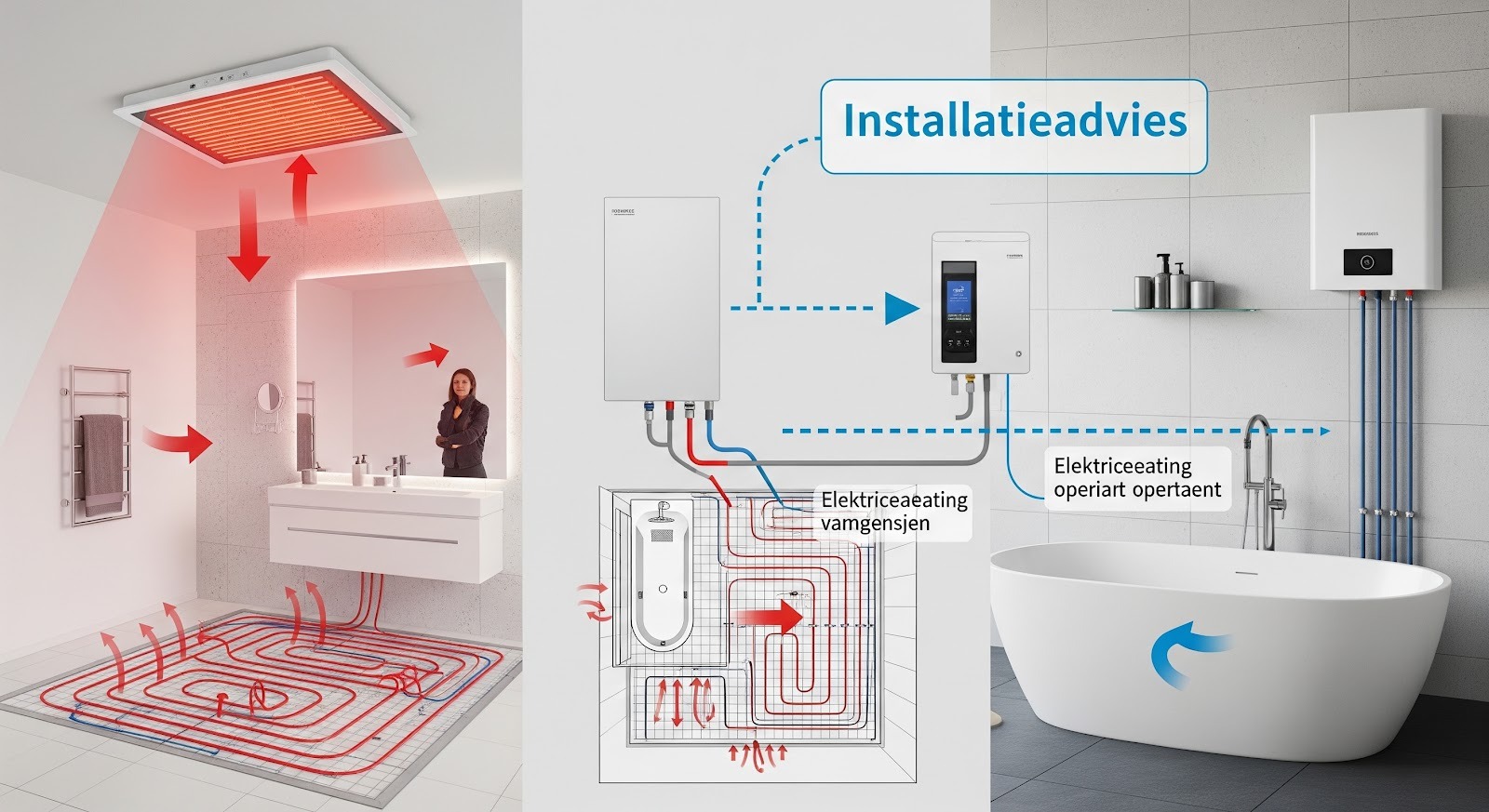
It is a technical mistake to place an infrared panel directly opposite a window, because part of the radiation is then lost to the outside. Infrared panels work best on the ceiling, focused on where you are standing still, such as in front of the mirror. For electric floor heating, it is essential that the mats are not placed under fixed sanitary facilities such as a bath or shower tray; this can lead to heat accumulation and damage to the system. For each project, Bricknest provides a laying plan that spreads the heat where your feet actually touch the ground.
Integration with existing systems
An electrical system is often integrated as a supplement to central heating. In the winter, the central heating system provides the basic heat, while the electric part provides the quick comfort boost. In the transition periods, when the central heating is off, the electric unit can heat the bathroom independently. This hybrid approach is often the most energy-efficient solution for the average Dutch home, because you don't have to heat up the entire house for one hot shower.
Sustainability and maintenance
In contrast to central heating boilers, electrical and infrared systems have hardly any moving parts, which minimizes the risk of mechanical defects. However, a certain amount of care is needed to maintain efficiency over the decades.
Cleaning and preventive maintenance
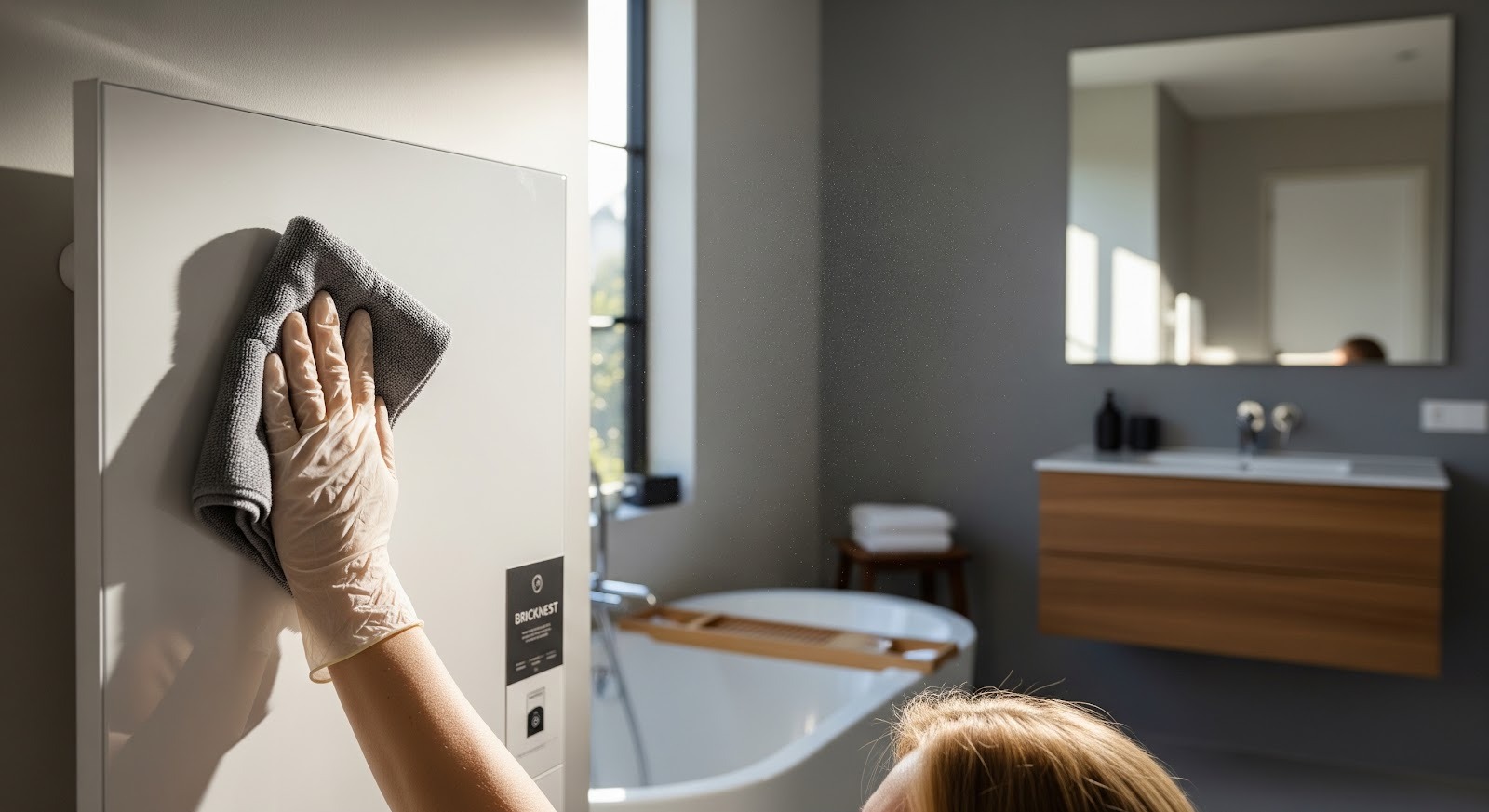
Dust accumulation on convectors or panels acts as an insulating layer and reduces heat transfer to the room. It is therefore advisable to wipe the surfaces regularly with a soft, dry cloth. For electric floor heating, it is important to check the thermostat settings periodically; a different sensor can lead to unnecessarily high energy consumption. Preventive checks of the connection points in the junction boxes also prevent hotspots due to transition resistance, which improves overall system safety.
Replacement of parts if necessary
Should a component fail after years of intensive use, modern systems often only allow the thermostat or sensor to be replaced without having to dismantle the entire installation. The modularity of the systems used by Bricknest guarantees that your investment is future-proof. Whether you opt for a complete renovation or a targeted upgrade to your climate control, with the right technical choices, you'll enjoy a warm, dry and healthy bathroom all year round.

